
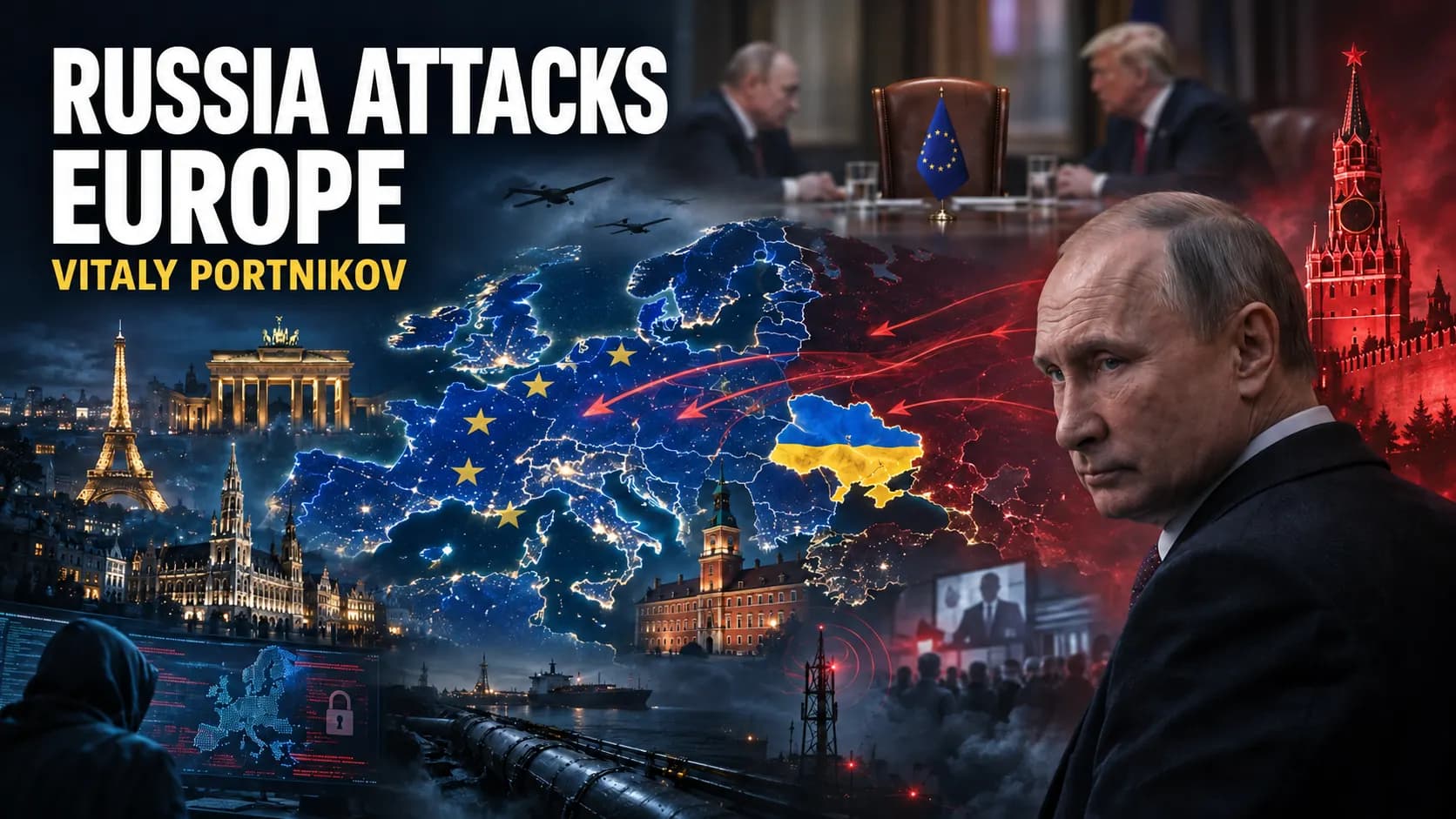
Russia Attacks Europe

The main—and perhaps somewhat unexpected—outcome of the negotiation process in Abu Dhabi and subsequent meetings of American intermediaries with the presidents of Russia and Ukraine was the shift of the main focus of the talks from the topic of ending the Russian-Ukrainian war to the topic of the "global security architecture" in Europe. Yes, the Russians had agreed to discuss "global issues" even before the negotiations began, but when the Russian delegation that arrived in Abu Dhabi announced that they had no mandate to talk about the war at all, it seemed like an outright mockery.
Of course, the reasons for such mockery can be simply explained—Putin is buying time to, on one hand, avoid conflict with his American counterpart and not fall under new sanctions, and on the other hand, to continue the war. However, shifting the focus specifically to European security issues may also serve other purposes.
The Kremlin might have hoped that after Donald Trump's victory in the 2024 presidential elections and a significant reduction in aid to Ukraine, Ukraine would soon capitulate or at least there would be an opportunity to occupy new Ukrainian territories. But this did not happen, primarily thanks to increased European financial and military aid. The year 2026 became not the year of Ukraine's capitulation, but the year when intensive strikes on the oil refining enterprises of the Russian Federation began. This is certainly not what Moscow had counted on.
Therefore, Russia decided to primarily increase pressure on Europe—to force it to abandon aid to Ukraine. Talks about the architecture of European security are more of a warning about danger: if you do not comply with our demands, we will attack you. So you should think not about Ukraine, but about your own prospects. Think about how long you will live in peace.
To intimidate Europeans, the Kremlin, as usual, uses a variety of tools. The very fact of negotiations with Americans about European security without the participation of the Europeans themselves and the reproaches from both Russian officials and Jared Kushner that Europe cannot put forward its own representative at such negotiations (although the Russians firmly refuse Europeans a seat at the negotiation table) is a demonstration of European weakness. As if to say, Putin can negotiate their fate with Trump without their participation. "Separate" proposals to European countries—sign non-aggression agreements with Russia—are another tool of division and, by the way, intimidation. Because when there is an idea of a non-aggression agreement, the prospect of aggression may also arise.
And, of course, working with right-wing populists and left-wing populists on the continent. Let's recall a whole series of diversions in the eastern lands of Germany just before the elections, in which the notorious "Alternative for Germany" triumphed. The Russians seemed to be convincing the voter—vote for those who want to make a deal with us, because you see how tensions are rising. And one can imagine with what impatience the Kremlin awaits the presidential elections in France and the possible victory of Marine Le Pen—because they may hope that an experienced politician from the far-right camp in relations with Russia will play the role of a "French Trump."
So, at first glance, in the very approach to discussing security issues even before the prospect of ending the Russian-Ukrainian war appears, there seems to be no logic. The logic arises precisely when we realize that the Kremlin is not interested in either peace or security—but is focused solely on continuing the war.