
Architecture That Speaks, or Ukrainian History, Faith, and Music Under the Vaults of St. Nicholas Cathedral in Chicago
Music through the ages — from church hymns and classical works to folk songs — came alive in the majestic space of St. Nicholas Cathedral, uniting Ukrainian spiritual heritage, historical memory, and respect for Ukraine's defenders.
Every year, the Chicago Architecture Center holds Open House Chicago, an event that opens the doors of hundreds of architecturally significant buildings in the city to visitors. Among them is the Cathedral of St. Nicholas, a Ukrainian shrine that impresses with its grandeur, beauty, and rich spiritual symbolism. Over two days, thousands of people come to see architecture that not only shapes space but also tells the story of a people's faith, culture, and identity.
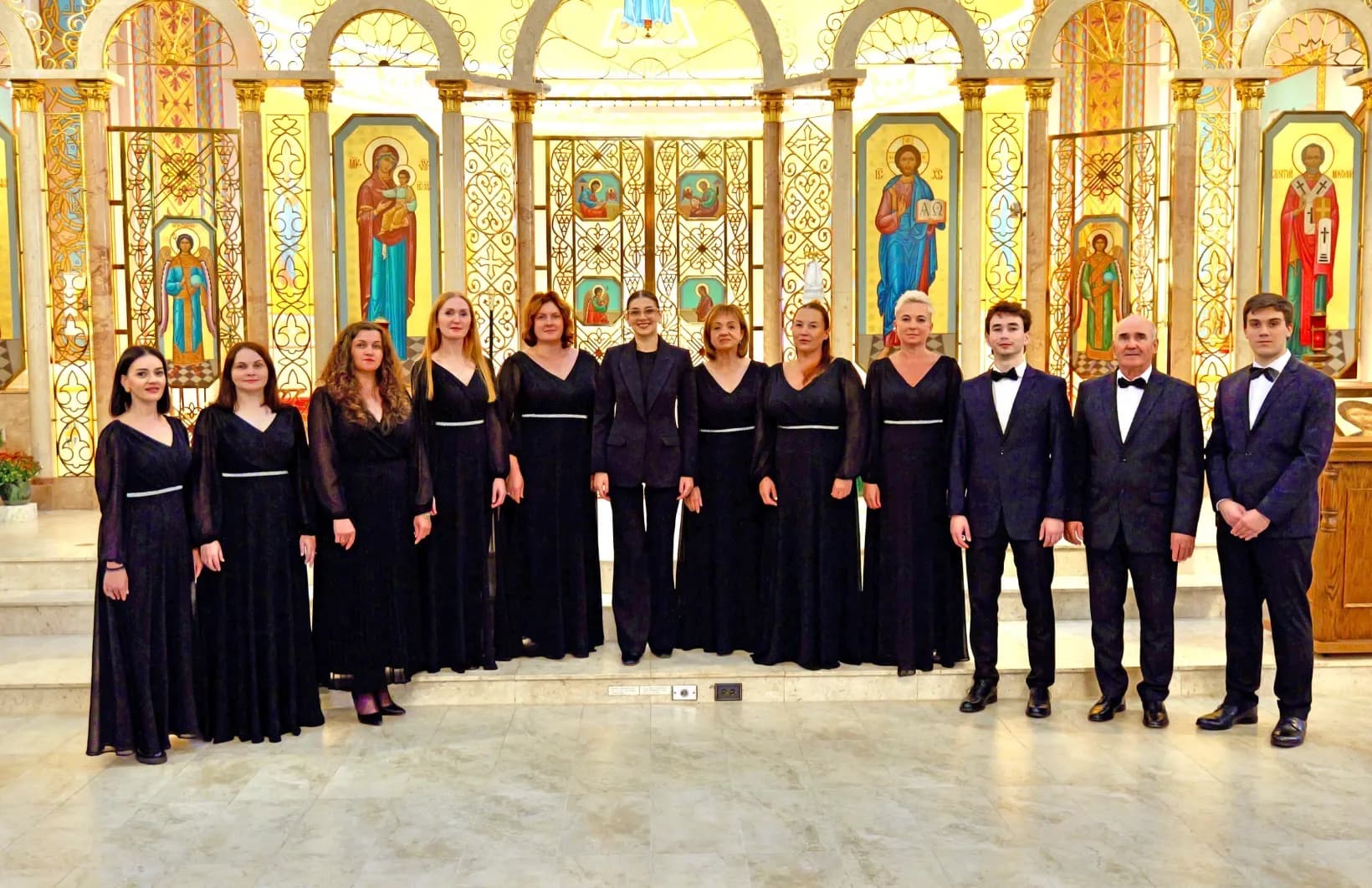
For the second year in a row, the Glorious choir joined this event with a special concert dedicated to Ukraine's defenders. This year's program was titled "Music through the Ages" and covered a wide spectrum of Ukrainian musical heritage: from spiritual works and classical compositions to folk songs passed down through generations. Within the cathedral walls, the music acquired a special resonance. It became not only an artistic event but also an opportunity to reflect on Ukraine's history, its spiritual roots, human losses, and the resilience of its people.
Music frozen in stone
"Architecture is music frozen in stone," — this famous aphorism resonates especially powerfully in St. Nicholas Cathedral. Its architecture seems to invite one to hear what cannot be expressed in words.
What do the domes rising to the sky tell us? What melody do the gilded icons and mosaics evoke? What does the sunlight, passing through colorful stained glass, convey?
First and foremost, it is a song of faith — a praise to the Creator that permeates the entire space of the temple. The words of the psalm "Bless the Lord, O my soul! O Lord my God, You are very great!" seem to grow from the bricks and stones, filling the cathedral with spiritual grandeur.
Since 1915, those who enter this church hear the choir's singing, and with their imagination, they can join the invisible singing of angelic hosts. The music that sounds here is meant to elevate a person above the mundane, help them transcend their own limitations, and direct their gaze toward the eternal. Upward, to the heavens, — such is the spiritual movement embedded in the very space of the temple. However, the aspiration to the heavens does not mean forgetting earthly roots. A person belongs to a certain people, has their own history and cultural identity. That is why the Ukrainian tradition is so distinctly present in the architectural image of the cathedral.
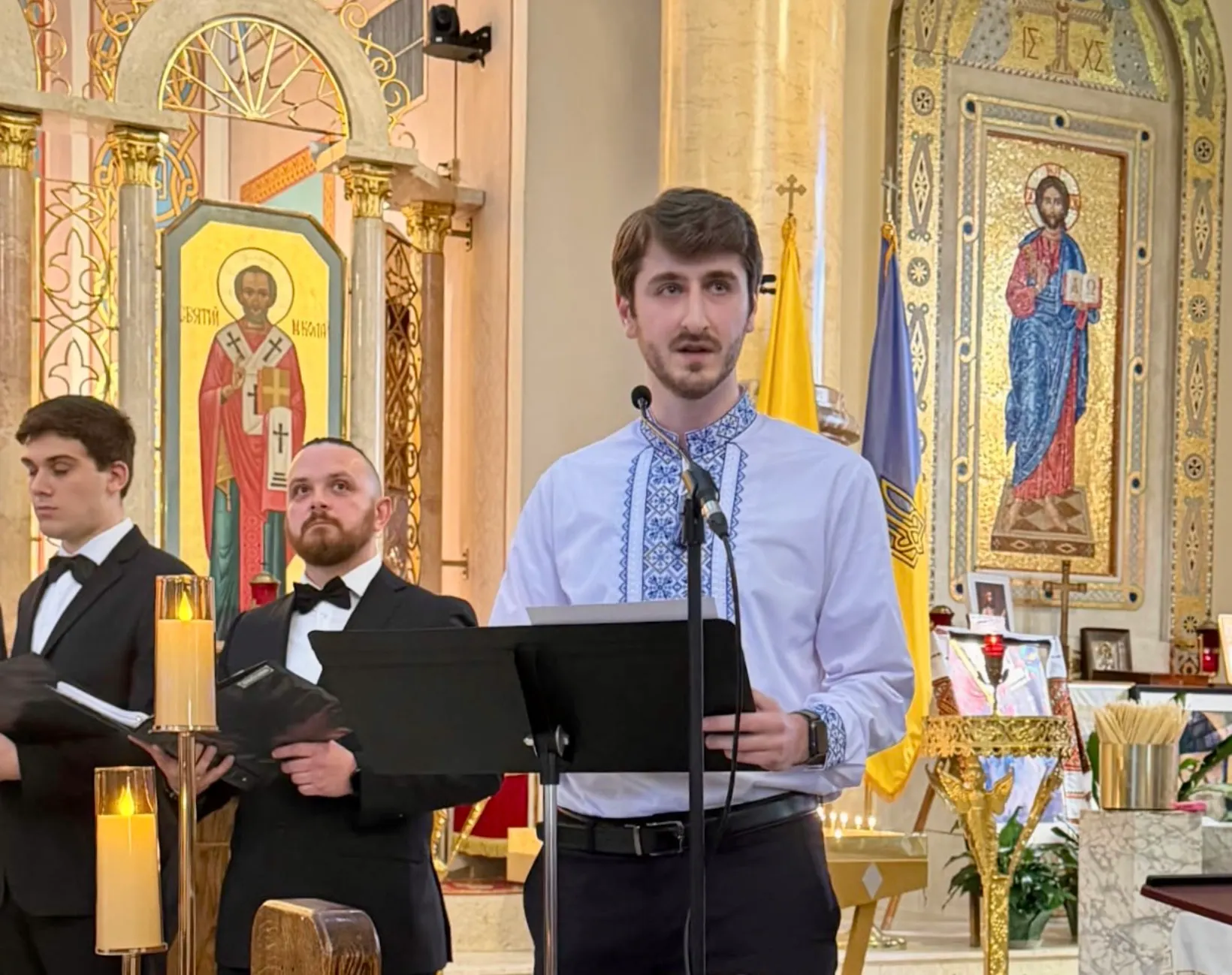
Ukrainian ornaments woven into the brickwork remind us of the embroidery that has adorned our ancestors' clothing for centuries. Metal structures, domes, and crosses crown the building, transforming its silhouette into a visible sign of spiritual and cultural heritage. Thus, as a person begins their work on earth, they strive to ascend to the heavens without losing connection with their people.
The architecture of the cathedral becomes a kind of book, written in the language of forms, colors, and symbols. And the music that echoes under its vaults helps to read this book with the heart.
Faith embodied in images
A special place in the spiritual space of the cathedral belongs to iconography. Stained glass and icons not only adorn the temple but also tell the story of Christianity, its saints, and those whose lives became examples of faith, courage, and self-sacrifice.
One of the works in the concert program was "Antiphon" by Kyrylo Stetsenko: "Bless the Lord, O my soul." Another spiritual center of the program was Roman Hurko's work "Bogorodytsia Divo." Reflections on the Mother of God resonate with the ancient prayer, the words of which can be read above the sanctuary: "It is truly right to bless You, O Theotokos."
In church tradition, Mary is glorified as more honorable than the cherubim and incomparably more glorious than the seraphim, as the one who bore the Word of God and through whom the world received the Savior. This image reminds us of the special connection between the heavenly and the earthly, between prayer and human life. In the silence of the temple, the icon ceases to be merely an artistic creation: it becomes an object of contemplation, prayer, and spiritual experience.
The history of Ukraine in stained glass
The cathedral tells not only about faith but also about the history of the people who accepted, preserved, and passed on this faith to future generations. Among the figures represented in its stained glass are St. Clement I, St. Prince Volodymyr, St. Princess Olga, Saints Cyril and Methodius. They belong to different pages of Christian history, but each is connected with the spread of faith and the formation of a spiritual culture that became part of Ukraine's historical heritage. St. Clement I, whom church tradition honors as one of the early bishops of Rome, is associated with the legend of his martyrdom in Crimea. St. Prince Volodymyr and his grandmother, St. Olga, hold a special place in the history of the baptism of Rus and the establishment of Christianity on its lands.
Saints Cyril and Methodius, Greek missionary brothers, made a significant contribution to the development of the Slavic written tradition; their legacy reminds us of how closely language, culture, and spirituality are intertwined. A special place is held by St. Josaphat — a martyr who gave his life for church unity and his faith. His figure symbolizes fidelity to convictions even when such fidelity demands the highest sacrifice. All these images testify that the history of a people consists not only of dates and political events. It lives in the figures of people, in spiritual traditions, in language, books, prayers, and art. The stained glass of the cathedral transforms these memories into visible images that continue to speak to the present generation.
However, the nation was created not only by princes, saints, and church figures. It was also shaped by political leaders, musicians, teachers, artists, and ordinary people who worked, taught, created, and sacrificed themselves so that Ukraine could retain its identity. Thanks to their efforts, Ukrainian culture has survived numerous trials and continues to develop.
Ukraine — a land impossible to forget
The musical program continued this narrative with works by Ukrainian composers. Among them were the third concerto by Dmytro Bortniansky "Lord, by Your strength the king shall rejoice" and "Melody" by Myroslav Skoryk.
Ukraine — a land too long unknown and too often forgotten. But forgotten not because there was nothing to remember, but because the memory of it was often suppressed. Yet it is a rich and beautiful land, located at the crossroads of civilizations. Its history dates back to the times of the great princes of Kyivan Rus, the Galician rulers, the freedom-loving Cossacks, and many generations of people who fought for the right to live on their own land.
Can a single melody convey the spirit of such a people? Can music simultaneously express the pain of lost freedom, the joy of everyday life, and the hope for a better future?
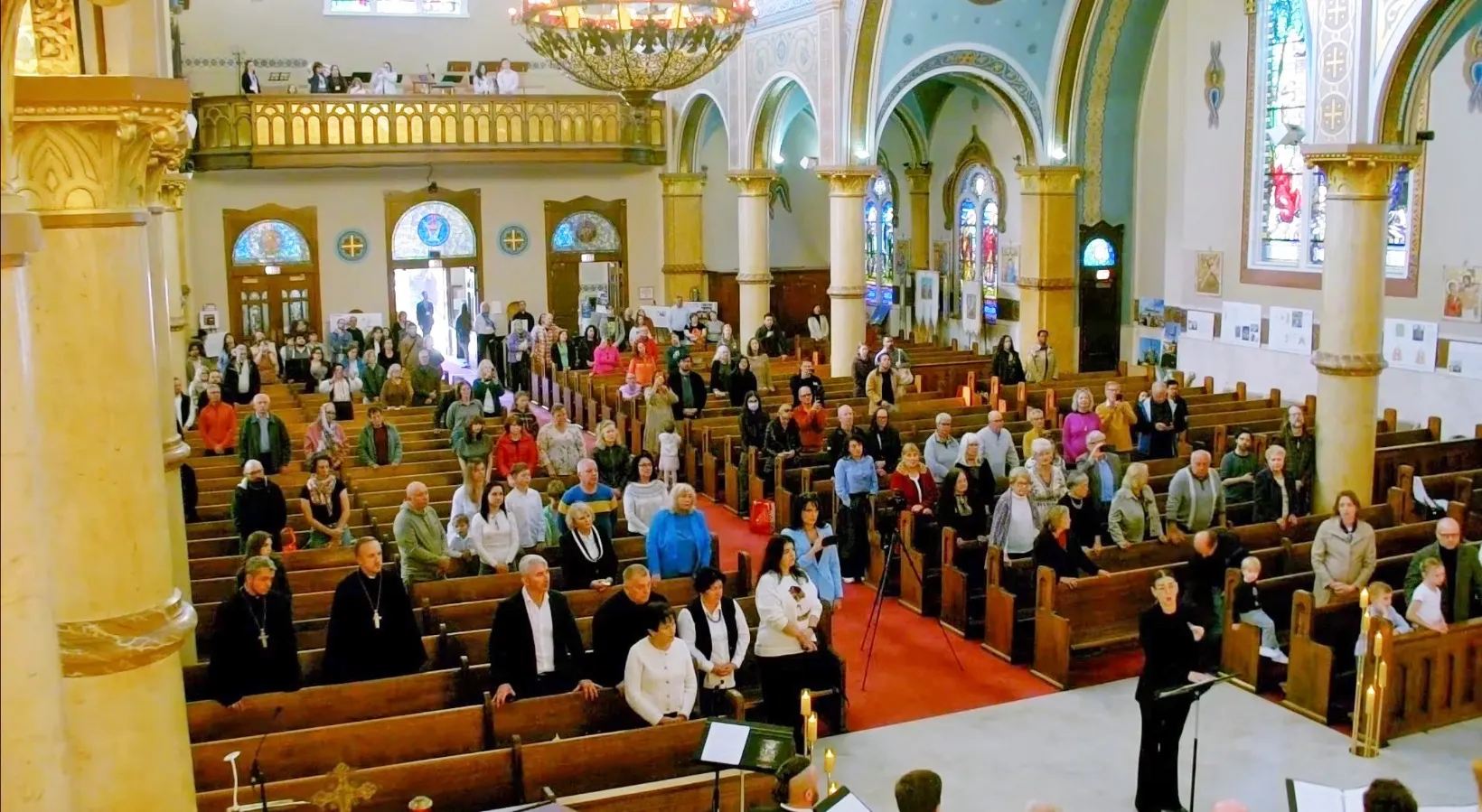
It seems so. Myroslav Skoryk's "Melody" approaches this with extraordinary subtlety and poignancy. Created by a composer who is no longer with us, it has become one of the most famous Ukrainian musical works. Its recognition has spread far beyond Ukraine, and the music itself has found a place in concert programs and cinema.
There is no need for words to convey the depth of feelings. The melody touches the innermost strings of the soul, leaving room for personal experience — for sorrow, memories, love for the native land, and hope. In the context of a concert dedicated to Ukraine's defenders, this work takes on special significance. It reminds us that behind every struggle for freedom stands not an abstract idea, but a living country with its people, language, culture, and the future they strive to preserve.
Songs in which the soul of the people lives
From the high notes of classical music, the concert returned listeners to the folk song — that part of Ukrainian heritage in which everyday life, personal feelings, and the experiences of many generations are reflected. "The Moon in the Sky" is one of the most beloved Ukrainian folk songs, a kind of romance passed down from generation to generation. Under the moonlit sky, a young woman sails in a boat, her heart filled with love, longing, and uncertainty about her beloved's feelings. The moon reflected in the water becomes an image of love itself — beautiful but changeable, sometimes close, sometimes distant, never entirely within our control.
Such songs are more than musical testimonies of the past. They preserve the living memory of the people: their joys and sorrows, customs, feelings, and the language of the heart. Every time we sing them, the voices of previous generations seem to return to us. Another dimension of the people's soul is revealed in the song "If I Had Eagle's Wings." Its images convey the longing to overcome distance, return to the native land, and find a close person.
After all, everyone longs for something. Some for love, some for fame or wealth. Others yearn for family and friends who are far away. And there are those who mourn for a home they can no longer return to.
For Ukraine and Ukrainians, the longing for their native land has become a particularly painful reality. It is a longing for the past, for a home that had to be left behind, for peace and stability, for the opportunity to build a future without fear. In ancient folk songs, this longing resonates with extraordinary sincerity. Imaginary eagle wings become a symbol of freedom and the ability to overcome any distance to return to the native land and find the one you love. This music prompts not only empathy but also action. It reminds us that Ukraine needs the support of all who wish to see it free, strong, and capable of defending its future.
Returning to one's roots
Another work in the program — "In the Autumn Garden, White Asters," opens up the painful theme of cultural memory and the appropriation of artistic heritage. This Ukrainian romance is associated with the fate of melodies that, during Soviet times, received new interpretations and became known outside their original cultural context. In the concert narrative, this song serves as an example of how a Ukrainian artistic work can lose its connection to its origins in public memory. However, the melody carries something more than notes. It preserves the feelings of the people, their memories, sorrows, and the desire to be heard. In the song, white asters bend under the autumn sky, and the heart mourns lost love, wondering if it will remain in anyone's memory. Personal longing here takes on a broader resonance: it echoes the fate of a culture that was attempted to be deprived of its own voice. A people's history can be distorted, its traditions overshadowed, and its songs attributed to others.
But it is impossible to completely separate a people from the spirit that gave such works life. Thus, the performance of this song becomes a symbolic return to Ukrainian roots, a gesture of respect for a cultural heritage that has survived despite numerous attempts to silence it.
Joy that cannot be contained
The concert concludes with "Kolomiykas" by Andriy Hnatyshyn — a work that represents a completely different side of the Ukrainian musical soul. Kolomiykas, rooted in the Carpathian folk tradition, are lively songs and dances filled with wit, playful motifs, and inexhaustible energy. For generations, they have accompanied village celebrations, weddings, and community gatherings, uniting people with music, dance, and laughter. They can be humorous, teasingly playful, sometimes even biting, but they are always full of life. They reveal that side of the Ukrainian character that does not allow the national experience to be reduced solely to suffering and struggle. After all, Ukrainian culture is not only about mourning the lost, praying for the fallen, and longing for home. It is also about the ability to rejoice, joke, sing, and dance, even when circumstances demand courage and endurance. In Andriy Hnatyshyn's musical arrangement, this folk tradition takes the concert stage, reminding listeners that Ukrainian heritage lives not only in solemn hymns and mournful melodies but also in joyful rhythms that invite us to celebrate life itself.
Architecture, music, and memory
The concert "Music through the Ages" at St. Nicholas Cathedral united art, spirituality, and historical memory in a shared narrative about Ukraine. From the majestic domes and stained glass to church hymns, from the works of Ukrainian composers to folk songs — each element of the program reminded us that national culture does not exist separately from the people who create, preserve, and pass it on. Architecture speaks the language of stone, brick, color, and light. Icons and stained glass preserve the images of spiritual history. Music gives these images a voice, and folk songs return them to the human heart.
The dedication of the concert to Ukraine's defenders gave this artistic event a special meaning. Behind every fallen hero stand family, community, and a future forever changed by their sacrifice. The memory of them is not only sorrow but also an obligation to preserve what they gave their lives for: freedom, dignity, and the right of the Ukrainian people to remain themselves. Perhaps this is the main message of the evening. Music helps us hear the voices of past generations. Architecture reminds us of the strength of spiritual foundations. And culture as a whole testifies that a people who remember their roots are capable of looking to the future.
The architecture of St. Nicholas Cathedral speaks to us in the language of stone. Ukrainian music continues this narrative in the language of the heart. And as long as these voices sound, the living memory of Ukraine will be passed from generation to generation.