“He Would Have Liked That”: The Story Mykola Melnyk’s Medals Cannot Tell
He wrote a book about war, endured extraordinary hardship, and continues his struggle. Yet one of his most meaningful acts invites us to reconsider what it truly means to honor the fallen and care for Ukraine’s future.
After Mykola Melnyk was gravely wounded, one of his fellow soldiers gave him a soccer ball.
An unusual gift, one might think, for a man who had lost a leg. But Mykola wasn’t offended. Quite the opposite. He promised to learn to run again and one day score a goal with that very ball.
This small story reveals something essential about him. His humor, stubborn determination, sharp wit, and refusal to let circumstances dictate what he is still capable of achieving.
Yet behind that irony lies a much deeper story: that of a man who has lived through war, lost brothers-in-arms, endured devastating injuries, and, despite everything, retained an extraordinary capacity to think about the future of others.
There is one seemingly modest act in Mykola Melnyk’s life that, to my mind, reveals more about the man than any list of military decorations ever could.
But we will come to that a little later.
On October 23, we had the honor of welcoming Mykola Melnyk to AAU ”Self reliance” in New York, where he presented his book, My Maidan. War. Love. Fight.
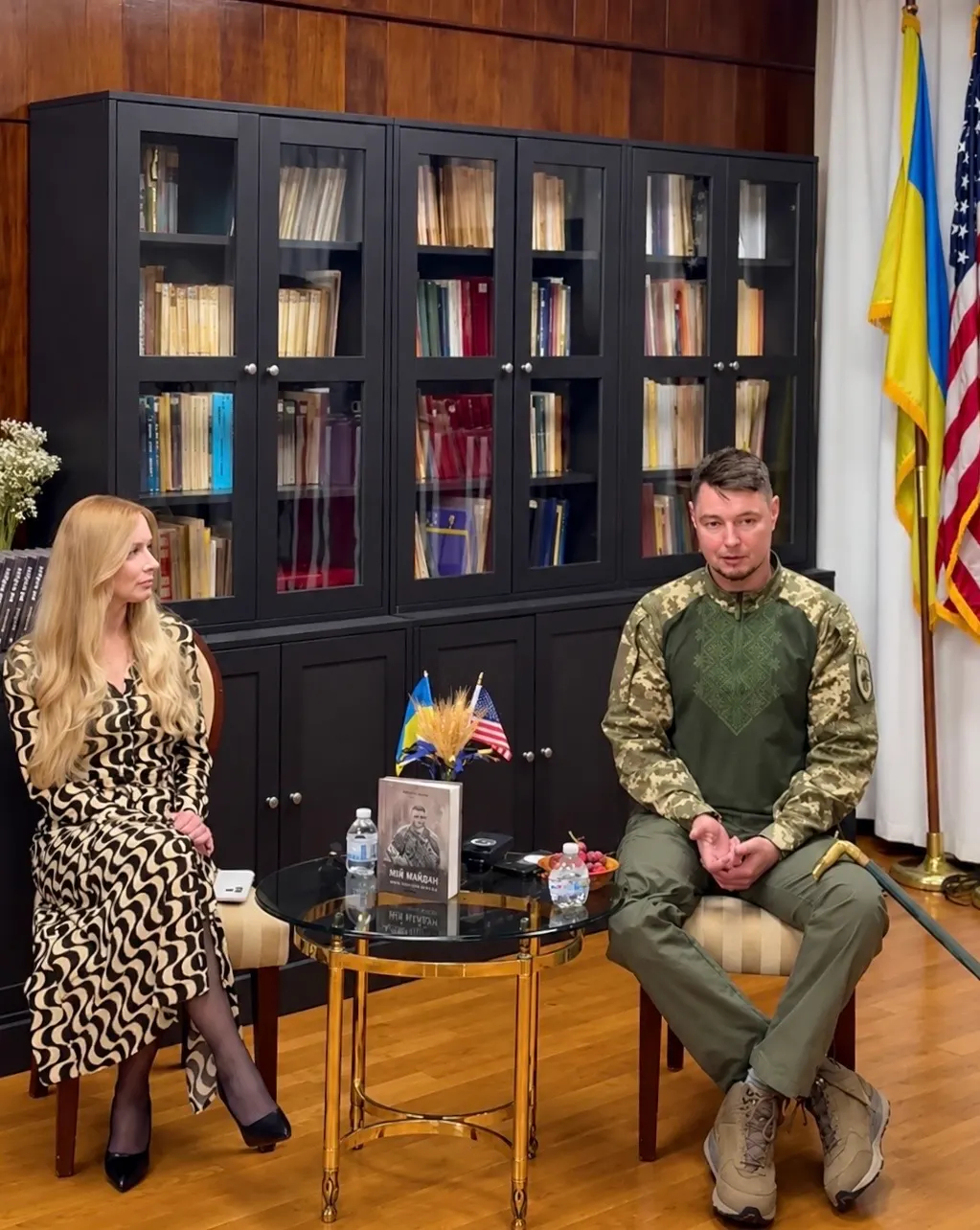
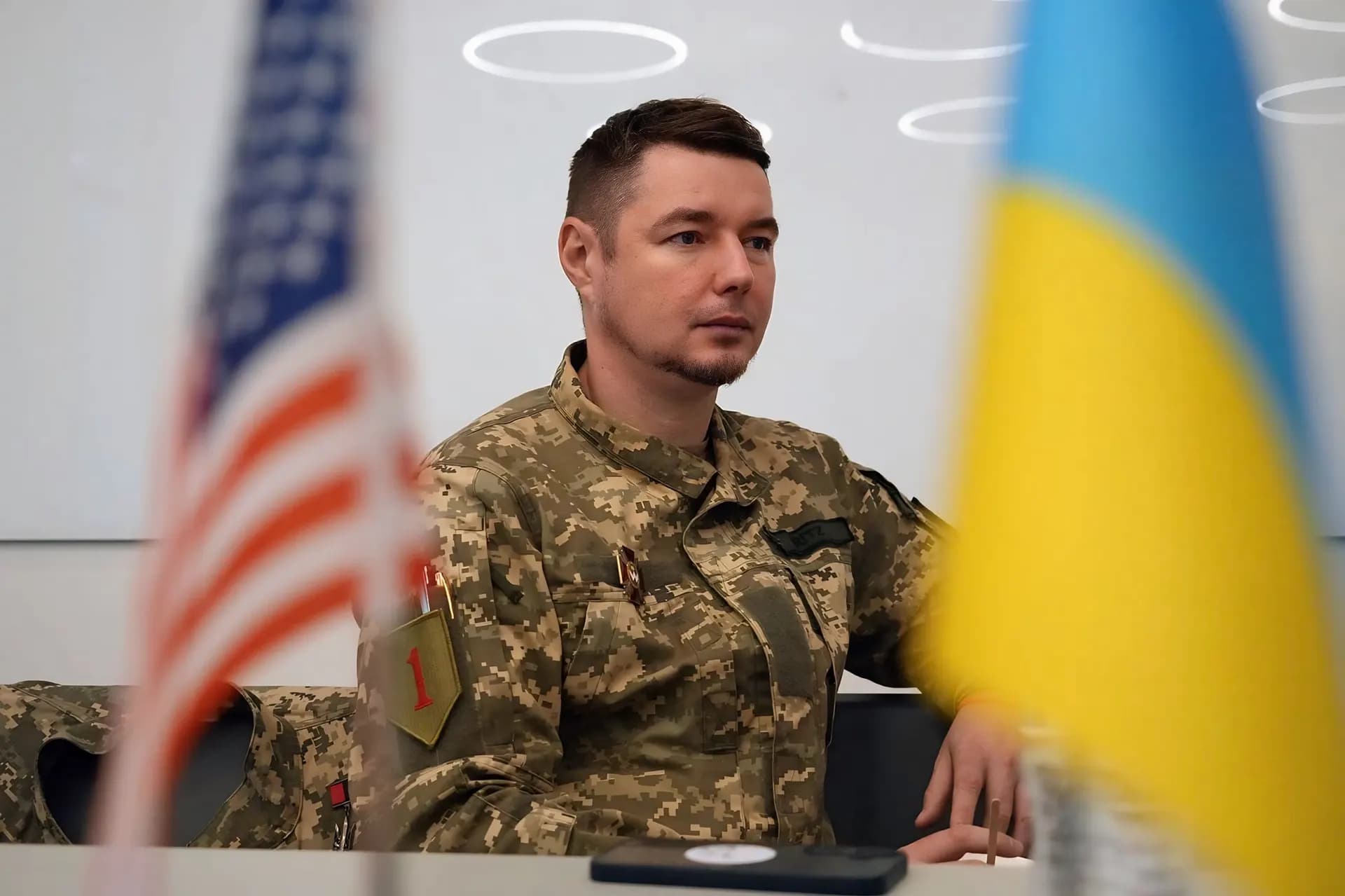
Mykola is a veteran of the war, a former company commander in Ukraine’s 47th Separate Mechanized Brigade, known as Magura, a recipient of the Order of Bohdan Khmelnytsky, a lawyer, writer, and civic activist.
Behind those titles is a life that has demanded difficult choices time and again.
Mykola wrote his book in dedication to his fallen brothers- and sisters-in-arms. He conceived it as an attempt to make sense of what Ukraine has endured since the Maidan Revolution.
The four themes of its title seem to trace four defining chapters of a human life.
Maidan — when dignity ceases to be an abstract ideal and becomes a personal conviction for which people are prepared to take responsibility.
War — when those convictions face their most merciless test. When a commander bears responsibility not only for accomplishing a mission, but also for the lives entrusted to his care.
Love — the inner strength that allows us to remain human amid destruction and loss.
And struggle — which, as it turns out, does not end when a soldier leaves the battlefield.
The Ukrainian counteroffensive of 2023 occupies a particularly significant place in the book. Mykola took part in those operations, commanded soldiers, and knows all too well the human cost of decisions that, to the civilian world, often appear as little more than lines in a military briefing.
In one publicly released excerpt, he writes:
“We fought while the country danced in nightclubs.”
Harsh? Undoubtedly.
Unfair to those who spent that same time working, volunteering, saving lives, and supporting the armed forces? If taken as a sweeping generalization, yes.
Yet I believe something more important lies beneath the severity of those words: the painful recognition of the divide that can emerge between the front lines and the home front. Between someone for whom war is a daily struggle for survival and someone for whom it has gradually become part of the familiar background noise of the news.
And that is a question we cannot simply avoid.
Are we still capable of feeling another person’s suffering with the same urgency? Have we begun to grow accustomed to loss? Has the word “hero” become so convenient that we sometimes forget the living human being behind it?
This, to me, is one of the great values of Mykola’s book.
It reminds us that the history of war is not made up solely of dates, military operations, or liberated territories. It is made up of human lives. Each one contained an entire world — families, dreams, love, and plans that some will never have the chance to fulfill.
Mykola Melnyk is a man of keen intelligence and often uncompromising opinions.
He can be blunt, ironic, and unafraid to challenge his audience. He does not seem particularly interested in telling people only what they wish to hear.
And in many ways, that is precisely what defines his character.
He does not search for elegant language when confronted with irresponsibility. He speaks openly about problems within the military, shortcomings in veterans’ policies, bureaucracy, and the need to defend the rights of service members.
And behind those words lies not theory, but experience.
In June 2023, during the counteroffensive in the Zaporizhzhia region, Mykola suffered devastating injuries that resulted in the loss of his right leg and part of his left foot.
There would be surgeries, treatment, prosthetics, and a long, difficult recovery.
One could devote many pages to describing those ordeals. But must we once again define a soldier primarily by what the war has taken from him?
I am far more interested in what it could not take away.
His intelligence. His dignity. His sense of humor. His capacity to love. His determination to act.
Mykola continues to write, meet with Ukrainian communities, assist veterans, and raise difficult questions that society might otherwise prefer to avoid.
There is profound strength of spirit in this. Not the kind proclaimed in grand declarations, but the kind revealed through everyday decisions.
At the same time, I believe something must be said clearly: veterans should never have to prove their worth through new achievements after returning from war.
They have already given an extraordinary amount. They have the right to peace, recovery, personal aspirations, and the ordinary happiness of being human.
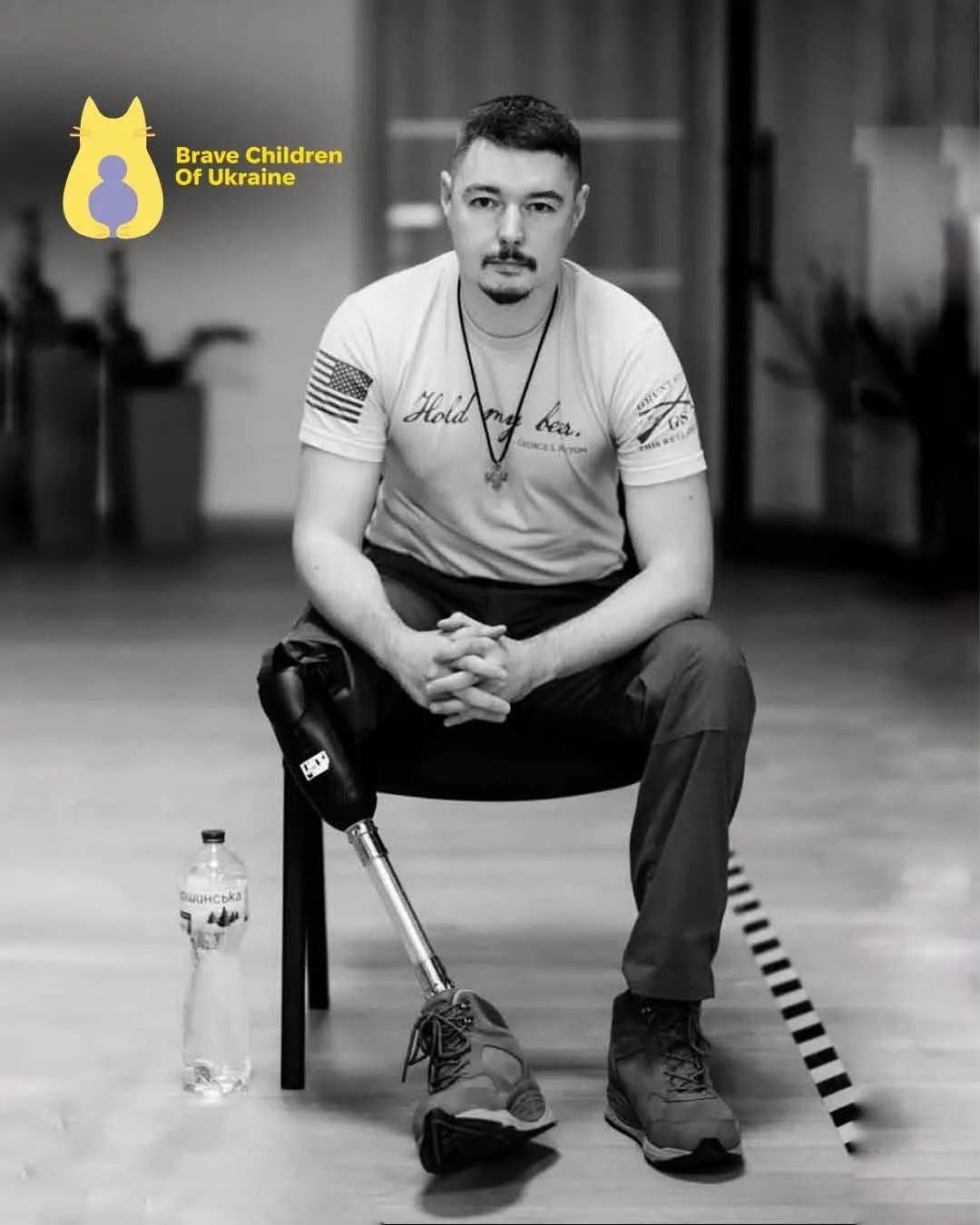
Mykola has chosen his own path — to continue working for others. And that choice deserves particular attention.
Now let us return to that seemingly small story I mentioned at the beginning.
In an interview, Mykola recalled how he and his fellow soldiers pooled their money to pay for the education of a fallen comrade’s daughter.
When asked why they had done it, his answer was disarmingly simple:
“We know he would have liked that.”
I found myself returning to those words, struck by the warmth they hold.
There is no grand rhetoric. No attempt to impress. Not even any particular emphasis on the generosity of the act itself.
Only an understanding that seems entirely natural to him: the death of a brother-in-arms does not mean the end of one’s responsibility toward him.
Perhaps this is what true brotherhood looks like. Remembering not only the person with whom you went to war, but also those he loved, those he worried about, those he dreamed of coming home to.
And when the opportunity arises, doing for those people what he himself would have wanted to do.
This story offers a particularly clear glimpse into the philosophy behind the work to which Mykola Melnyk now devotes so much of his energy.
Mykola founded Brave Children of Ukraine, a charitable foundation supporting the children of fallen Ukrainian defenders, as well as families of service members who continue to protect their country.
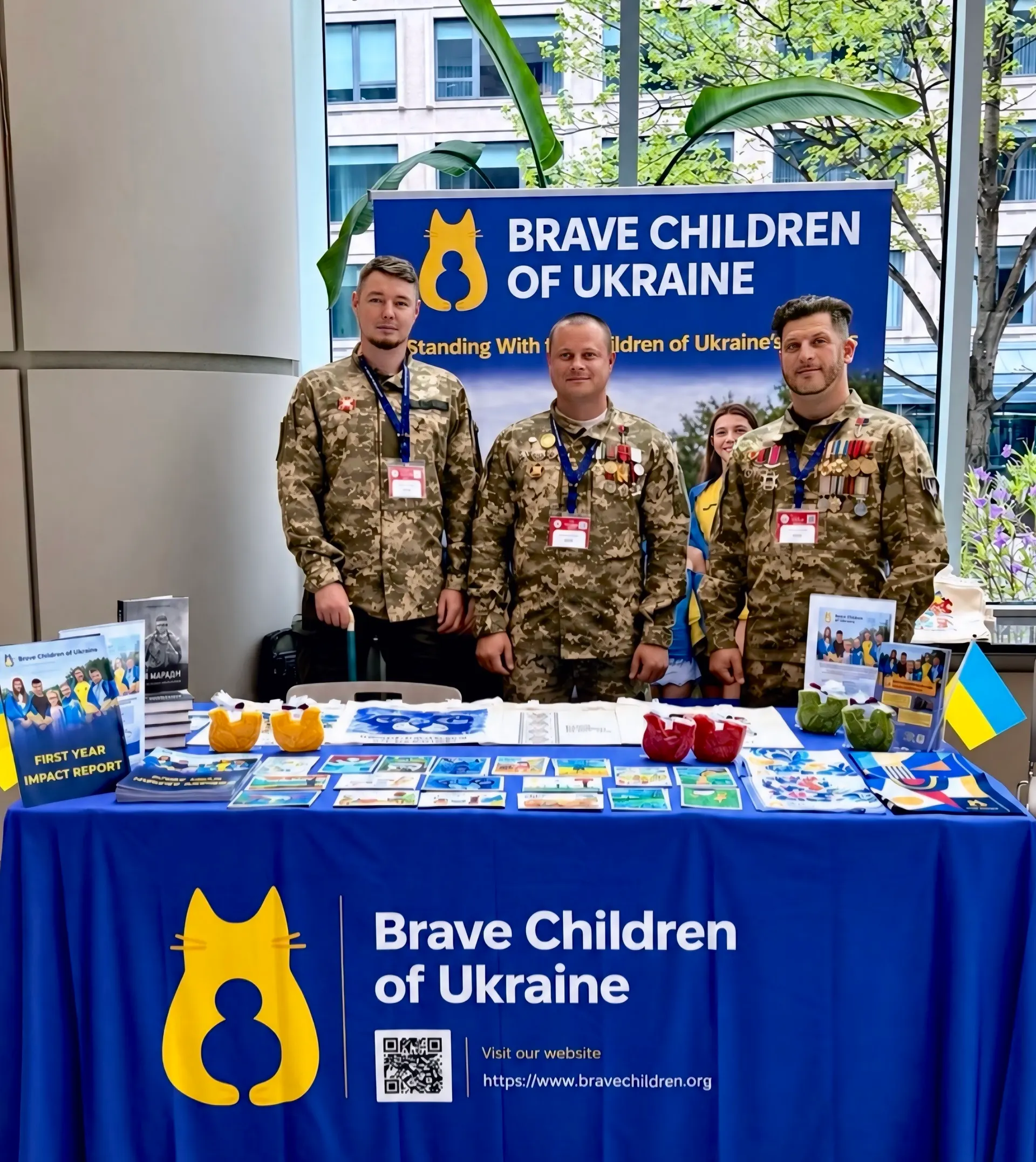
Its assistance addresses a wide range of needs, from psychological support and opportunities for rest and recovery to helping children discover and develop their talents.
Yet one area of the foundation’s work reveals the particular foresight behind Mykola’s thinking. Education.
According to figures published on the foundation’s website, its educational scholarship program supports 51 children of fallen defenders, while another 47 children receive assistance with sports and athletic development.
The foundation helps cover university tuition, supplementary education, tutoring, and opportunities for children to develop their abilities.
To me, this represents something much greater than charity in its conventional sense.
Consider this.
We can give a child a toy, organize a celebration, or help a family through a difficult time. All of these gestures matter. They are necessary and deeply human.
But what happens tomorrow? Five years from now? When that child finishes school, hopes to attend university, or must decide which profession to pursue?
Will that child have the opportunities they might have enjoyed had their father or mother returned from the war?
This is where responsibility takes on a deeper meaning.
Mykola is not content merely to ease today’s pain. Together with his foundation’s team, he works to give these children the opportunity to build fulfilling futures.
To receive an education, develop their abilities, and become independent, confident individuals.
To grow into educated Ukrainians capable not only of making their own way in life, but also of contributing to the development of their country.
There is profound wisdom in this approach.
The war will eventually end. But Ukraine’s need for educated, thoughtful, responsible people will remain.
The country will need doctors, scientists, teachers, engineers, entrepreneurs, and lawyers. People with strong professional knowledge, well-developed critical thinking, and a firm moral compass.
And the children of those who gave their lives for Ukraine’s freedom must have every opportunity to become those people.
Not because they are obliged to justify their parents’ sacrifice. No child should be forced to carry such a burden.
But because every child has the right to happiness, growth, and dreams. And because society has a moral obligation to help preserve those possibilities.
It is here, I believe, that Mykola Melnyk’s long-term vision for Ukraine becomes most evident.
His work reflects a concern not only for Ukraine’s survival in the present war, but also for the country it will become twenty or thirty years from now.
After all, a nation must do more than defend itself. It must also be rebuilt, strengthened, and entrusted to future generations.
And who will accomplish that if we fail to invest in our children today?
In one of his interviews, Mykola observed that, apart from diesel fuel, the only real currency in the army is respect.
I wish we would reflect on those words more deeply.
We Ukrainians have learned to thank our soldiers. We organize gatherings, ceremonies, and charitable events. We speak of courage, sacrifice, and heroism. And rightly so.
But genuine respect is not measured during ceremonies.
It reveals itself when a veteran needs medical treatment. When someone is looking for work. When a wounded service member must struggle to receive benefits to which they are entitled. When a person enters a public building only to discover that it is inaccessible to someone with a disability.
And here, we have considerable work to do.
It is entirely possible to deliver a flawless speech about the indomitable Ukrainian soldier and, the very next day, walk past someone who needs assistance without a second thought.
We can call veterans heroes while showing remarkably little interest in how they live after returning from the front.
Or we can begin with something more fundamental: ordinary human decency.
Respect for their dignity, their personal boundaries, their privacy, their right to work, to study, and to live full and meaningful lives.
Without condescension. Without pity that diminishes. Without demanding that they remain strong at every moment.
Those who return from war do not lose their dignity or their right to a full and meaningful life simply because their health or circumstances have changed.
On the contrary, society must recognize the extraordinary price they have paid for our freedom to live.
And we must respond to that sacrifice not only with gratitude, but with actions worthy of it.
There is a thought that emerges in Mykola Melnyk’s conversations and has stayed with me: before doing something, we ought to consider what the ultimate outcome will be.
A simple question, perhaps, but one that carries enormous responsibility.
What will remain after our decisions? After our work? After our lives?
We often measure accomplishments by how visible they are today — by the number of guests, the applause, the publications, or the money raised.
Yet not everything of lasting importance produces immediate results.
A child’s education is an investment measured in years. Its rewards are not always apparent at once. It requires patience, consistency, trust, and a willingness to remain committed even when public attention has moved elsewhere.
This is how generations of Ukrainians who built our communities abroad understood their responsibilities.
They established schools, community organizations, and cultural institutions. They preserved their language and traditions. They understood that they were building not only for themselves, but also for those who would come after them.
Today, we benefit from the fruits of their labor.
And now we have a responsibility of our own — to Ukraine, to its defenders, and to the children who will inherit its future.
That is why, for me, the meeting with Mykola Melnyk at Self reliance meant something greater than an ordinary book presentation.
It offered an opportunity to reflect not only on what one man has endured, but also on how each of us can turn gratitude into action.
What deeply impresses me about Mykola is the combination of a sharp intellect, remarkable determination, spiritual depth, and a generous heart.
He does not romanticize the world around him. He recognizes its contradictions and failures. He is unafraid to speak about difficult subjects. Yet he has not lost faith in the possibility of changing things for the better.
And he takes concrete steps to do so.
Not everyone can establish a charitable foundation. Not everyone has the means to pay for a child’s university education. But each of us can contribute — through a donation, practical assistance, sharing information, or offering our own time and expertise.
Let us support Brave Children of Ukraine.
Let us help the children of Ukraine’s defenders pursue an education, develop their abilities, and build futures of their own.
Let us remember those who are defending Ukraine today, those who have returned from the front, and the families of those who never will.
And let us remember that true gratitude does not end when a ceremony is over.
It begins when we accept responsibility.
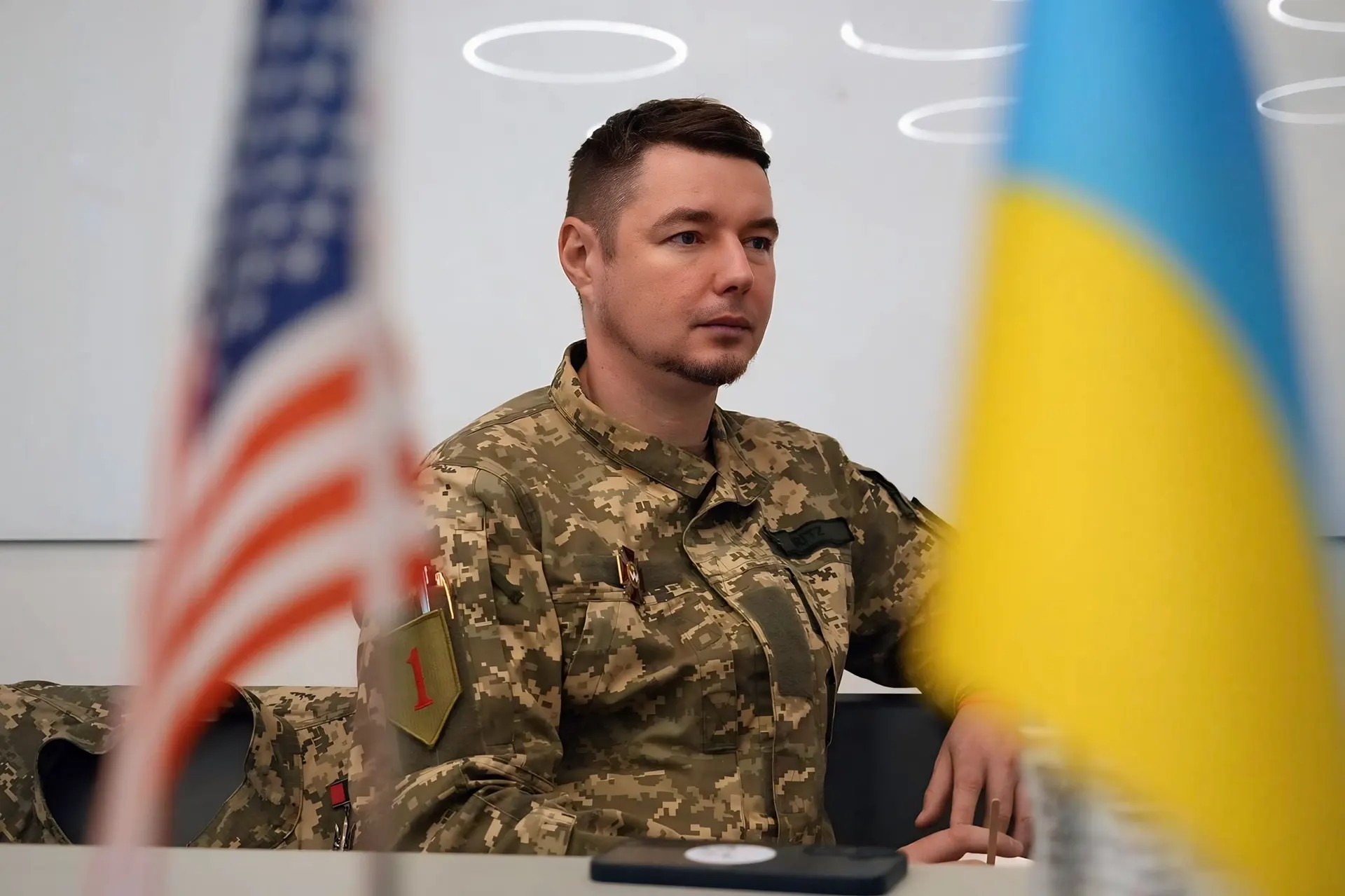
As I come to the end of this story, I find myself returning once more to that seemingly modest act.
The daughter of a fallen Ukrainian soldier has been given the opportunity to pursue her education. She will learn, grow, and build her own life. And within that future will be a small but meaningful part of the care shown by the men who once fought alongside her father.
Perhaps one day she will not even know every detail of how his brothers-in-arms helped make her education possible.
But is that really what matters?
What matters is that she has a future.
And suddenly, Mykola Melnyk’s words carry an even deeper meaning:
“We know he would have liked that.”
I believe he was right.