What Putin Hopes For
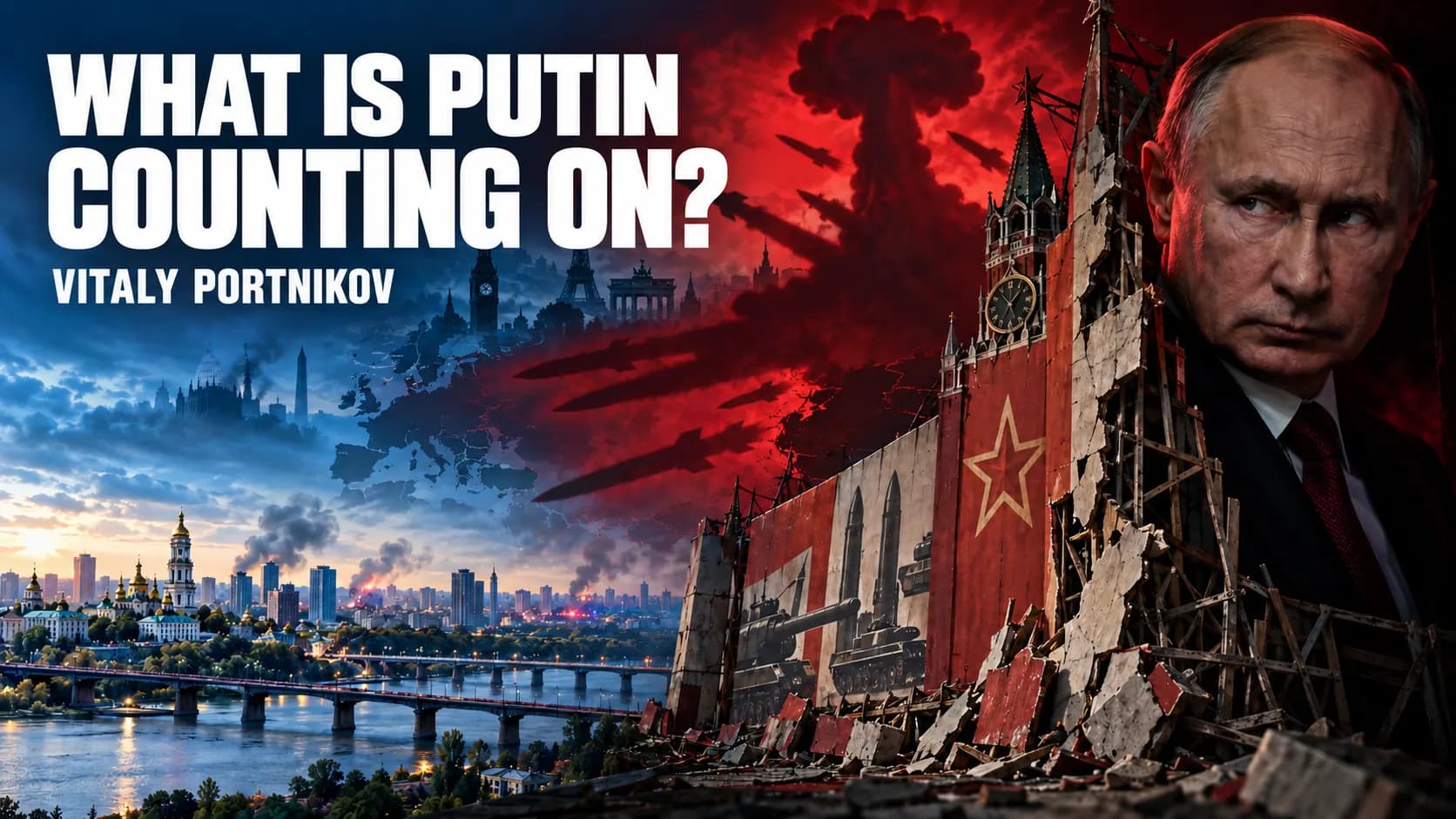
In response to the question of what exactly Putin hopes to achieve four and a half years into the Russian-Ukrainian war, in a situation where his troops, who were supposed to capture at least the entire Donetsk region in the first months after the attack (and in fact, according to Putin's plan, they should have captured it back in 2014), against the backdrop of continued sanctions and the beginning of Ukrainian strikes on Russian oil refineries, there is a clear and understandable answer.
Putin hopes for fear.
Trading in fear is a favorite political tactic of the Russians, one they have been employing for centuries when they need to mask their own weaknesses and problems. The "Potemkin villages" of the imperial favorite Prince Potemkin — cardboard settlements with which the nobleman tried to justify to Catherine II the lack of development and corruption in the Ukrainian lands — have long become one of the main symbols of Russian statehood for the entire world.
But the main Russian "Potemkin village" is the fear of Russia.
Putin hopes that Ukrainians, in the fires after Russian strikes, will capitulate in panic and no army will be needed, as all of Ukraine will be in his pocket. Putin hopes that Europeans will be frightened of war with Russia and will vote for politicians who will stop helping Ukraine, but will again agree to launch pipelines with Russian gas.
Putin hopes that Americans will always fear a nuclear conflict with Russia and therefore choose an extremely cautious model of behavior with him. Of course, he will feed representatives of the current administration with promises of joint business, but the main thing for him is that they are afraid. That is why his missiles strike Kyiv bridges — not to destroy, but to frighten. That is why, on the eve of the regional elections in Germany, which ended with the triumphant performance of the ultra-right and also pro-Kremlin "Alternative for Germany," the Russians staged a whole firework of sabotage in the eastern lands of the country. That is why Russian propagandists, and even the entire Minister of Foreign Affairs Lavrov, warn of a "very short war" with Europe. That is why during his last speech at the Valdai Discussion Club meeting, Putin was already talking about nuclear war almost as an inevitability — this is already addressed to the Americans, such a gun that is already hanging on the stage of the Russian president's political theater.
It cannot be denied that Putin knows how to trade in fear. The Russians have a tradition, experience, and most importantly, a desire for this: it is in the pervasive panic around them that they find true satisfaction. Take a walk in the evening around some outskirts of Nizhny Tagil or Cherepovets and then you will understand everything, without my explanations.
If we get scared — we lose, no matter what our actual positions and capabilities are. This is exactly what he is counting on.