Recipe for Memories
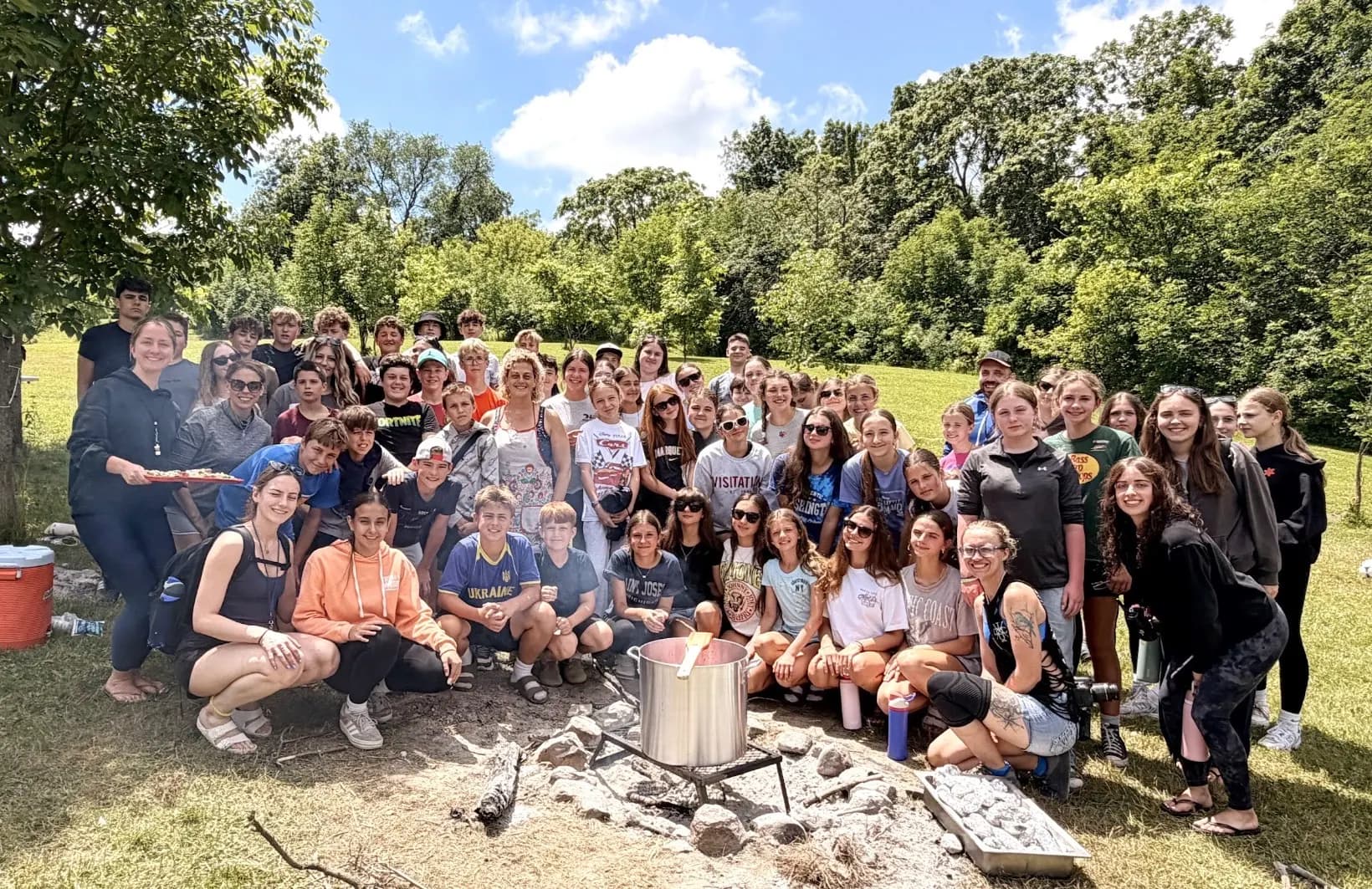
Summer is coming to an end, children are returning to school, the last cucumbers are being harvested from the garden, and memories of the SUM summer camp still surround us. The sleeping bag has not yet found its place back in the closet. A photograph of your group is already proudly displayed on the bedroom shelf. Registration opens for another year of weekly meetings. Around the family dinner table, stories of funny incidents from the camp come alive again, and conversations begin: "When will we go to camp next summer..."
Having visited various SUM homes and participated in summer camps at several of them, I can say that a SUM camp can be very different depending on where in the world you are. The scenery may change, but the traditions are almost indistinguishable. Yet, there is something that remains unchanged: Ukrainian traditions, a sense of community, and the memories we bring home. And although it is nice to return to your own bed after camp, soon you start dreaming about the next summer.
This summer marked five years since I began working as the head counselor at the SUM "Oselya Beskyd" camp in Baraboo, Wisconsin. During this time, I have learned a lot—about organizing a camp, working with youth, and even about myself. Yet, each summer brings new surprises and reminds me how much more I have to learn.
I love traditions, especially Ukrainian ones. But I quickly tire of doing everything the same way every time. So every year, I think about how to preserve traditions while also engaging the youth in new ways. This summer, I found the answer in cooking. One of the new ideas I wanted to implement at the camp was to offer children the opportunity to prepare traditional Ukrainian dishes themselves. I had heard that cooking classes had been held at the camp many years ago, but I wasn't quite sure how to turn this idea into a meaningful educational session.
Inspiration came before the camp when I attended the annual general meeting of the Ukrainian Women's Association for the Defense of Four Freedoms of Ukraine (UWADFFU), Alla Horska Branch. During the meeting, the conversation turned to a Ukrainian cookbook recently published by the Branch. The idea for the cookbook arose a few years ago. Collecting family recipes and traditions and writing accompanying articles gave the Branch members the opportunity to preserve Ukrainian family recipes and traditions. It took time to compile, edit, and print the book, but eventually, it saw the light of day. Several hundred copies were printed and sold. It was especially gratifying to see family recipes on the pages of the book—alongside stories and information about traditional dishes. Then a pleasant problem arose: all the copies were sold out. They needed to think about an additional print run, but how to determine how many books to print and whether there would be demand for them?
During the discussion, I, as the head counselor, saw an opportunity to turn the cookbook into a camp activity. I raised my hand and suggested inviting a member of UWADFFU to the camp: let her talk about the organization, present the book, and cook several dishes with the children using its recipes. After all, children are our future. It's not enough for our children to just know what borscht, sandwiches, or a pie are. For the dishes and the family traditions associated with them to be passed down from generation to generation, someone has to learn how to make them. UWADFFU and SUM member Andrea Krutyak agreed to come to the summer camp, talk about UWADFFU as an organization, present the cookbook, and cook together with our youth.
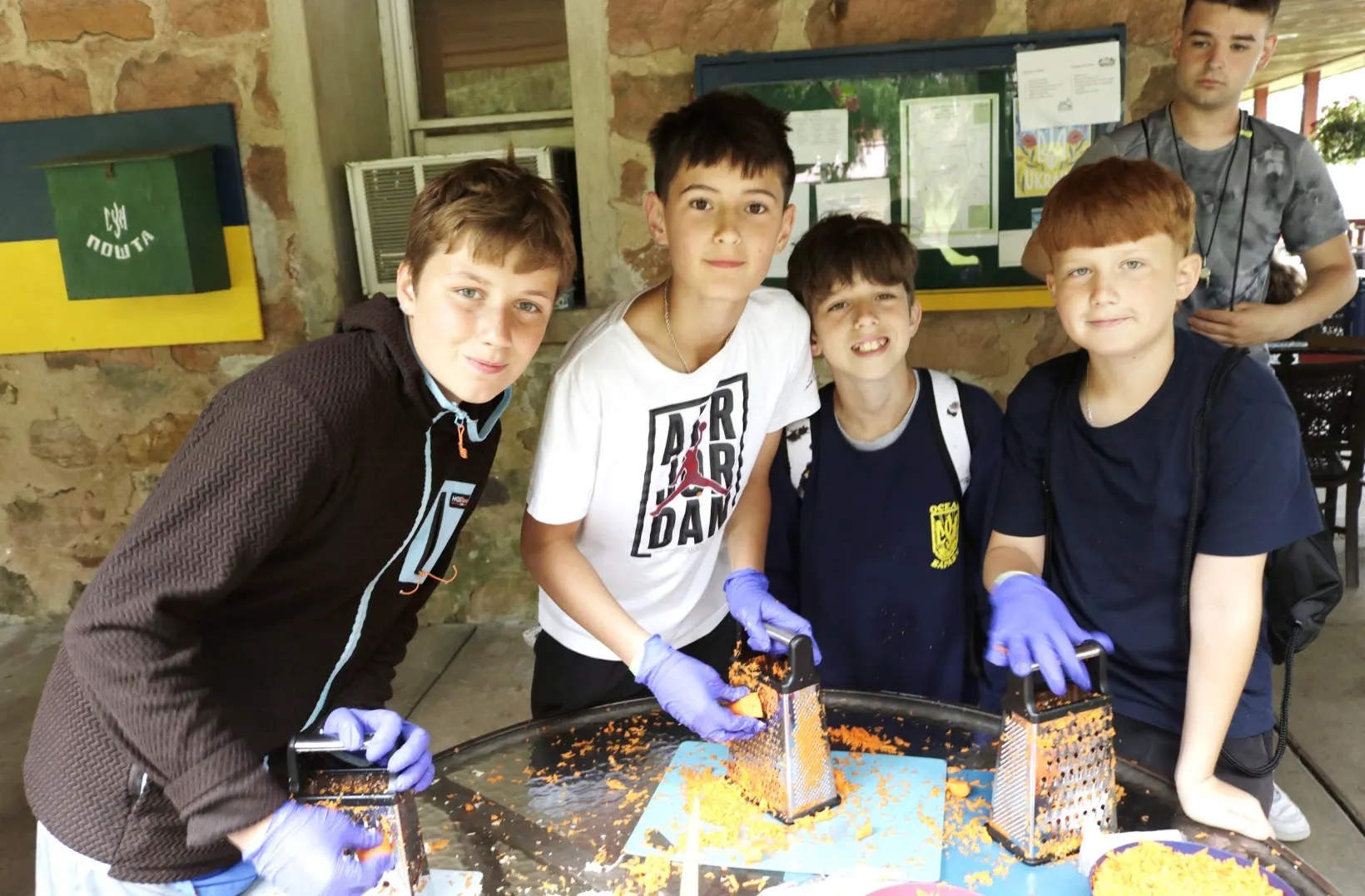
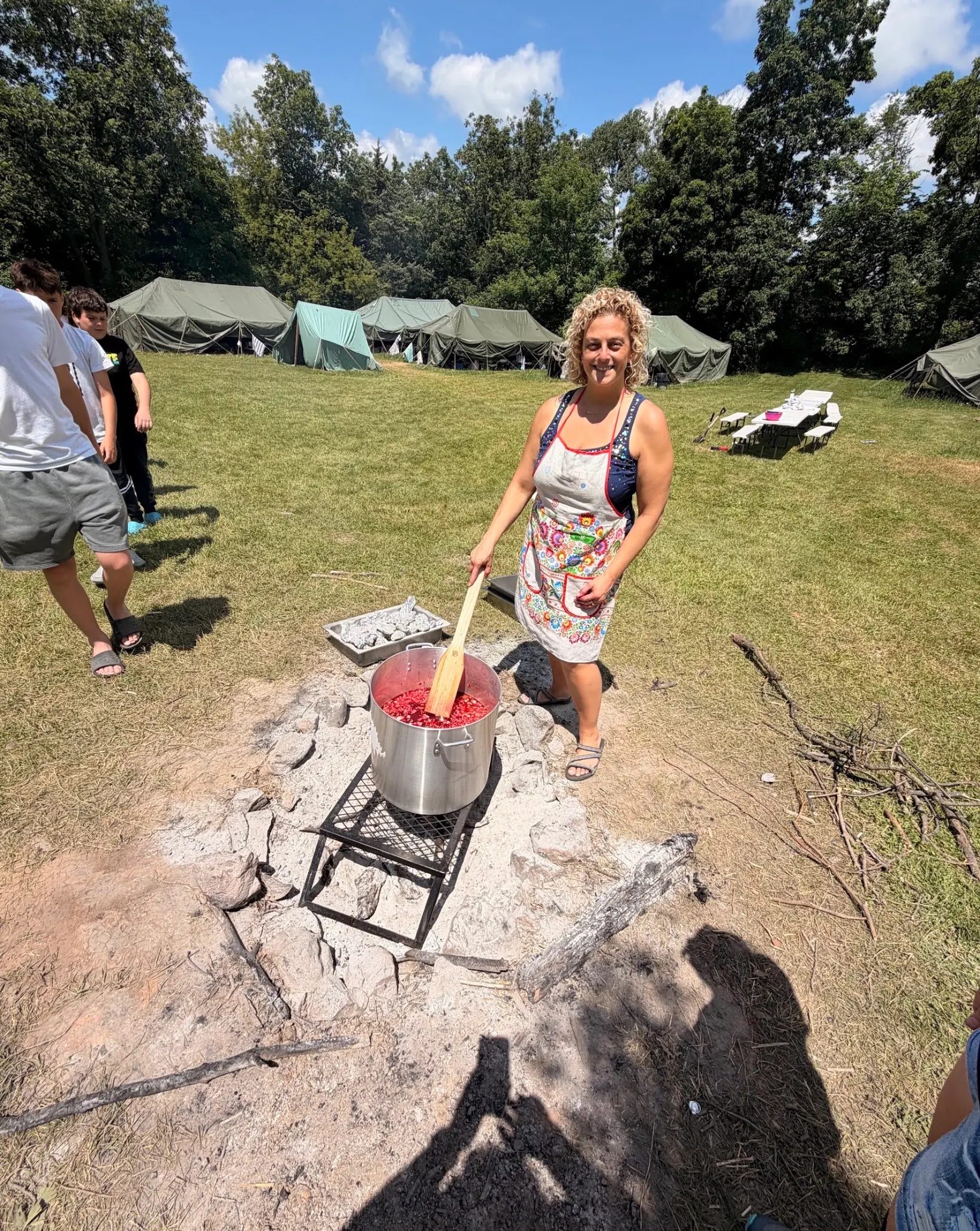
When the day of the activity arrived, I must admit, I was nervous. We had to peel piles of beets and carrots, chop onions, and carry water for the borscht from the water source to the campfire. For our famous Ukrainian sandwiches, the children had to take knives in hand and slice the ingredients. And then there was the pie: flour and butter that needed to be mixed by hand, as well as fresh apples and plums for the filling. Teenagers. Knives. Open fire.
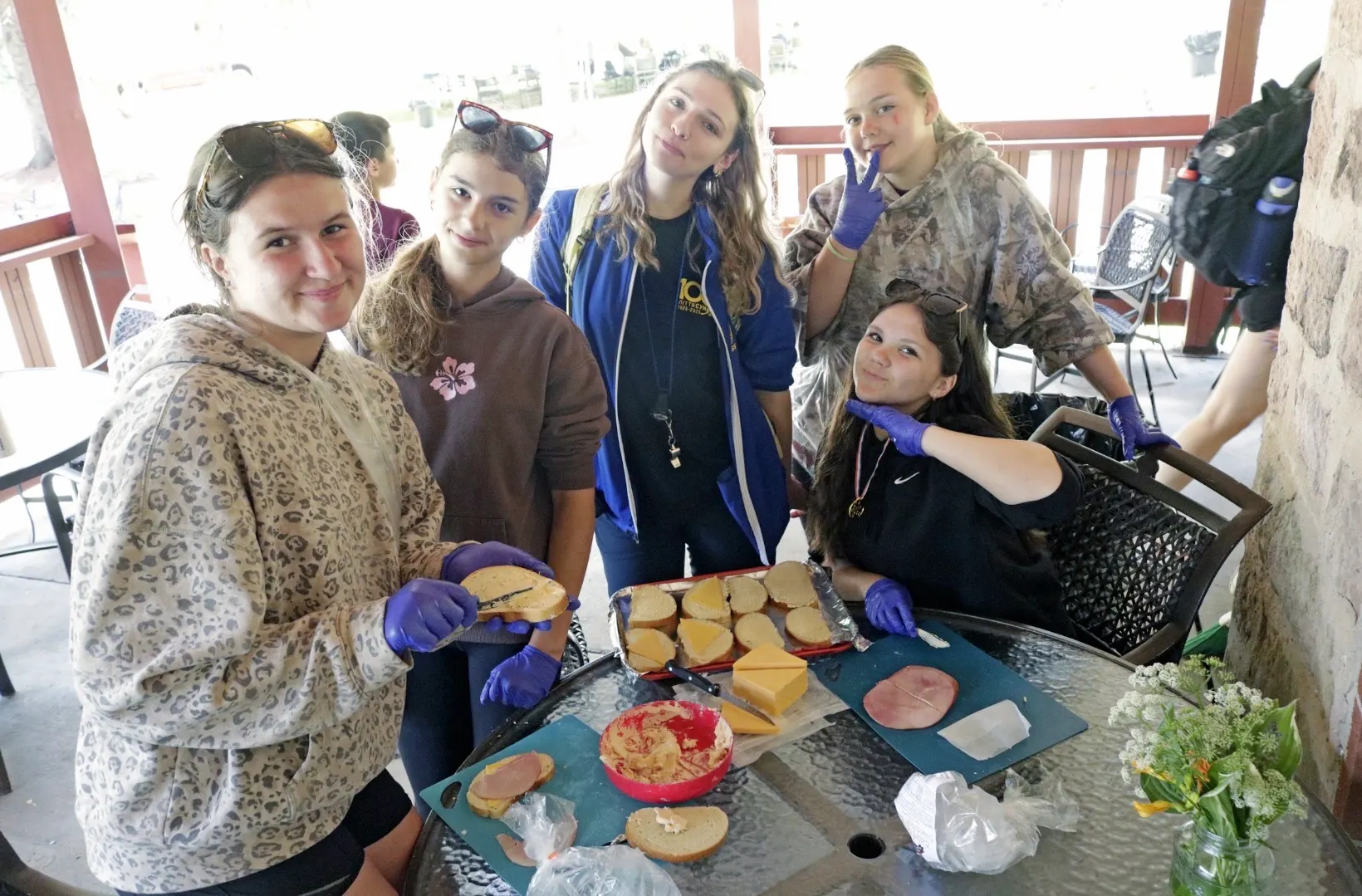
I told the cooks not to prepare lunch for us—we would manage on our own! And then I thought: what have I gotten us into?
And suddenly, we found ourselves in the midst of the action. Anyone who works with teenagers knows that it can be difficult to engage them. But that day, the children quickly came together: everyone had their task and took it seriously. The children asked how to properly peel and slice vegetables, and the counselors ensured that everyone worked safely with the knives. The children washed vegetables, carried water, stirred the contents of pots, prepared ingredients, assembled sandwiches, and kneaded dough. And, perhaps without even realizing it, they were doing something much more than just preparing lunch. They were learning how culinary culture is preserved.
Traditions continue to exist not just because we tell the next generation that they are important. They survive because we invite the youth to participate in them. We put a knife in their hand and show them how to slice a beet. We allow them to get their clothes dirty with flour; we explain why their grandmother cooked a particular dish in a certain way. We allow them to make mistakes, ask questions, taste, laugh, and try again. Eventually, the borscht was ready. The sandwiches were assembled. Then it was time for the pie. And the same young people who had spent the morning peeling, slicing, carrying, mixing, and stirring, prayed and sat down to eat what they had created together.
Perhaps, many years from now, they won't remember exactly how many beets went into that pot. Perhaps they will have to look up the recipe again. But maybe one of them will stand in a kitchen, preparing borscht for their own children, and suddenly remember that summer day at "Oselya Beskyd" and how they carried water from the source and laughed with friends, looking at their hands stained red from the beets.
Ukrainian culture is not just something we inherit. It can be fun. It is something we must consciously decide to carry forward. Of course, cooking was just a small part of our summer. At camp, we learned about the history of Ukraine and discussed ways we can contribute to the ongoing fight for freedom. We crafted, swam, played games, and certainly took thousands of steps walking up and down the hills of our beloved Oselya. We prayed together, shed a few tears, laughed countless times around the campfire, and sang more songs than we could count. These are the experiences that make camp what it is.
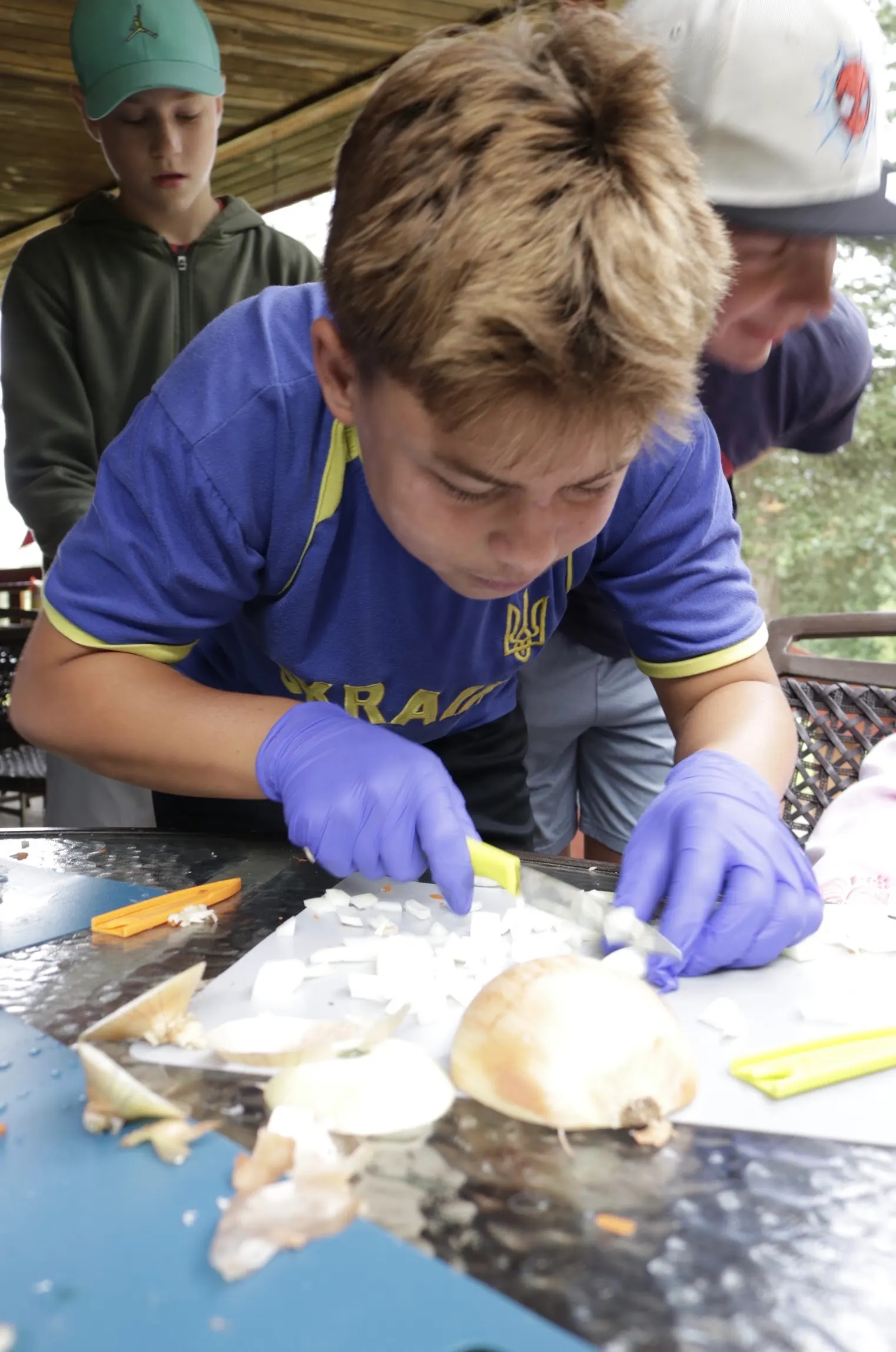
But I am especially grateful to UWADFFU and Andrea for helping us add something new this year and for giving us a day that became one of the highlights of our summer. The conversation at the meeting about whether to print a new edition of the cookbook turned into something much more. The collection of family recipes, traditions, and memories found its way to the campfire in Wisconsin, where another generation of Ukrainians was able to prepare these dishes themselves. This, in my opinion, is how traditions are passed on.
I proudly own a copy of the UWADFFU cookbook and hope that many more Ukrainian families will have a copy in their homes. It is more than just a collection of recipes: its pages contain dishes that have appeared on our family tables for generations, as well as the stories and traditions that surround them. And now, for our campers, these recipes will also preserve the memory of "Oselya Beskyd." If you don't have a copy yet, I encourage you to purchase one. By doing so, you will support the work of UWADFFU, Alla Horska Branch, and at the same time help ensure that these recipes continue to be prepared, shared, and passed down from generation to generation.
To purchase a copy, contact Kateryna Kulyas or email wadffu.allahorska@gmail.com.
Thank you to Andrea Krutyak and UWADFFU for sharing not only their cookbook with our youth but also their time and knowledge. I also look forward to continuing the collaboration between UWADFFU and SUM and finding new opportunities to unite our organizations. Preserving Ukrainian culture does not belong to any one organization, generation, or person—it is a collective effort, and our youth need opportunities not only to hear about their heritage but to feel it, participate in it, and ultimately take on the responsibility of carrying it forward. When the sleeping bags are finally packed away and another year of SUM meetings begins, I hope our children will carry with them memories of this summer at camp. Because camp is not just those two weeks we spend together each summer. It is reminded by everything we take home: new friendships, a song, a story, a prayer, or newfound confidence. And sometimes—just a new recipe.