Day of the Ukrainian Sunflower. Why not?
On September 5, social media was abuzz with images of the brightest Ukrainian flower — the sunflower.
On this day, the organization "Orange Wave" held the first online flash mob "Ukrainian Sunflower Day." Agree: turned towards the sun, golden-orange, it seems to radiate an unquenchable hope for light. And in general, it's hard to imagine a Ukrainian summer without sunflowers. For Ukrainians scattered around the world, this flower has become a poignant reminder of their native land, the bright beauty of its warm days.
The sunflower has long become one of the most recognizable symbols of Ukraine: the image of this life-giving flower accompanies Ukrainians in celebrations, folk art, painting, and photography.
Recently, a parade dedicated to Ukraine's Independence Day took place in Chicago, where beautiful women in authentic Ukrainian attire gifted sunflowers to random passersby and children. This simple act was filled with so much warmth, joy, and hope that the image of the sunflower lingered in memory for a long time.
A few days after the parade, seeing a sunflower on the street, I couldn't pass by without inviting this "bright gentleman" for a selfie. Then I wondered: is there a separate Ukrainian Sunflower Day?
It turned out that there is indeed an International Sunflower Day — May 1. However, this is not an official international holiday, but an informal date primarily associated with the sunflower as an agricultural crop. But for Ukraine, this date doesn't quite emphasize what we would like to highlight. Because in our case, we would like to talk about the sunflower as a national symbol, not just as an oil crop (although in this sense, Ukraine has something to say, as almost 30 percent of the world's sunflower production comes from Ukrainian lands). For most Ukrainians, the sunflower is a memory of childhood, an image of the Ukrainian summer, fields, sun, and light.
I shared my thoughts about possibly holding a Ukrainian Sunflower Day with the NGO "Orange Wave" and was happy to receive support. It turned out that a simple idea can be turned into an exciting joint action if done together. Later, the Ukrainian National Museum in Chicago joined the initiative, adding a sunflower to its profile picture on Facebook.
The museum also announced that next year they plan to prepare materials from their archives related to sunflowers.
Reviewing the dates on the calendar, we found another one associated with sunflowers in the Ukrainian context.
On August 29, Ukraine commemorates the Day of Remembrance of the Defenders of Ukraine who died in the struggle for the independence, sovereignty, and territorial integrity of the state. This date is associated with the Ilovaisk tragedy of 2014. The sunflower became one of the symbols of this day because the combat actions and the withdrawal of Ukrainian troops from the encirclement near Ilovaisk took place among sunflower fields.
This connection of the sunflower with the memory of fallen Ukrainian defenders is extremely important. It cannot and should not be forgotten. But does this mean that the sunflower should remain for Ukrainians only a symbol of tragedy? Probably not. Memory is undoubtedly necessary, but... Historically, the sunflower has a much broader meaning in Ukrainian culture. It is a bright, radiant, joyful flower that reaches for the light, turning towards the sun, associated with the victory of light over darkness, with late summer, with warmth, with Ukrainian land, beauty, and life.
Yes, the sunflower field witnessed one of the most terrible tragedies of the Russian-Ukrainian war, but the flower itself did not cease to be a symbol of life, and perhaps this is its special strength. The sunflower can remind the world of Ukrainian defenders. But it can also remind the world of Ukraine itself — bright, beautiful, joyful, and unbreakable.
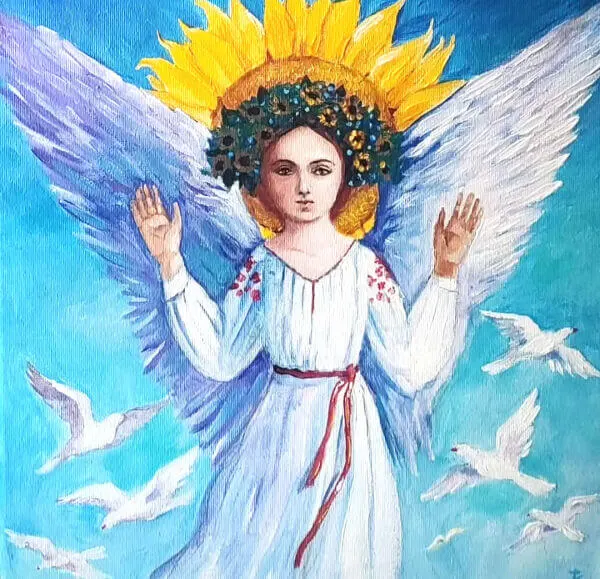
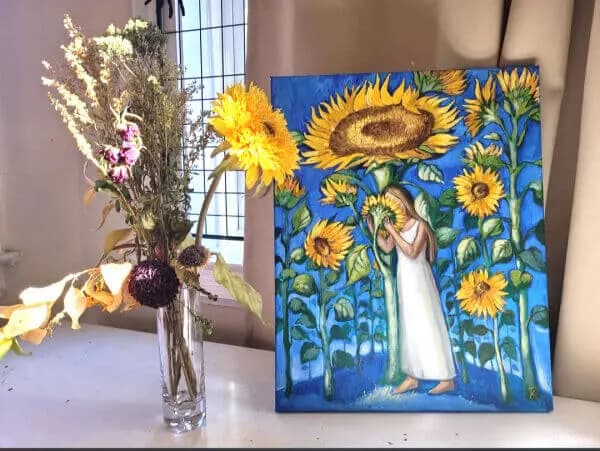
Ukrainian sunflowers are absolutely unique and amazingly diverse, just like the fates of Ukrainians scattered around the world today. This was once again demonstrated by the online flash mob I mentioned at the beginning of this publication, which attracted incredibly interesting people. I'll tell you about just a few of them, whose photos you see in the illustrations for our article.
Rostyslav Siryk from Kharkiv shared a photo of an indomitable sunflower that grew from well-compacted asphalt in Slobozhanshchyna.
Savva Svitlynsky added a photograph of a work by Halyna Ridna from the series "Sunflowers," and Valeria Nosyk, an artist from Poltava, posted her work "Sunny Symphony."
Natalia Zavizostup shared photos with bouquets of bright sunflowers. I was particularly touched by Oksana Bereza's comment under these photos: "Sunflowers of the Ukrainian soul." It seems that the image of these flowers is associated with the deepest self-awareness of Ukrainians.
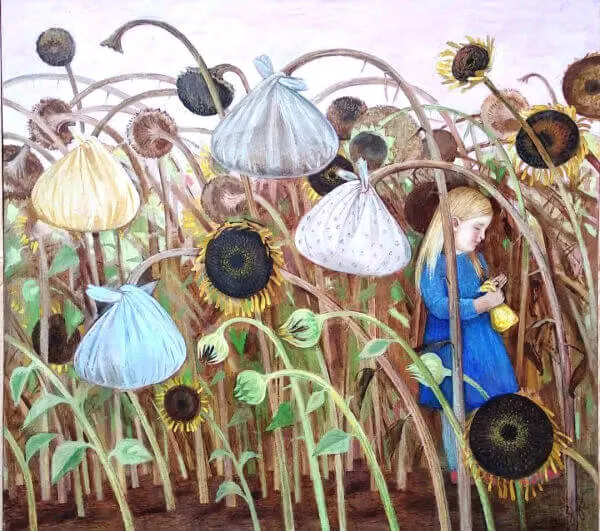
Kharkiv artist Kateryna Zub joined the flash mob with her work "Bundles."
Olena Dyadenko posted her work Sunny Girl ("Sunny Girl").
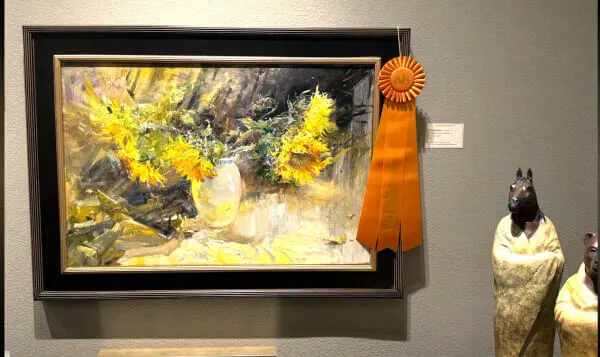
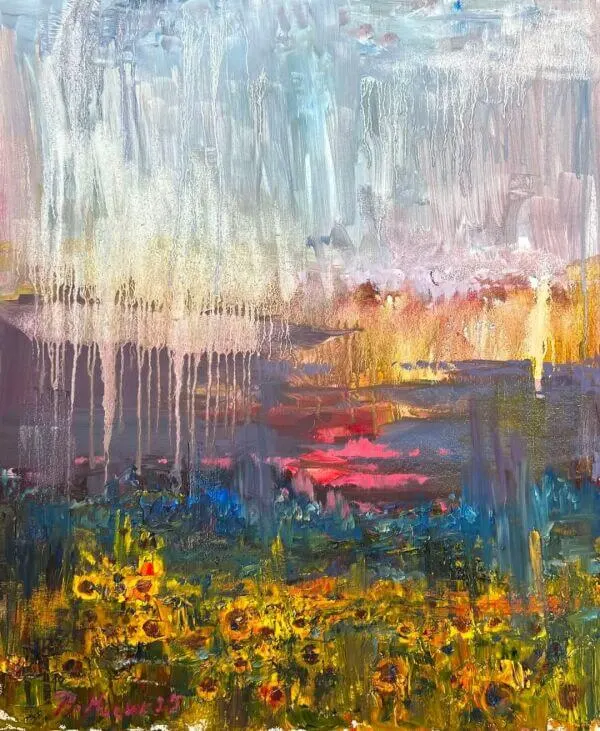
Artist Oksana Sulyma shared a selection of works by Ukrainian artists featuring sunflowers. Among them were classic works by Kateryna Bilokur and Maria Prymachenko, as well as works by contemporary Ukrainian artists. In particular, she mentioned Vira Ustyanska, who is working on the series "Project 1000 Sunflowers." It was symbolic that just before the online flash mob, which we called "Ukrainian Sunflower Day," Vira Ustyanska won third place at the 27th Annual National Exhibition of the American Impressionist Society for her painting In the Flow with Shadow — work No. 197 from her project 1000 Sunflowers. The exhibition featured 1,547 works by artists from the United States. It is also interesting that this award coincided with the days when Ukrainians were talking about the sunflower as a symbol of light, life, and resilience.
I don't have the opportunity to mention and share the colorful photos of everyone who participated in the flash mob this year. But I want to emphasize that in the proposed photos and paintings, we see different sunflowers, different stories, and different fates of Ukrainians, which together create the image of a bright, vibrant, life-affirming, and unbreakable Ukraine.
So, on September 5, 2026, we held such an event for the first time.
Yes, it's just a flash mob, or maybe — a small beginning of something bigger. Sometimes beautiful traditions start with small steps. And if we dream a little, perhaps someday at the beginning of September, Ukrainians will open social media and see thousands of sunflowers, and to this tradition — in all possible ways to popularize and honor this flower — Ukrainian schools, cultural centers, museums, artists, public organizations, and just people who love Ukraine will join.
The image of the sunflower needs no translation.
Sunflower Diplomacy is understood without words and is a bright reminder to the world of Ukraine, which, despite everything, continues to grow and reach for the light.
And finally. If, after reading about Ukrainian Sunflower Day, you suddenly feel an irresistible desire to share your photo with sunflowers but regret missing the flash mob opportunity, I think it would be quite appropriate to post your photo with hashtags by the end of September:
#UkrainianSunflower #UkrainianSunflower #SunflowerDiplomacy #SunflowerDiplomacy.