Global Leadership of Ukrainians: How the Kyiv-Mohyla Foundation of America Shapes Education, Partnerships, and International Support for Ukraine
Why did I go to the World Ukrainian Summit in Bern?
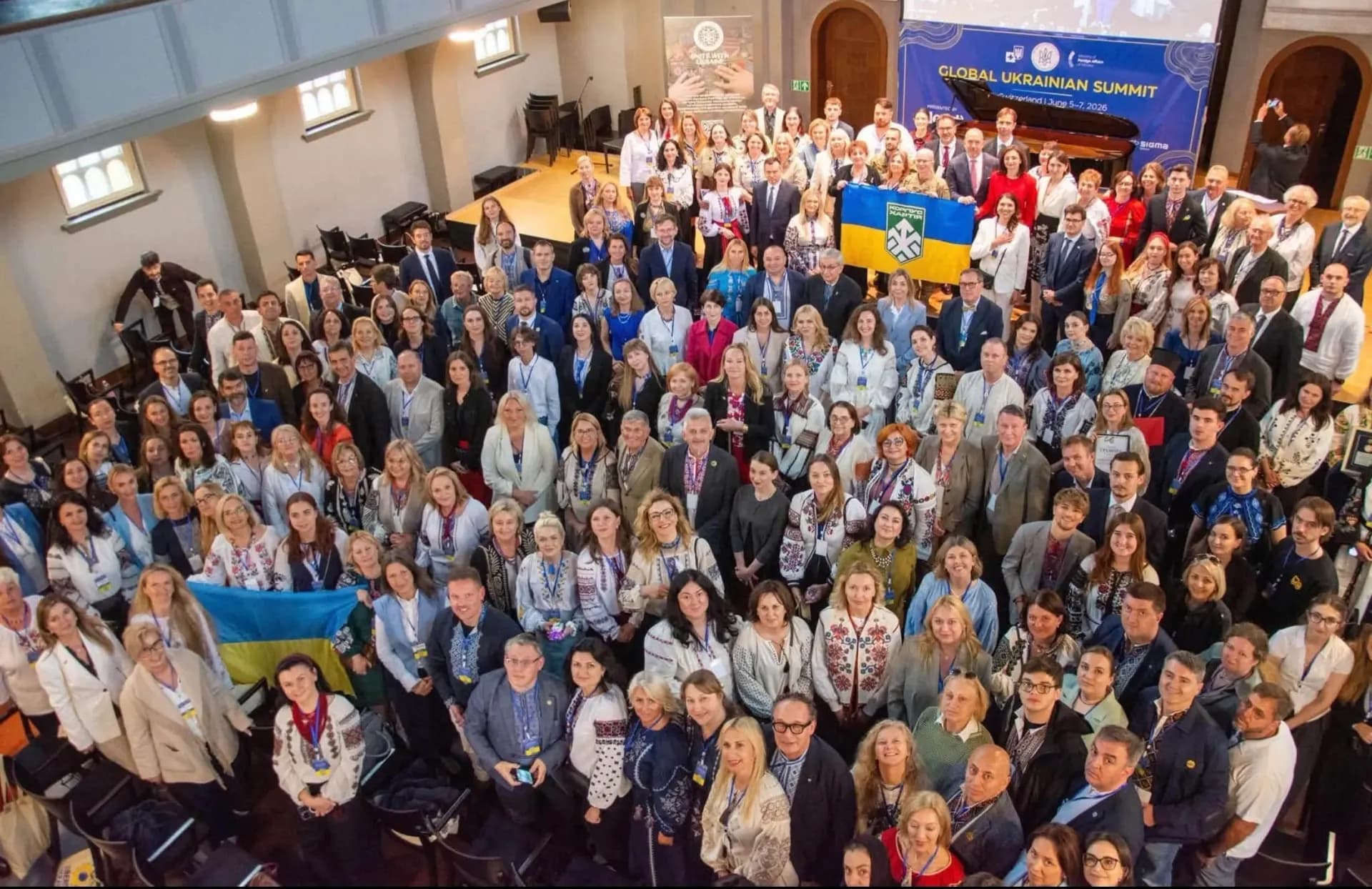
When I received a message from the Vice President of the Ukrainian World Congress in America, Marta Farion, inviting me to participate in the World Ukrainian Summit, I didn't hesitate for a moment. It was one of those decisions made instantly, and today I am sincerely grateful for the trust of the KMA Foundation to be delegated to the important forum of the Ukrainian World Congress, which took place in Bern from June 5-7, 2026. The event was organized by the Ukrainian World Congress in collaboration with the Ukrainian Society in Switzerland and with the support of the Ministry of Foreign Affairs of Ukraine.
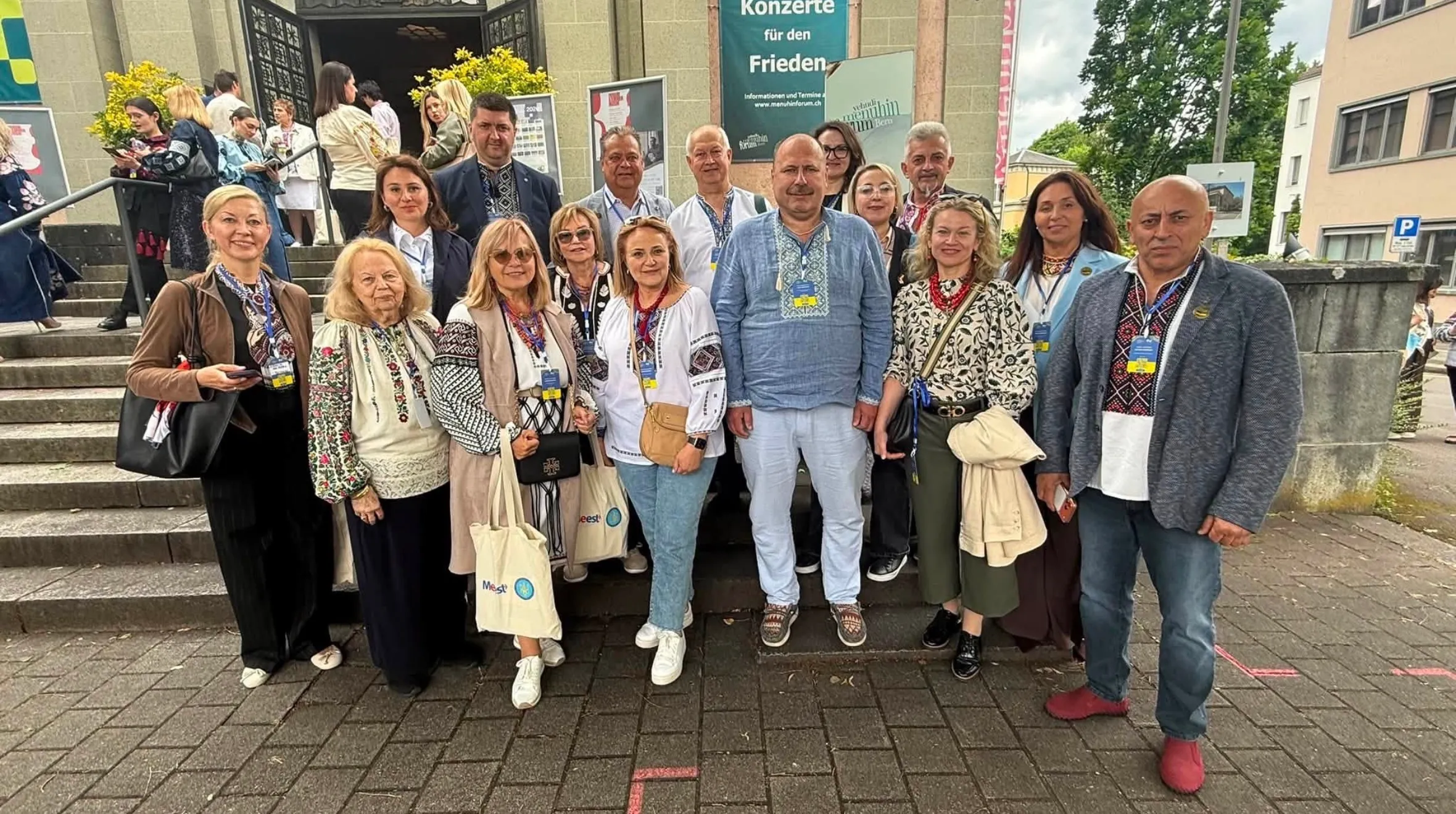
The theme of global unity of Ukrainians is one of the areas of my activity, something I have been living for over thirty years, working in the Ukrainian community of Chicago, convincing American friends to support Ukrainian education, culture, and institutions. My professional experience combines 33 years of work on Ukrainian radio in Chicago and 22 years of experience as a curator at the Ukrainian National Museum and three years at the KMA Foundation, which includes fundraising and public diplomacy. These directions, media and cultural, have shaped my worldview.
I chose the theme of global leadership of Ukrainians not by chance. The Kyiv-Mohyla Academy, founded by Metropolitan Petro Mohyla in the 17th century, was from the very beginning part of the European intellectual space. Its graduates created educational and spiritual centers, developed book printing, spread ideas of freedom and responsible service to society far beyond Ukraine's borders. Students from various Eastern European countries studied at the academy, and its alumni continued their education at leading universities of that time in Europe. After centuries of trials and the revival of independent Ukraine, the Kyiv-Mohyla Academy has once again become a center for forming a new generation of Ukrainian leaders. And today, as Ukraine fights for its freedom, we are experiencing a historical moment that in many ways resonates with past eras of state-building. That is why the theme of global leadership of Ukrainians is for me a continuation of the Mohyla tradition of openness to the world and service to society. Today, Ukrainians demonstrate to the world an example of resilience, responsibility, and the ability to self-organize even in the most difficult circumstances. Our task is to turn this strength into long-term global leadership. The Kyiv-Mohyla Academy Foundation in America sees its mission in supporting this process. Together with the Ukrainian diaspora and international partners, we invest in education, youth, and the development of future leaders.
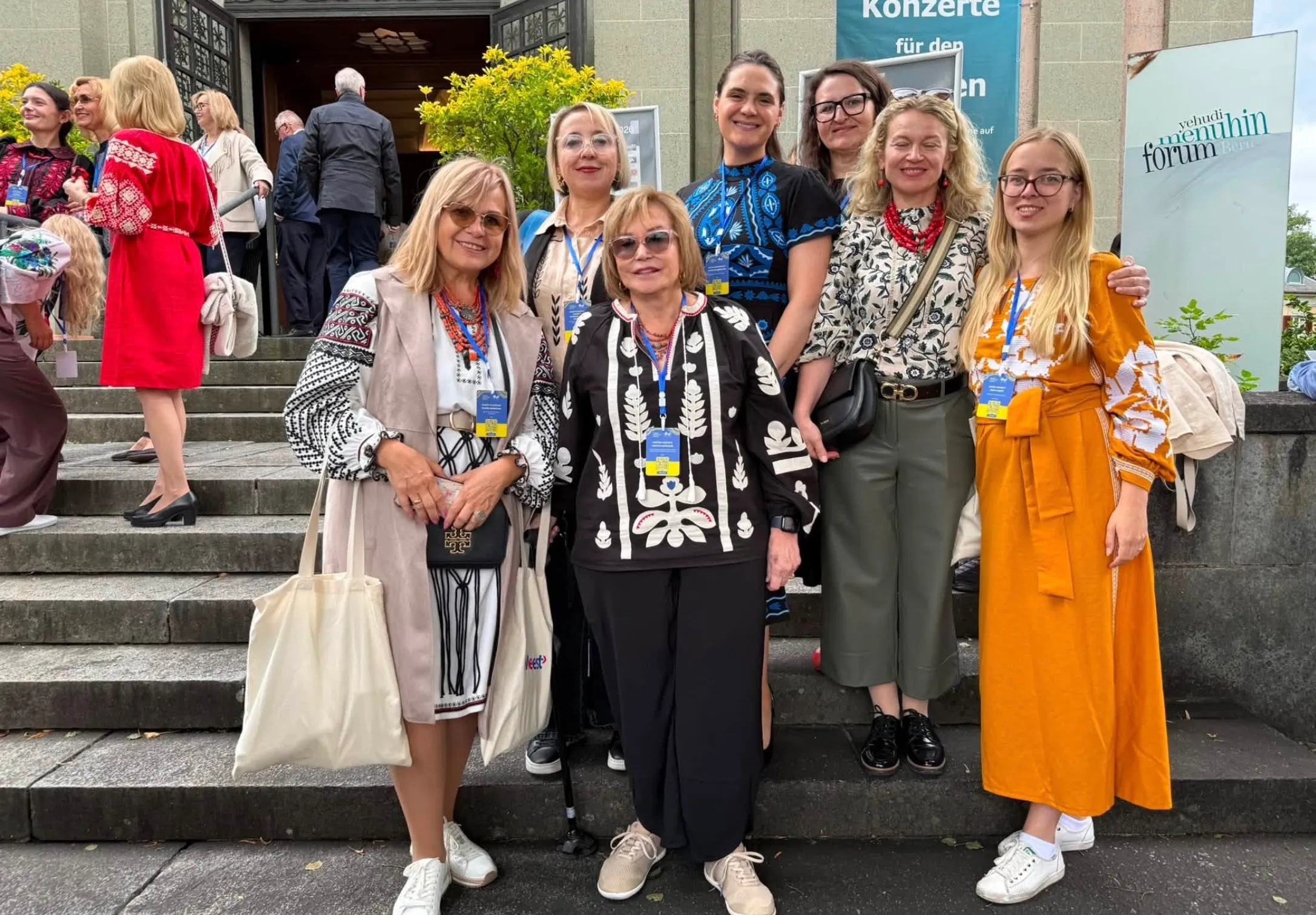
Bern greeted us with the calm of old Europe. Tourists photographed the famous Zytglogge clock, and on the narrow streets alongside German and French, Ukrainian was heard. The city, majestically overlooked by the Swiss Federal Parliament, turned into the capital of the global Ukrainian community for a few June days. Over 350 delegates from more than 50 countries gathered here, from Canada and the United States to Australia, from Brazil to Japan, from South Africa to the Scandinavian countries. When you look at such a map of Ukrainian presence, you begin to understand how large the Ukrainian world has become. Already on the first day, I felt part of something much larger. The main topic was the future of Ukraine and the role of Ukrainians worldwide in its creation.
For many years, we have been accustomed to calling ourselves a diaspora. But in Bern, another definition was increasingly heard, namely the global Ukrainian community. Over more than a century, the face and character of the diaspora itself have changed, undergoing a moment of rethinking its role. If previous waves of emigration laid the foundation for preserving culture and traditions, one's identity, now at the forefront we have a global network of influence capable of opening doors for Ukraine, forming international support, and creating opportunities for future generations of Ukrainians. That is why it is extremely important for Ukrainians worldwide to act as a single global community.
One of the most interesting panels for me was dedicated to Ukrainians in Europe after 2022. The war has changed Ukraine and Ukrainian communities worldwide. To the millions of descendants of previous waves of emigration, millions of new Ukrainians have been added. I was struck by how much younger the global Ukrainian community has become. On stage, in the corridors, during discussions, over coffee – everywhere, there were many young people who do not wait for someone else to change the world for them. No wonder the Vice President of the Ukrainian World Congress in Western Europe, Volodymyr Kohutyak, said words that, in my opinion, became one of the main messages of the Summit: "It is important to reach out to Ukraine's friends and international organizations, as their support is extremely valuable to us. At the same time, we must strengthen young Ukrainian organizations, because they are the future of our global community."
Indeed, today the new generation of Ukrainians is forming a new image of our state in the world – modern, professional, and confident.
A very strong impression was made by the conversation about cultural diplomacy. The Vice President of the Ukrainian World Congress in Africa, Dzvinka Kachur, said something extremely important: "In the example of African countries, we see that our culture has a real impact. Our communities actively advocate for Ukraine through culture."
This is indeed true, because a concert, a book, a festival, or a children's exhibition can do as much for Ukraine as an official diplomatic reception.
Dmytro Shchukin, who works in Italy, honestly spoke about another challenge. According to him, Ukrainians need to go beyond their own information bubble and systematically work with local politicians, journalists, and societies. And the head of the American Coalition for Ukraine, Marianna Tretiak, said a phrase that, as someone who has worked in Ukrainian media in Chicago for over three decades, I especially wanted to write down: "I believe that in every part of the USA there are those who support Ukraine. We just need to find them, educate Ukrainians and Americans about Ukraine, and make these people active allies."
Probably, this is exactly what Ukrainian communities across America are doing. The President of the Ukrainian World Congress, Pavlo Grod, very accurately formulated the modern concept of Ukrainian unity: "Unity has many faces. But we are all united by a common responsibility for Ukraine. Together we are a strong, united global Ukrainian community."
High-level meetings were also important. The President of the Ukrainian World Congress, Pavlo Grod, and the head of the Ukrainian Society in Switzerland, Andrey Luzhnytsky, held talks with the delegate of the Federal Council of Switzerland on Ukraine, Jacques Gerber, and the Commissioner for Labor Market Integration of the Federal Department of Justice and Police of Switzerland, Adrian Gerber. During the meeting, they discussed support for the Ukrainian economy in wartime conditions, protection of Ukrainian refugees in Europe, and creating conditions for their future return home after the end of hostilities.
The Ukrainian side expressed gratitude to the Swiss government for its solidarity with Ukraine, shelter for thousands of Ukrainian families, and large-scale humanitarian and economic assistance amounting to 5 billion Swiss francs.
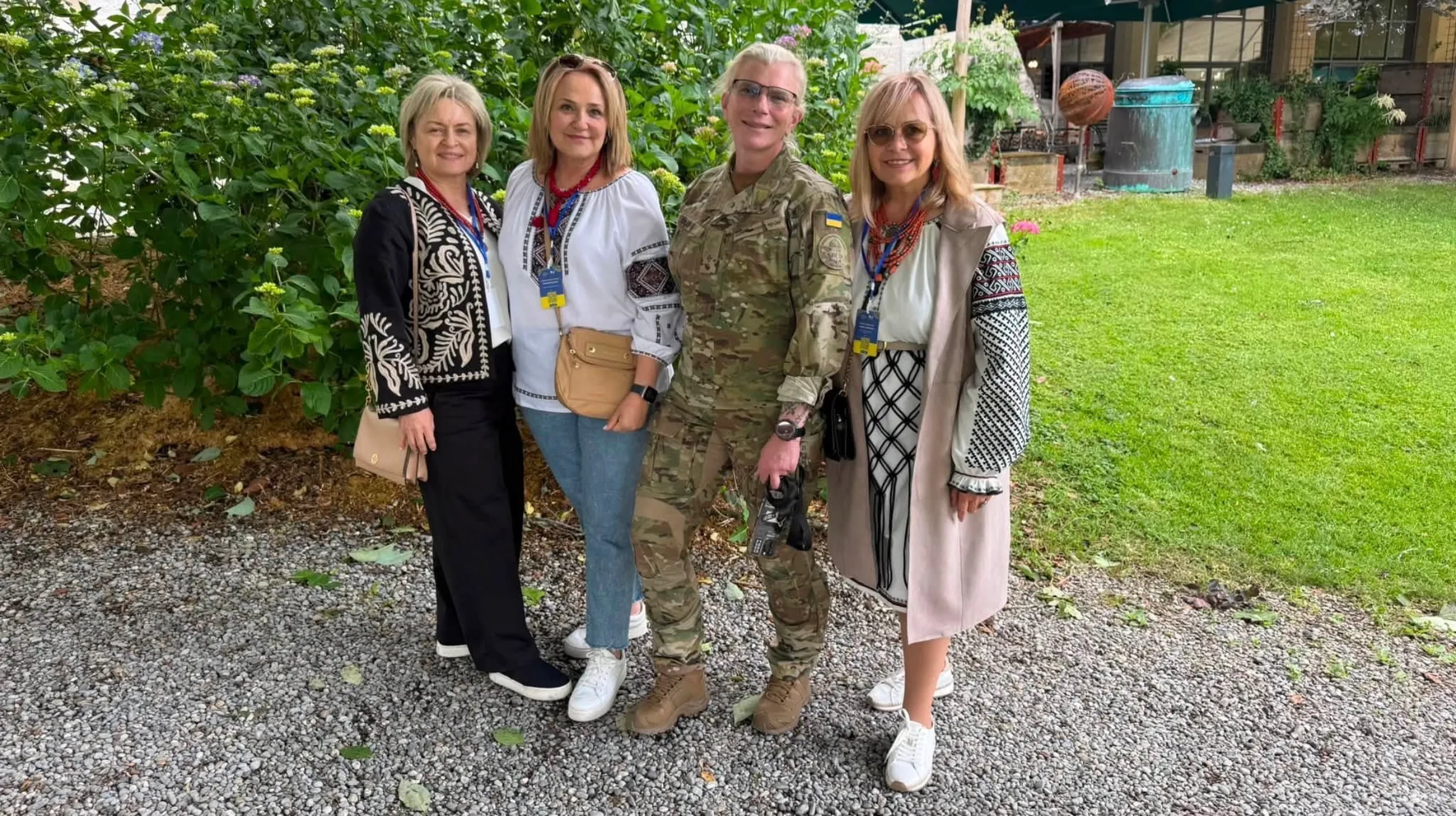
A separate and perhaps the most emotional panel was the one involving Ukrainian military personnel, veterans, and volunteers. The director of the Unite With Ukraine initiative, Andriy Potichny, emphasized: "People who have the right resources and tools at the right time win." The President of the Ukrainian World Congress, Pavlo Grod, urged communities not to be passive observers: "We cannot be commentators. We must actively build the future of Ukraine, in the public sphere, in politics, in the countries of the world."
Especially strong was the speech of the legendary paramedic Yulia Paievska (Taira), who reminded those present: "Your money buys equipment that saves our comrades. Perhaps your donation will put an end to this war."
The commander of the aerial reconnaissance company, Oleksandr Koba, noted that modern warfare changes daily and requires constant support from society, while the representative of the NGU "Khartia" corps, Ivan Kovalchuk, succinctly formulated the new reality of the front: "We fight with technologies, not people." The commander of the "Barracuda" aerial reconnaissance group, Vyacheslav Balbek, emphasized that the one who adapts and learns faster will win, while the commander of the UAV systems unit of the Main Intelligence Directorate of the Ministry of Defense of Ukraine, with the call sign Volunteer, reminded that the war remains a war of attrition, and the support of the global Ukrainian community is vital for Ukrainian defenders.
One of the most important discussions at the Summit was about the future of over 8 million Ukrainians who found themselves outside their homeland due to the war. During the panel "Protection, Support, and Interaction with Ukrainian Displaced Persons Worldwide," moderated by the board member of the Ukrainian Society in Switzerland, Oleksandr Volkov, participants discussed issues of temporary protection, integration, and maintaining connections with Ukraine.
The Commissioner for Human Rights of the Council of Europe, Michael O'Flaherty, emphasized: "There are no safe areas in Ukraine. We must not forget about the most vulnerable people and that human dignity should remain at the center of every decision." The Commissioner of the Verkhovna Rada for Human Rights, Dmytro Lubinets, supported the need to extend temporary protection for Ukrainians until the end of active hostilities, especially for children, women, the elderly, and people with disabilities. The Vice President of the Ukrainian World Congress and Member of the Romanian Parliament, Mykola-Miroslav Petretsky, emphasized the important role of Ukrainian communities as a bridge between people and state institutions. And the head of the Association of Ukrainian Organizations in Germany, Rostyslav Sukenik, noted that people need to see clear future prospects, especially when it comes to children. The discussion was complemented by the Vice President of the Ukrainian World Congress in Southern Europe, Pavlo Sadoha, and sociologist Denys Denysenko, who presented the results of a study of the Ukrainian community in Portugal.
There was also a lot of talk about the information war. The head of the Ukrainian House Foundation in Poland, Myroslava Keryk, emphasized that many stereotypes about emigrants, asylum seekers, and Ukrainians in general are actually part of Russia's information war. She stressed: "The Ukrainian language is defended on the front today. It is important for us to preserve it. Integration is not assimilation." This thought was shared by many Summit participants – Ukrainians can successfully integrate into the countries they reside in without losing their identity.
Despite the fact that the war remained the central theme of the Summit, participants talked a lot about Ukraine's future. Separate panels were dedicated to the reconstruction of the state, the role of Ukrainians abroad in post-war democratic processes, and international cooperation. The head of the Central Election Commission of Ukraine, Oleh Didenko, emphasized the importance of involving millions of Ukrainians abroad in future elections, and the Commissioner of the Verkhovna Rada for Human Rights, Dmytro Lubinets, focused on protecting the rights of citizens forced to leave Ukraine due to the war.
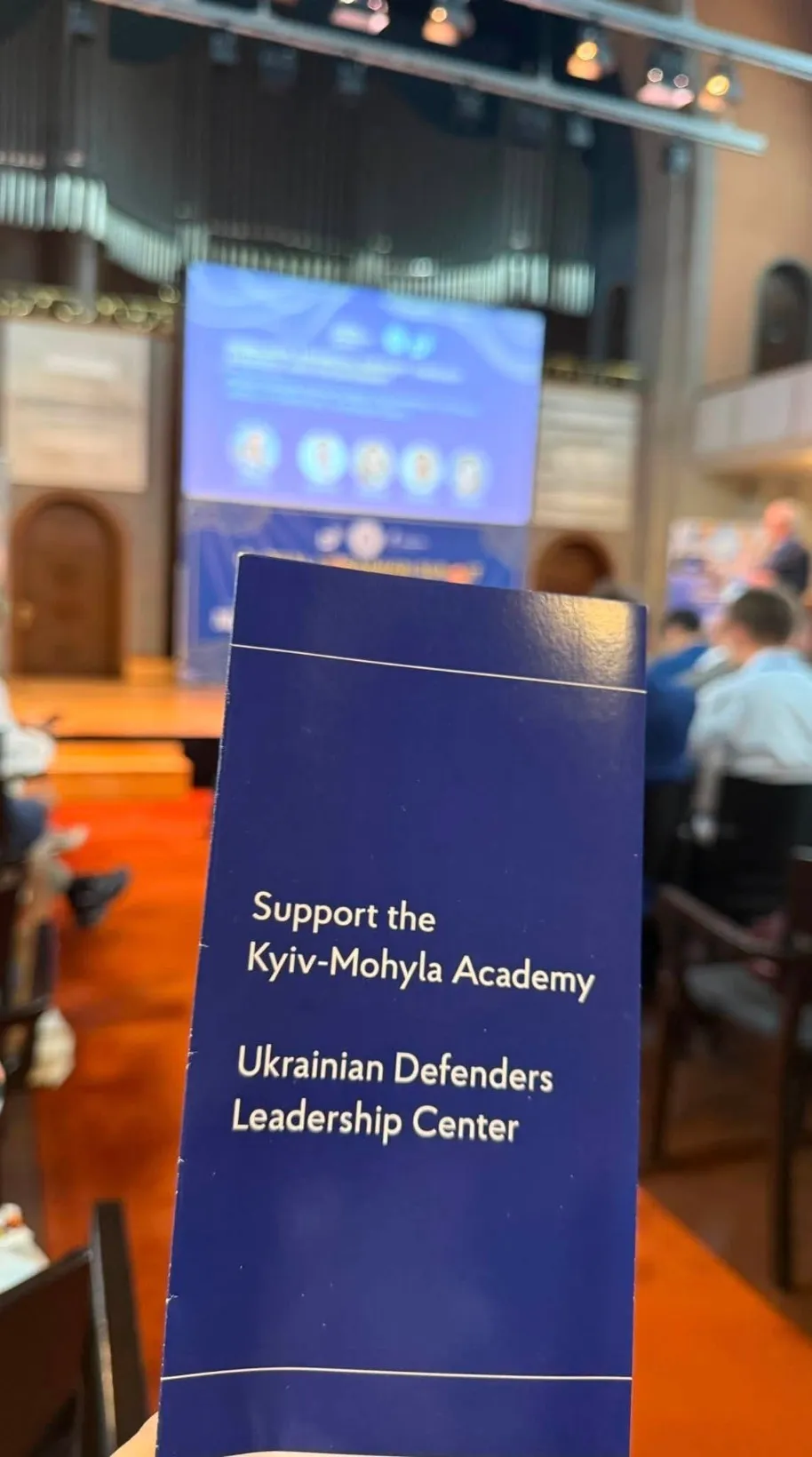
For me, as a representative of the Kyiv-Mohyla Academy Foundation in America, discussions about education were especially important. In many discussions, the idea was voiced that after the victory, Ukraine will need not only rebuilt houses and roads but also a new generation of leaders. That is why the Kyiv-Mohyla Academy is today developing programs for veterans, supporting children of war, preparing future diplomats, managers, scientists, and community leaders. At the summit, I was once again convinced that Ukrainian education is becoming part of the international space. We talked with colleagues about partnerships between universities, joint research projects, exchange programs, and opportunities for Ukrainian students.
The forum concluded with the Bern Declaration "United in National Action." Its main idea is that Ukrainians worldwide are an integral part of the Ukrainian nation. In the declaration, participants reaffirmed their support for Ukraine's victory, its European future, the restoration of territorial integrity, and holding Russia accountable for war crimes. But most importantly, it is a call for joint action: to support Ukrainian defenders, strengthen international advocacy, protect the Ukrainian language and culture, participate in the state's reconstruction, and prevent a split between Ukrainians in Ukraine and abroad.
Returning to Chicago, I thought about our youth, who are already taking on leadership and responsibility for Ukraine's future. It was especially pleasant to see at the Summit among those recognized in the "30 under 30" program two young Ukrainian leaders, representatives of the Ukrainian Youth Association of America from Chicago, Marusia Bandrivska and Oleksandra Horodyska. We are sincerely proud of their success, as it is yet another confirmation that the new generation of Ukrainians is confidently making its mark in the world.
Today we see that the global Ukrainian community is shaping the future. I sincerely thank the organizers for the high level of the summit, the opportunity to exchange experiences, and new partnerships. The delegation from Chicago also included Motria Melnyk, president of the Institute of Modern Art, delegate from the Heritage Foundation, Maria Dmytriv-Kapeniak, head of the UCCA, Illinois branch, Maria Bandrivska, Ukrainian Youth Association of America, Maria Fedashyn, delegate from the UWAA organization, Larisa Fedashyn, volunteer of the KMA organization, one of the sponsors of the scholarship program for children of war at KMA.
Together we are building a strong global Ukrainian community and bringing Ukraine's victory closer.
Photos by Maria Klymchak and Halyna Kharlamova (UWC)