Living Despite Everything
Reflections after the performance "We Must Live"
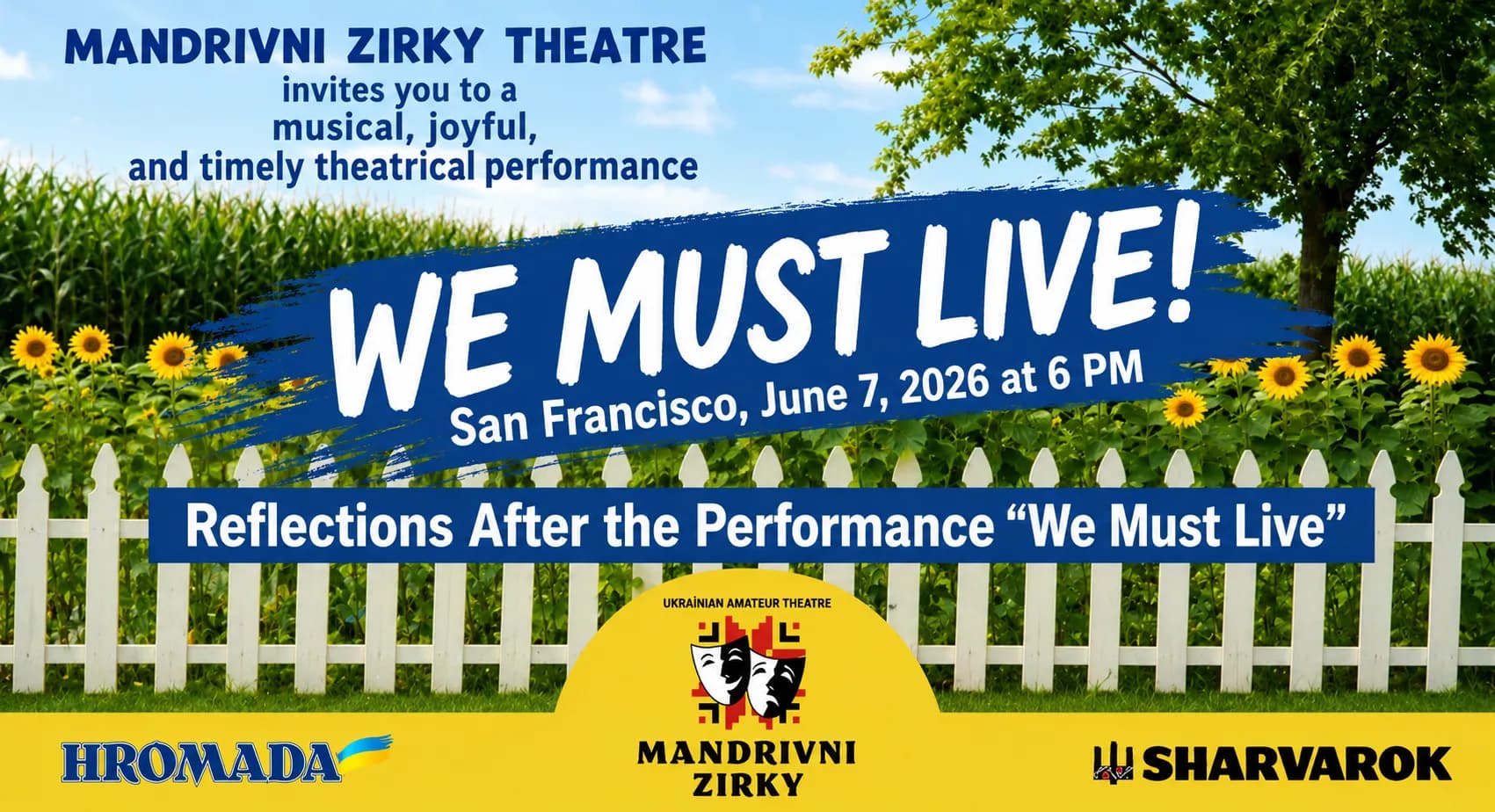
The first Ukrainian amateur theater in San Francisco, "Wandering Stars," intrigued me long before the premiere with its announcement: "We Must Live!" — a theatrical revue based on the National Unity Radio Dictation. A dictation, mostly a dry text without any dramatic plot — not only to be staged but also in the genre of a revue, meaning a musical?
"This year's dictation was titled 'We Must Live!' After it, a wave of mockery, ridicule, and parody spread on social media," said director Olena Bilyak before the performance.
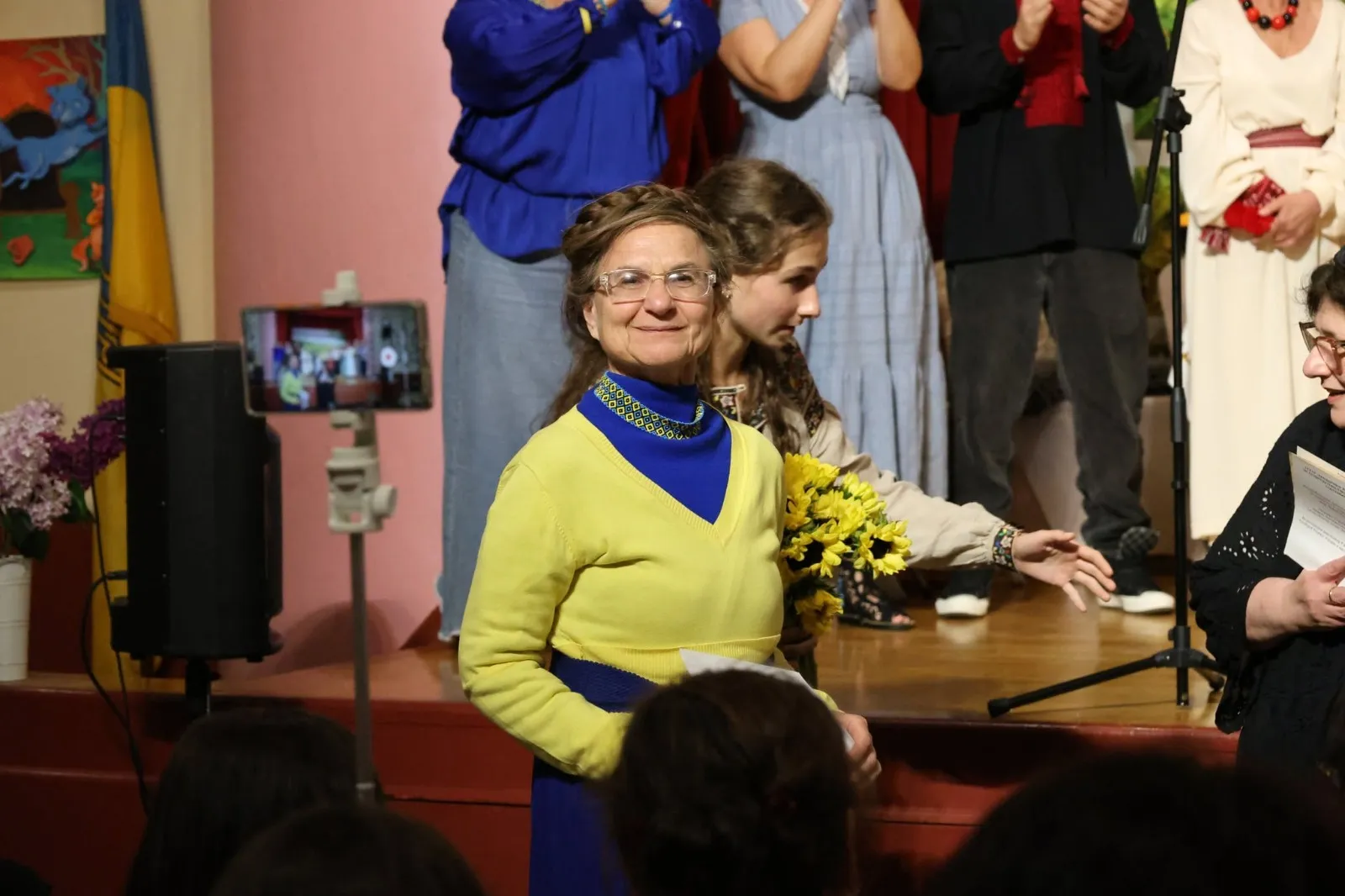
— And I immediately saw it on stage, and I wanted to create a fun musical performance with songs and dances. We gathered texts from social media and websites, piece by piece.
The plot emerged naturally: for the birthday of one of the residents of a village somewhere in the central region of Ukraine, guests from different regions of Ukraine and the American diaspora gather, and each congratulates the hostess with "advice"-reflections on how to live during the war, on the brink of death. Each participant "translates" the dictation text into their regional dialect and interprets the meaning in their own way.
"You must live interestingly," advises a resident of the Luhansk region in juicy surzhyk. "As long as you're alive, you must love your land, adorn it. Go to the garden, pick the second strawberry coming... make dumplings that mom cooked." "Make them" so that "the devils in the underworld will learn Ukrainian!" - says a resident of the occupied region.
"You must live beautifully," echoes an Odessa resident, naturally in "Odessa" language. – Go to the opera. Make eggplant caviar so that the hands of those who make it don't hurt. When all these ugly ones, who prevent us from living, run to drown in the swamp, then there will be happiness!" After all, "they want us to live like them, dying in quiet horror. But we will live not 'thanks to,' but 'despite'!"
Living — despite, this is the leitmotif of the entire performance. Despite the daily and nightly bombings, because "How dare they bomb you, my Kyiv?!" — Kyiv residents adapt the classic song about the capital to a wartime tune.
Live here and now, "not tomorrow and not a little" (because "tomorrow" may not come — this is not proclaimed, because it is invisibly, inaudibly felt every moment and everywhere).
The material is fragile: "you must live" for what "you can't grasp with your hands."
"You must live interestingly!" — even on the front line, claims a guest who came from the front.
"You must live — not half-heartedly after a sleepless night, but now, because the whole world considers us unbreakable!" — assures a Kharkiv resident. — Kissing near Shevchenko, going on dates 'under Gradus,'" — (no, not at all what you thought — this is a local architectural landmark, I add from myself). "In Kharkiv, they learned not to postpone anything for tomorrow. And also — not to be ashamed to cry, because a friend died, and it became known only after a year and a half." You must live, and even the theater does not stop working — in a shelter.
"You must live well," respond guests from Hutsulshchyna and Lviv. — Go for a walk, dressed in a fine dress and shoes, kissing a fine fellow." And, of course, fundraise for the Armed Forces. This is also a leitmotif emphasized by guests from all regions.
Everyone lives as fully as possible and does what they can to support the homeland. Even a guest from California. "You must live — not when the house is paid off, and not when there is less stress, but now," he declares in "Brighton" dialect, and from his lips, it sounds natural (unlike the announcers of Ukrainian media, who for some reason have started speaking in this dialect, "forgetting" ordinary Ukrainian words and replacing them with some absurd "Brightonisms": "top," "creative," "deadline," "fact-checking" — soon it will be impossible to understand the announcers without an English-Ukrainian dictionary! Is this how we protect and preserve the Ukrainian language? By the way, in the performance — no abuse of these "pseudo-fashionable" words). – Use the diplomacy of cuisine, music; tell the Uber driver that Ukraine is not only a war zone." And also — "find senators and congressmen who are against helping Ukraine," because — exactly like on the distant homeland, — true values are "the memory of home and the warmth of meetings."
The last to appear is a guest from Crimea, because, of course, "Crimea is Ukraine," and even there "quietly, they write the national unity dictation." In Crimea, various peoples lived from ancient times, besides Ukrainians: "Greeks, Bulgarians, Jews-Karaites," — emphasizes the guest, though forgetting to mention the indigenous people of Crimea — the Crimean Tatars. However, the song representing Crimea — a Jewish song about Dzhankoy — is so infectious with energy that everyone on stage started dancing with the performers! And during the final song, "One Viburnum Outside the Window," the whole hall danced.
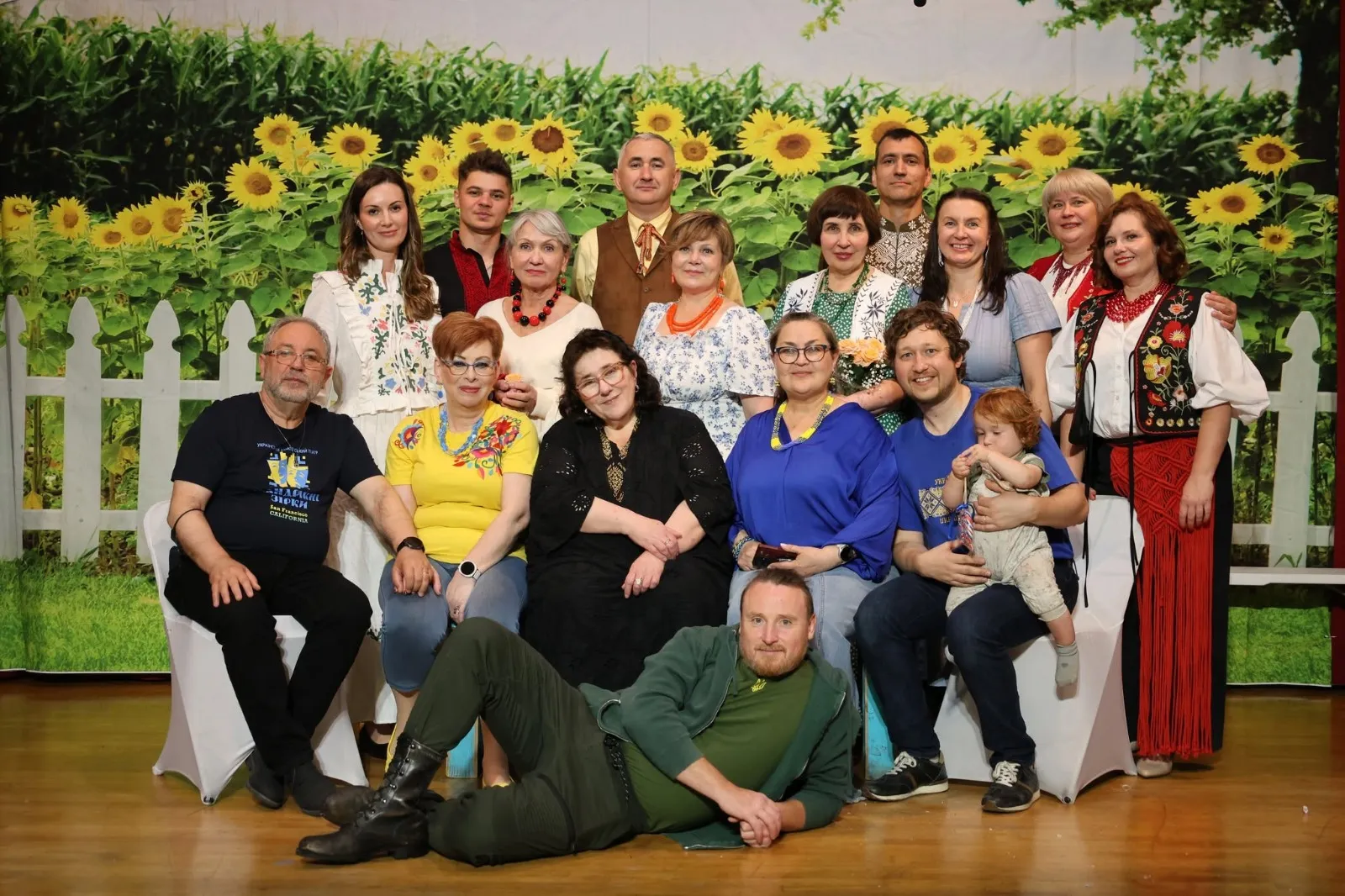
Songs selected from each region are diverse in character and color, just like the entire performance. Some are traditional, folk; some have reworked lyrics; others are modern, topical. Like all of Ukraine — a patchwork quilt that binds diversity, warms, and protects the united nation of Ukrainians. This nation lives — the performance asserts. Lives despite and on the edge, lives here and now, lives a full life.