Learning to paint pysanky. And let LIFE prevail!
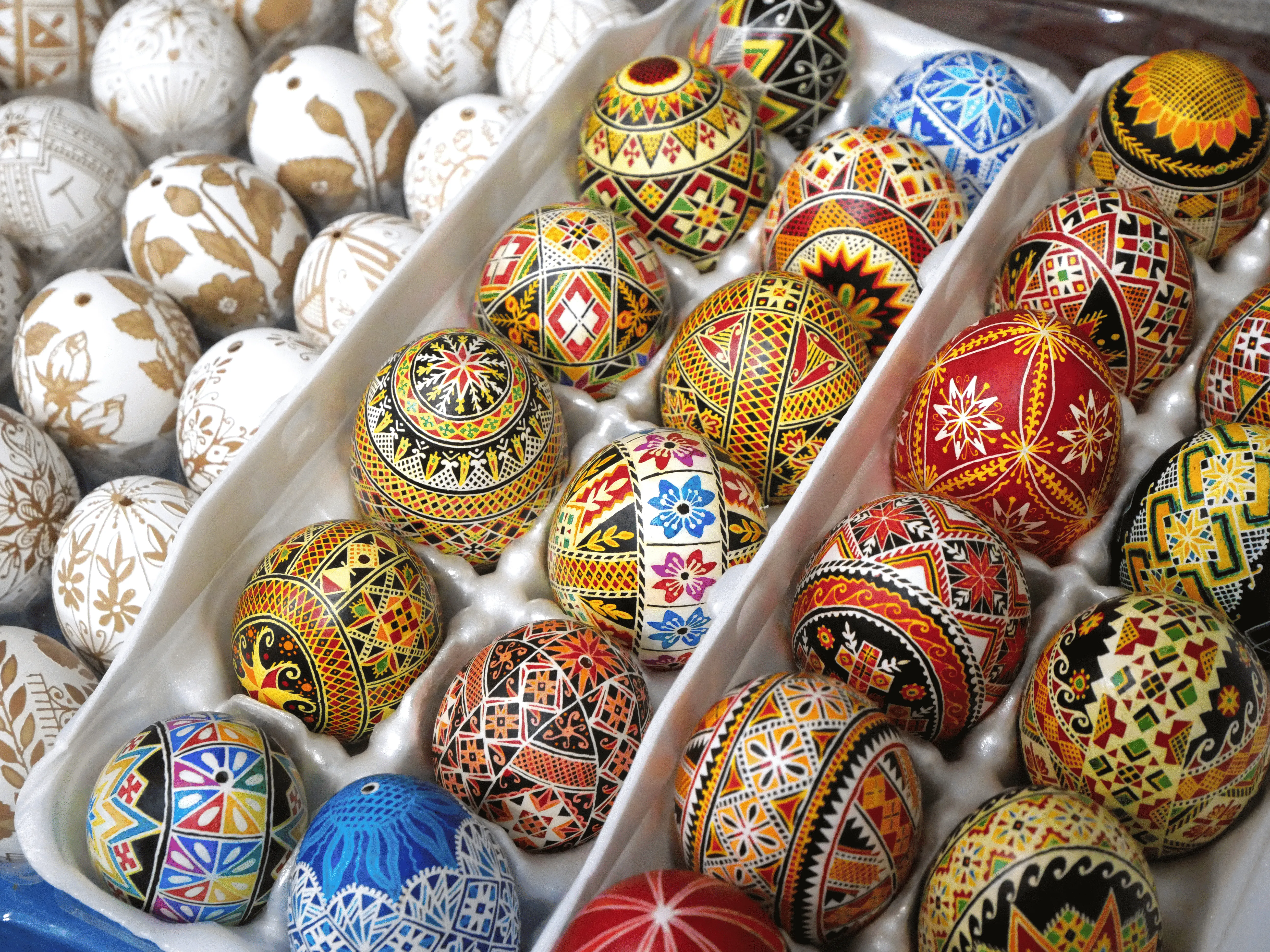
For Ukrainians, the bright Easter holidays, filled with deep Christian meaning, have long been accompanied by wonderful customs, traditions, and rituals. Among them, the incredibly interesting process of making pysankas holds a notable place. Agreeably, in skilled hands, they transform into true works of art. Each region of Ukraine has its own peculiarities in the choice of colors, symbols, motifs, and its own methods of dyeing and decorating eggs. Among them are krashankas, krapankas, dryapankas, malovankas, eggs painted to resemble marble, with acid-etched drawings or geometric patterns... There is much to say on this topic. But the main thing is that the tradition of pysanka-making is passed down in Ukraine from generation to generation. Even when abroad, Ukrainians maintain it, teaching their children and grandchildren to decorate pysankas.
Ordinary boiled krashankas, simply dyed in one color in the appropriate dye, are then consumed. Pysankas, however, are raw eggs that are decorated, and after the work is completed, the contents are blown out through two opposite holes, allowing them to be preserved for years.
True pysanka-making is a complex art form practiced by folk craftsmen. However, anyone can master its simplest techniques. In Chicago, for example, almost all church parishes organize unique workshops for those wishing to try their hand at pysanka-making on the eve of Easter. The Church of the Holy Protection is no exception, and both adults and children attend these interesting classes. In previous years, they were conducted by the church's pastor, Father Anatoliy Basarab, who learned this craft as a child from his grandparents. But now Father Anatoliy is immensely pleased that true craftsmen conduct such classes in their church, as was the case last Saturday.
The church basement temporarily transformed into a creative workshop. Good and interesting guests shared their skills, advice, and practical help with those present.
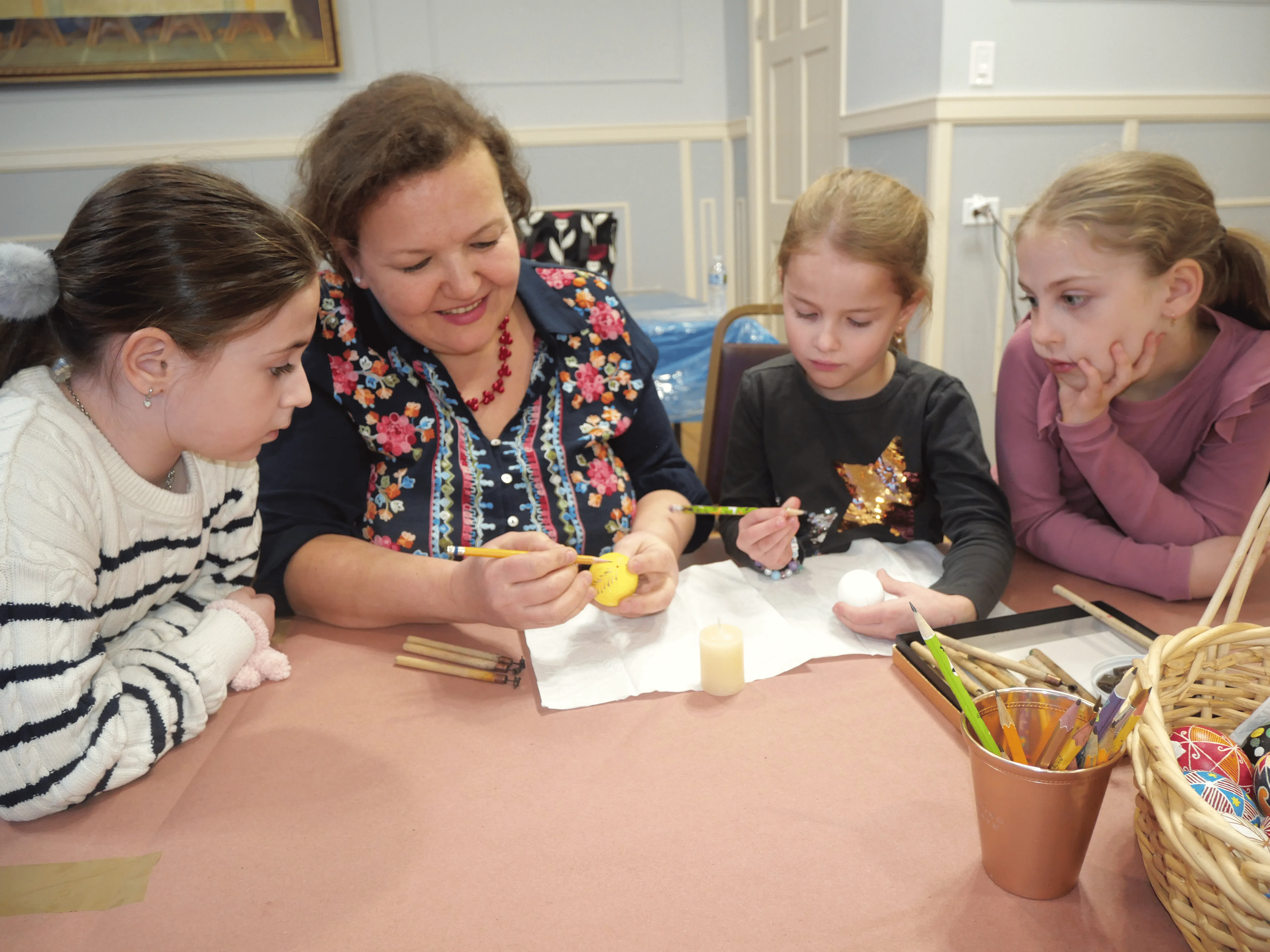
Lidiya Stefanyshyn hails from Prykarpattia. She received her artistic education at the Kosiv College of Folk Art Crafts named after V. Kasiyan and the Lviv Academy of Arts. Ms. Lidiya is a member of the National Union of Artists of Ukraine, creatively working in leather art processing and ethnic-style clothing modeling. "What does this have to do with pysankas?" you might ask. She simply knows how and loves to do it. Although she does not consider herself a pysanka artist, her artist's intuition, professional education, and desire to transform an ordinary egg into a small artistic marvel result in pysankas that delight the eye with their beauty, meaning, and craftsmanship. And if you know how to do it yourself, why not teach others?
Ruslan Kopyltsev also comes from Prykarpattia, from the village of Markivka in the Kolomyia region. He is a folk craftsman. He does not have a formal artistic education, but fate has endowed him with a talent for pysanka-making. Participation in competitions, exhibitions, certificates and diplomas, his works in the famous "Pysanka" museum in Kolomyia, hundreds of gifted items to friends and acquaintances—all this describes him. And you have to see how his eyes light up when he talks about pysankas, how they are made, what they mean, what energy they emit, what message they carry to descendants... And, of course, you have to see his works. Especially those made using the technique of etching patterns on eggshells with vinegar. It's something incredible! It's even hard to understand how one can create such geometrically perfect, diverse patterns, such tiny lines, dots, and figures on a small egg. From a distance, they even seem carved from wood.
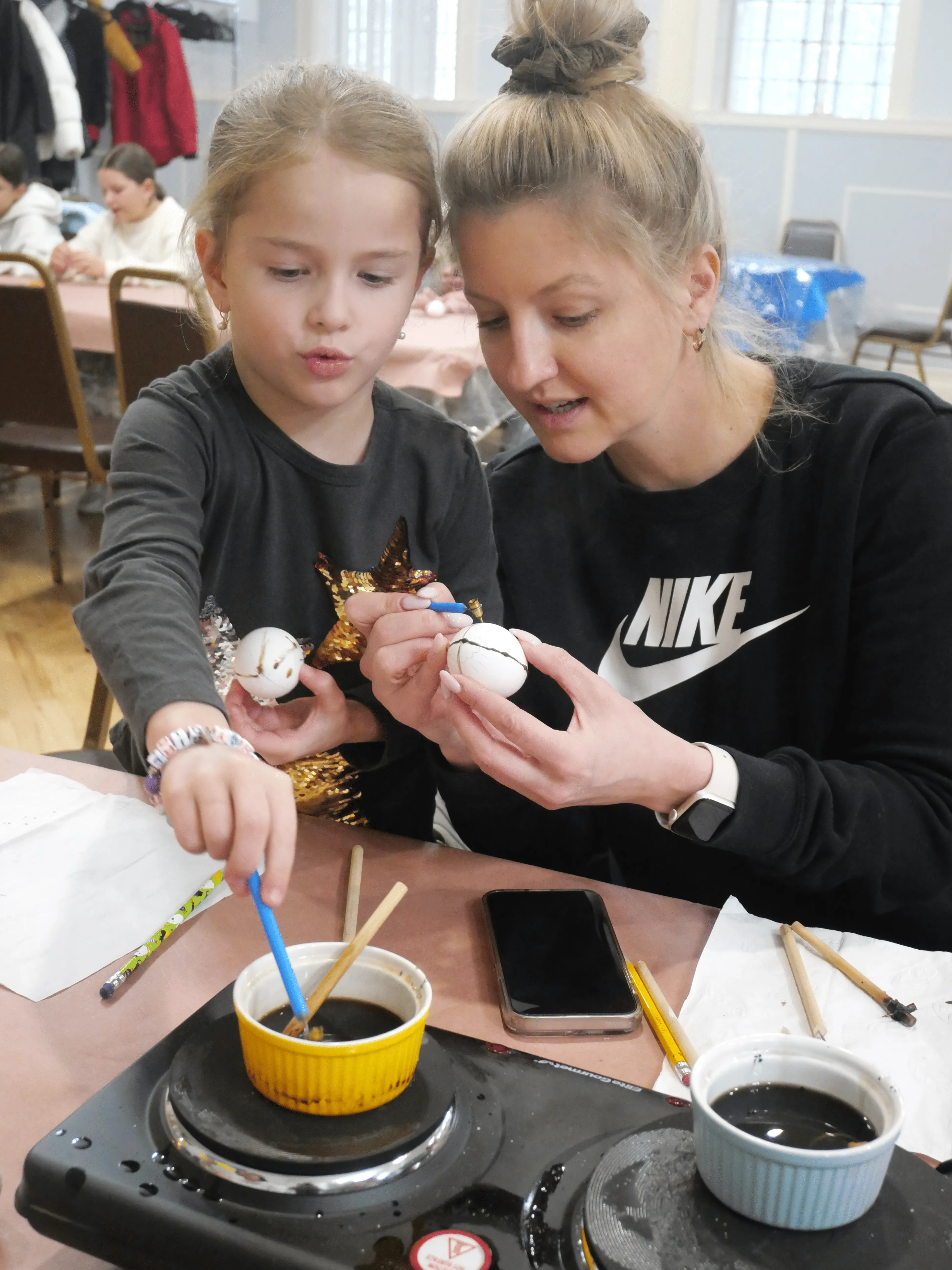
Such talented people conducted the master class, which was attended by several dozen people eager to learn at least the basics of pysanka-making. The oldest "student" was 74-year-old Ms. Anna, and next to her, her grandson, 14-year-old Matviy, worked enthusiastically. At the neighboring table were young girls: they had attended a similar class last year, so their movements were more confident than those of absolute beginners. Here were young mothers with children. The youngest "pysanka artists" were four years old. The little ones lacked patience: they would hold the stylus for a while, watch the wax melt, see something beautiful and colorful emerge after immersion in the solution, and then run off. They would occasionally check in to see how their mothers were doing, if everything was going well...
And the professional mentors approached each participant, offering guidance and assistance. In a short time, the egg ceased to be just an egg, transforming into a pysanka. Even if the pattern lines were not entirely even and the ornament not perfectly outlined, this pysanka was still the best because it was yours, made with your own hands. It was guaranteed a place of honor in the festive basket, next to the Easter bread.
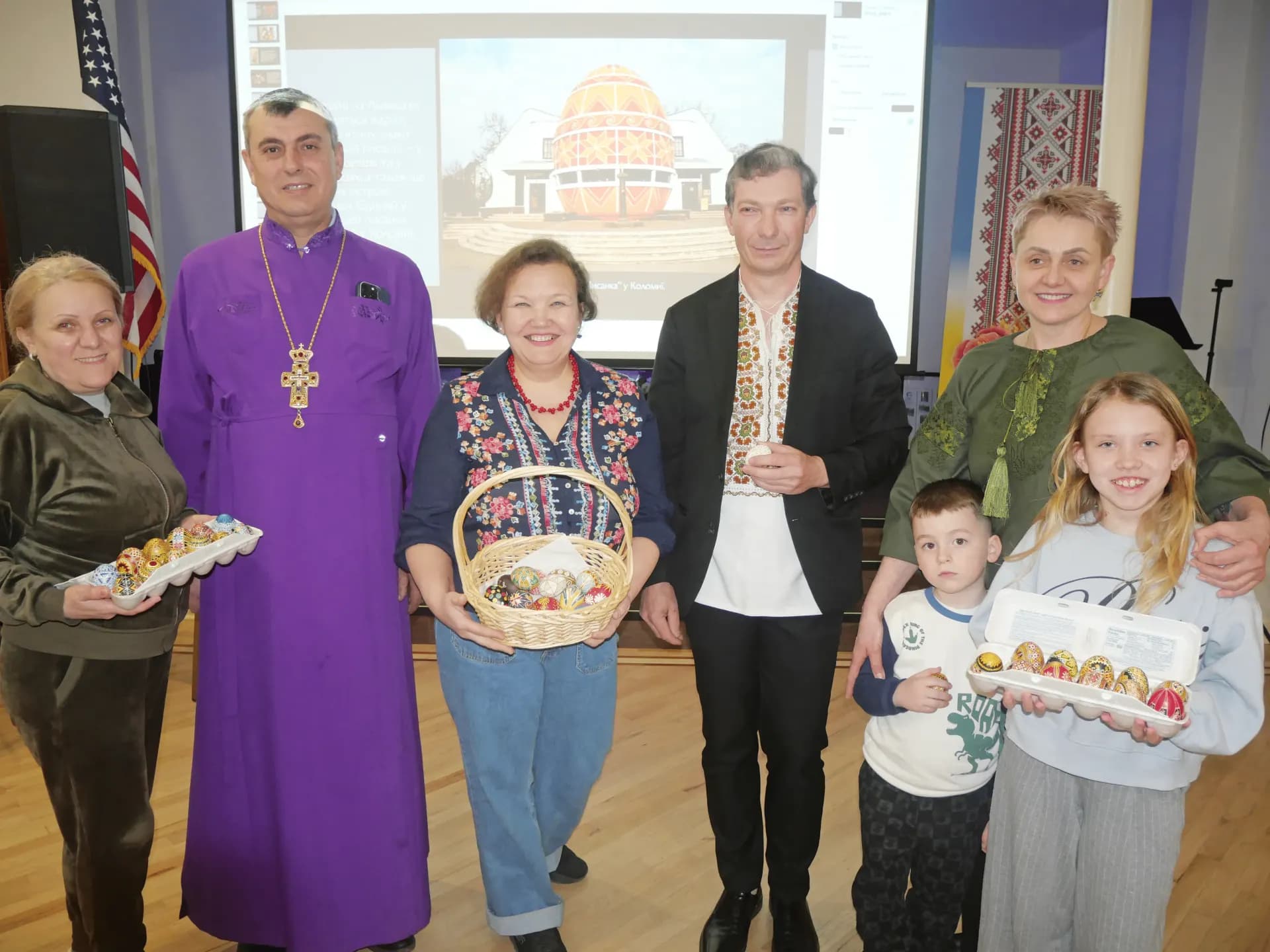
Next came a photo session. Why not? Perhaps someone present will one day become a famous pysanka artist and remember where, how, and when they took their first steps into the great art of pysanka-making.
And further on was a box labeled "Collection for the Armed Forces of Ukraine." Because this was not just a master class, but an entire event called "Pysanka for the Armed Forces of Ukraine." The collected donations will support our defenders. Because the pysanka symbolizes the spring rebirth of nature, it symbolizes life. And each of us sends prayers to the heavens that this year's Easter will be marked by the end of the war. That SPRING will triumph. That LIFE will triumph!