A meeting that gave wings. Because people can fly too...
Last Saturday, I attended an amazing gathering where I simultaneously met and conversed with six renowned Ukrainian women. More precisely, I just listened, trying not to miss a single word. Because these were words about truth, about freedom, about the strength of spirit, and about the power of words themselves, about resilience in the face of life's trials and the tests of time. These were words about courage. And about conscience. And about wings. Those that not only birds have. Those that humans have too — invisible but strong, allowing one to soar through life with views, relationships, actions, deeds, and convictions. And to show others how to fly.
Just like they did — Lesya Ukrainka, her mother Olena Pchilka, Olha Kobylianska, Nataliia Kobrynska, and Olena Teliha, as our contemporary Lina Kostenko continues to do. Now you understand, dear reader, which famous Ukrainian women I met? Yes, simultaneously. You say it's unrealistic since they lived and worked in different time periods? You're right, reader. So, let me reveal the intrigue: my story today is about the literary-musical event "The Word Does Not Remain Silent. Dialogues Across Generations," which took place at the Ukrainian National Museum in the Ukrainian neighborhood of Chicago.
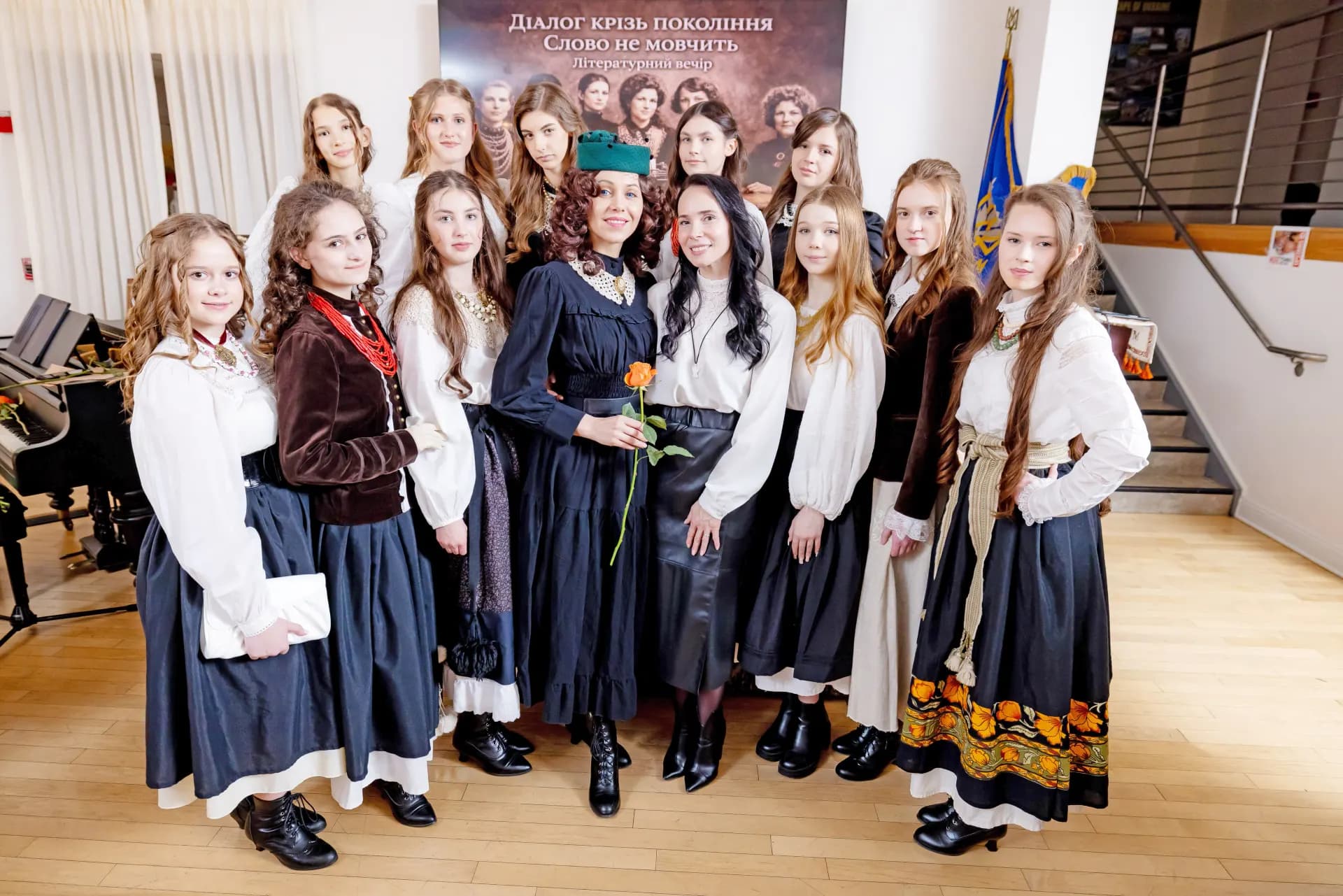
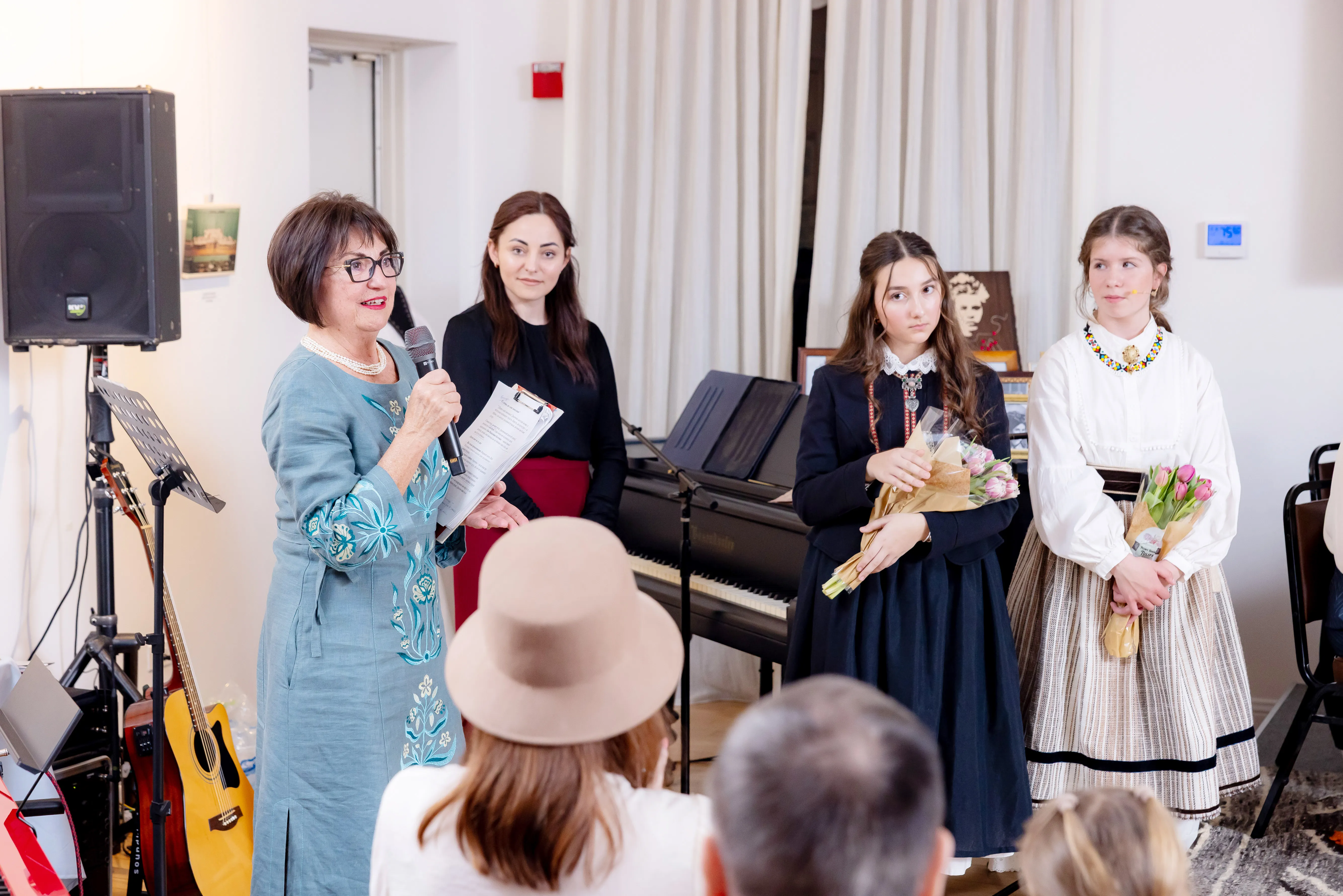
It was organized by great enthusiasts of various creative projects — Roksolana Prokopiv, Mariyana Hladiy, and Tetyana Dynka. The roles of the famous Ukrainian women were taken on with great responsibility by Anastasia Sovych, Tereza Dynka, Sofia Buryadnyk, Samira Prokopiv, Angelina Sovych, and Olha Oliynyk. The musical accompaniment was excellently handled by Olha Kmet, Andriy Boychuk, Liubov Lukashevych, Marta Fraser, and the group "Smile" from the vocal studio "Elegia" (led by Lana Polyak). Kateryna Hrod and her students from the modeling school "StarKids" came to help. And the chosen storyline was guided by the host Katruia Semko. Thus, one of the museum's halls (thanks for the hospitable support to Lidia Tkachuk and Halyna Parasiuk) was transformed that evening into a salon of nobility, sophistication, and true Ukrainian intelligence.
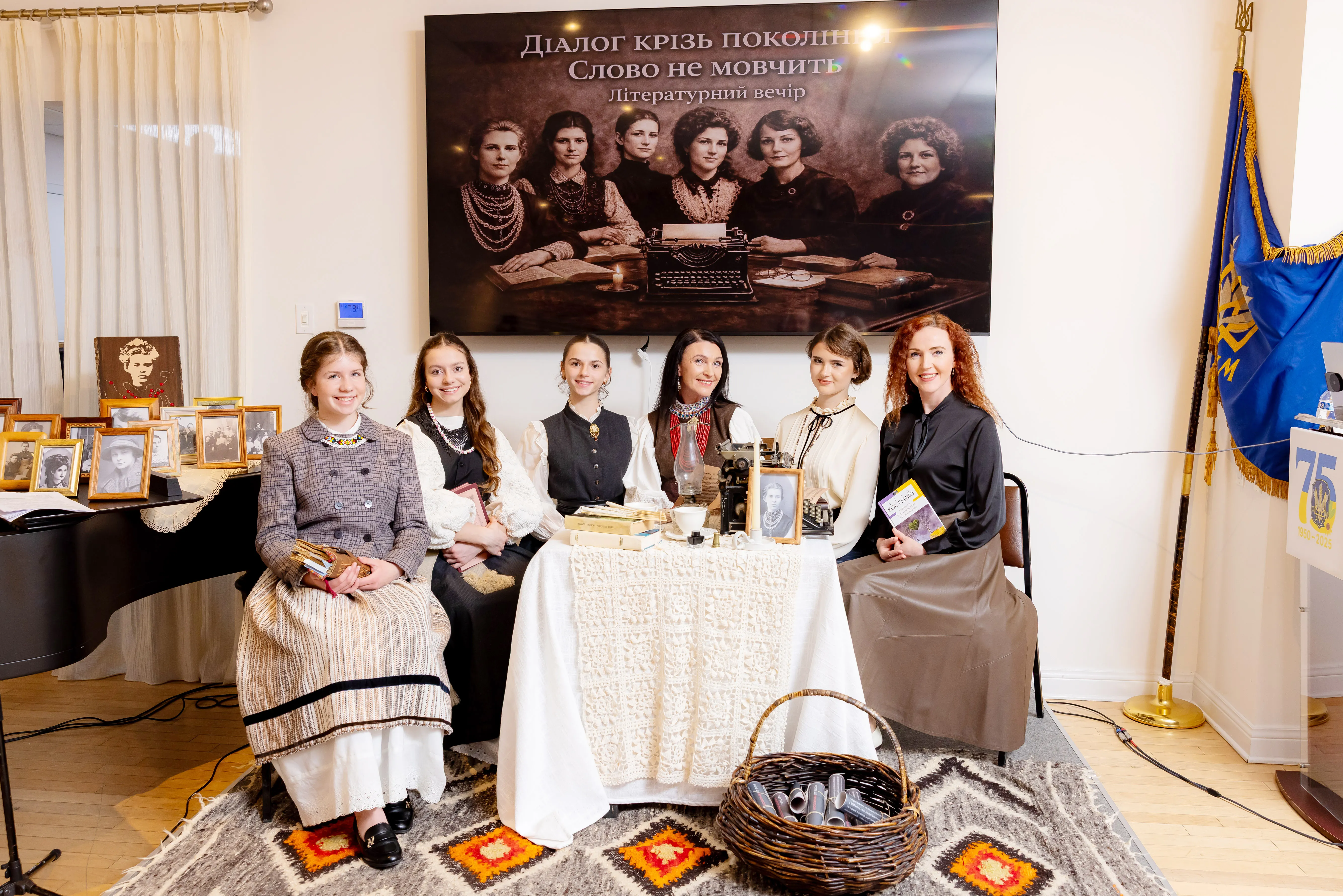
What did it look like? Dimmed lights, a piano, a candle on the table, a typewriter, elegant attire on the heroines characteristic of the years they lived in, and... conversation. Dialogues. About the eternal. About what seemingly belongs to each of them individually, but somehow concerns all of them together and each of us, as it becomes a reason for reflection. Because the Word was spoken by those women who truly had wings in life.
Here from her time speaks Lesya Ukrainka (1871–1913): "I was a proud little girl — to avoid crying, I laughed." And it was not easy — to fight a physical ailment and to fight for life ideals, to defend the Word, to defend Ukrainian identity. But... "Who told you that I am weak, that I submit to fate?.."
She did not submit. Her spirit was strong as steel. And with the support of her mother, equally strong in spirit, Olena Pchilka (Kosach, née Drahomanova, 1849–1930) — a noble lady of Cossack descent, a writer, philanthropist, public figure, who was rightfully called the mother of the Ukrainian word, as she dedicated her entire life to it. And she undoubtedly passed on her genes to her daughter. Is it not for this reason that the very young Lesya would say-write: "Word, my only weapon..."
"And mine," responds Nataliia Kobrynska (1851–1920), who founded the Society of Ruthenian Women, and later the first women's almanac "The First Garland," on whose pages Olena Pchilka and Lesya Ukrainka were published; who step by step defended the idea of active women's participation in cultural and political life; who was sincerely concerned with issues of national culture and national consciousness. Her literary talent was dedicated to this, and the weapon in her hands was the word.
"And this weapon is important to me," joins the dialogue Olha Kobylianska (1863–1942). Born in the Carpathians, surrounded by the beauty of nature and the free spirit of the people, she became one of the most important figures of early modernism in Ukrainian literature, carrying through her work the theme of the Ukrainian intelligentsia, and in the interwar period said: "We'll somehow survive, just as long as the Bolsheviks don't come..."
They came. Ukraine, you were not spared from misfortune. Hundreds, thousands, millions of Ukrainians felt it. Among them were those who took the Word as their weapon. Like, for example, Olena Teliha (1906–1942). Once, she was present at a party where the Ukrainian language was blasphemously and unjustifiably desecrated. She couldn't remain silent, she stood up, defended her opinion. That's how she went through life — in journalism, in poetic creativity, in desperate work in the OUN.
She came to our society of famous women — to our meeting today. She couldn't resist declaring: "We stand with men in the fight for our own land side by side. Not in the shadows, not behind. We fight, we win. Together! There were doubts, of course. Especially at the beginning. But not a drop of doubt. Not being brave in such times is a luxury we cannot afford."
Together! What a beautiful word. What a strong word. And how powerless it is in front of the barrel of an enemy's gun. They, along with many others, were shot in Babyn Yar — Olena Teliha and her husband. This was preceded by the arrests of nationalists in Kyiv. They were captured in the premises of the Union of Ukrainian Writers. Mykhailo did not belong to the Union, so he could have avoided arrest. He could have left. And he did. After her, after Olena. To the execution. Because — together!
How many fell in the 1930s, in the era of the "executed renaissance"?! Those who lived for Ukraine, who breathed Ukraine — an entire generation of Ukrainian artists was destroyed by the Stalinist regime. And the building "Slovo" in Kharkiv, where the writers lived, became a symbol of tragedy.
However, the red plague hoped in vain to destroy the Ukrainian Word altogether. Yes, in vain. Because others came in place of the executed and destroyed. No less brave. No less desperate. And they worked — the creative intelligentsia of the 1960s (hence the name of the movement — the Sixtiers), demonstrating a civic position independent of party ideology, a turn to national traditions, to cultural revival.
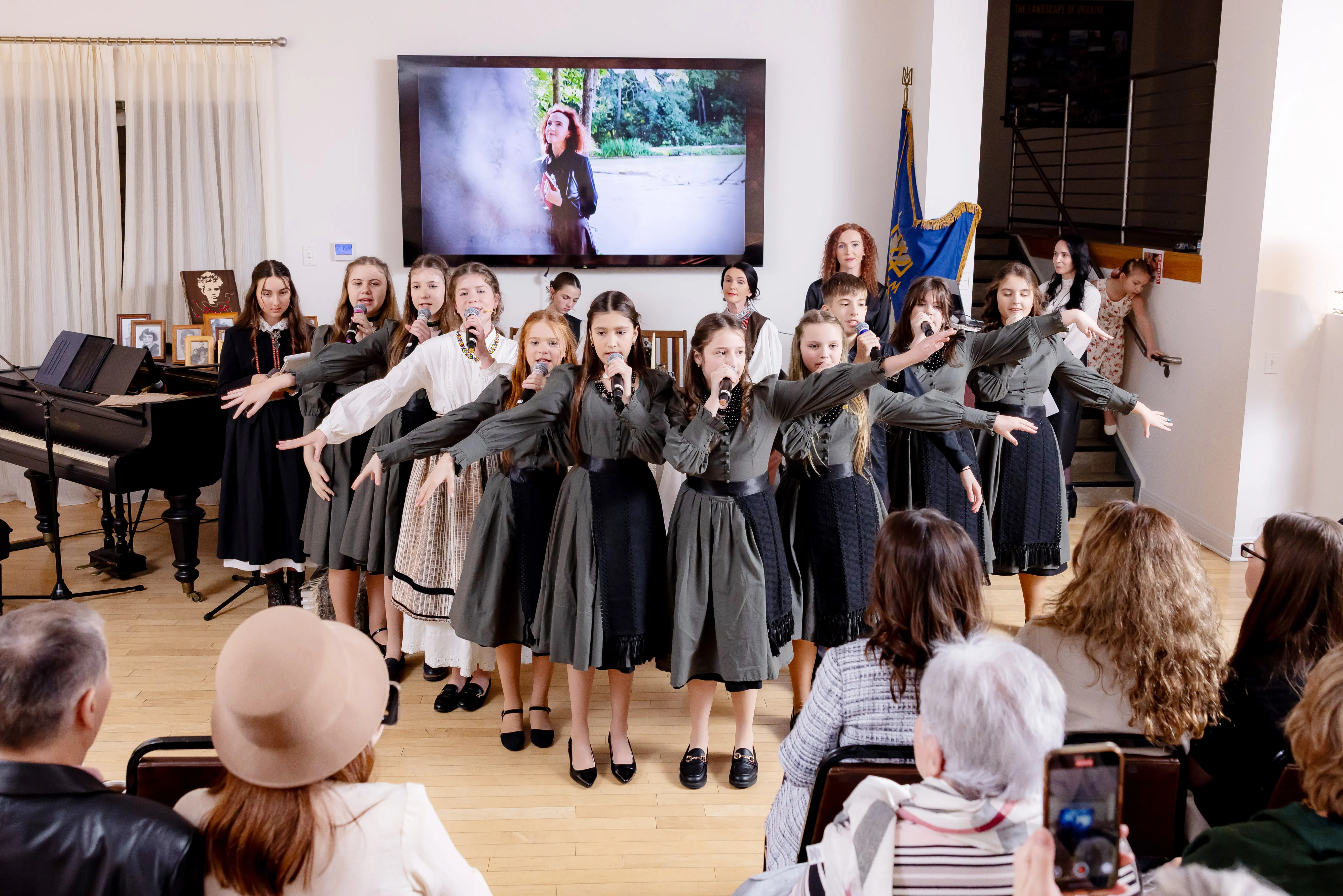
They also tried to silence them, to bind their thoughts, to ignore, not to publish. They were also persecuted. They were also destroyed. But the time came when everything written "in the drawer" was revealed to the world. And we, the contemporaries, are happy that the ideas of the Sixtiers continue to resonate with us through the touch of a pen and the voice of Lina Kostenko (birthday — March 19, 1930) — a woman who became a legend in her lifetime, who today is a herald of Truth, Justice, Humanity.
She came to our meeting too. She came and said: all words have already belonged to someone, but you must pronounce them for the first time. You. Precisely you. As an individual. As a separate universe. Well, person, are you ready to say your own words? Be vigilant, because "life goes on and everything without corrections, and as you write, so it will be." You must know: not all mistakes can be corrected. You must remember: you cannot turn back the road, you cannot relive your fate... Therefore, do not forget to thank the evening sun for the day, a loved one for love, and your native land for such beauty around, "that you could stop and talk to God." And just don't forget: "There is so much sorrow in the world! People, be mutually beautiful." And do not lose the need for the Word — that word that becomes a prayer, that word that turns into wings, that word that turns into a weapon for the right to be called a person, a free person on free land.
Again, our wise Lina: "Nations do not die from a heart attack. First, they lose their language." It was taken from us for centuries. Destroyed. Ridiculed. Executed. Yet we are still here! And we will be! Because we have what cannot be understood in the swamps. We have the Word and Memory, which the enemy fears no less than weapons. We stand!
This is how this amazing meeting of amazing women was, who lived by the Word to pass on to us, the future generations, Destiny. I wanted to say at least a little about each one, so that especially those who were not at the evening could understand on which wings one can fly through life, trying to truly live, create, and inspire. Is it not from them, from the famous figures in literature, that today's event organizers learn this, whom I want to name once again — Roksolana Prokopiv, Mariyana Hladiy, Tetyana Dynka, and all those who performed assigned roles, who created the musical canvas of the meeting. And the youth involved in the project — it's not just beautiful, it's extremely important. For today. And for the future. After all, it was an evening of Ukrainian culture, Ukrainian intelligence, Ukrainian spirit.
These were the moments where poetic words and sung poetry intertwined, reflections and convictions, the feeling that each of us is truly capable in life of that "store minimum" — to be mutually polite. And mutually beautiful. Because there is so much sorrow around!
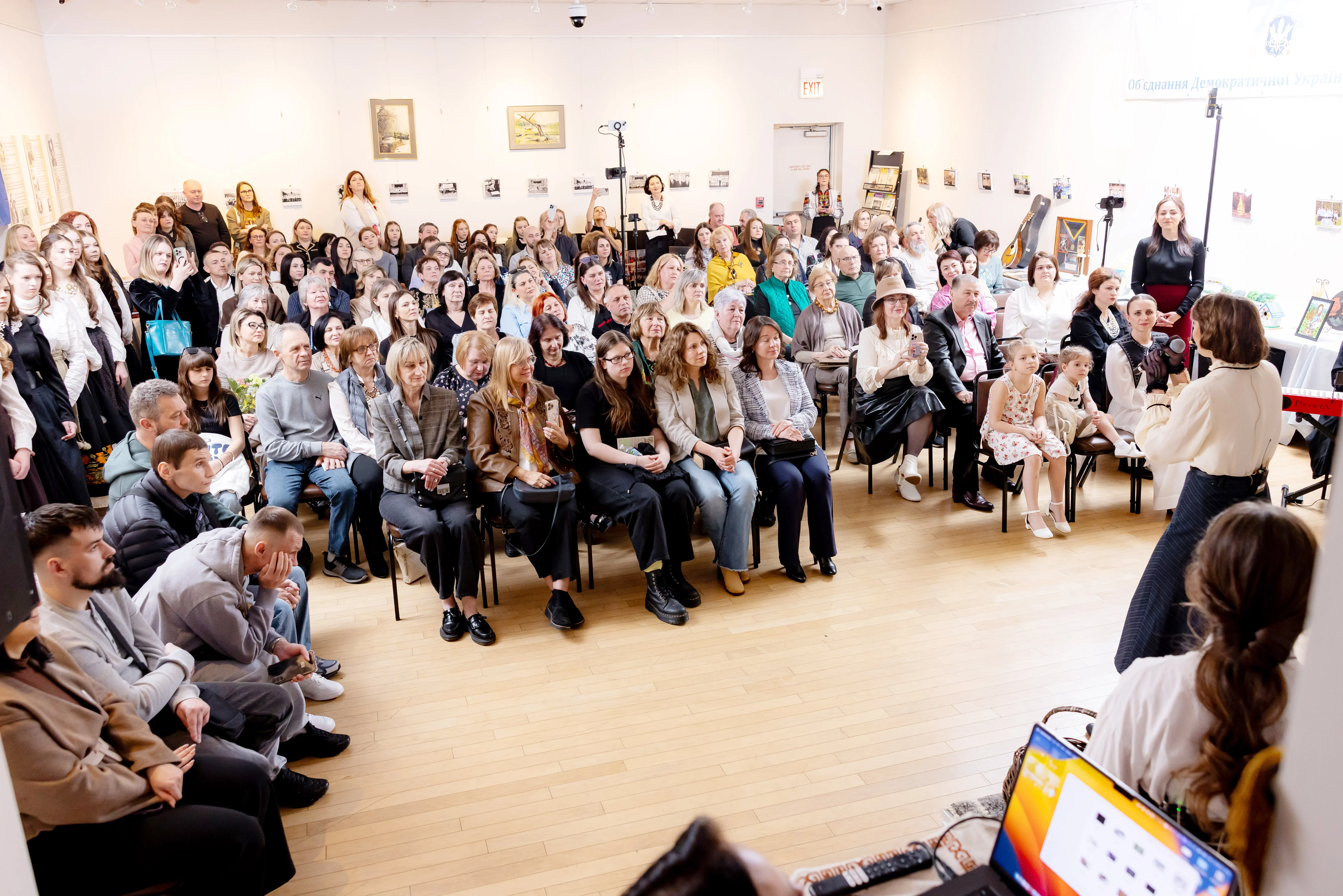
For someone, perhaps, this evening reminded them to take a book of poetry by their favorite author from the shelf, which had already gathered dust in the hustle and bustle of everyday life. Or inspired them to write something of their own. To share their soul. As Roksolana Prokopiv did, reading her own poetic revelations. Because for her, it is important — "the living fire will not be lost, which holds the light among us." Because she is convinced: "we must not remain silent anymore, because silence also takes the side of darkness." That darkness that recently took her brother in the war. That darkness that wounded the bodies and fates of Ukrainian defenders who sat in the hall...
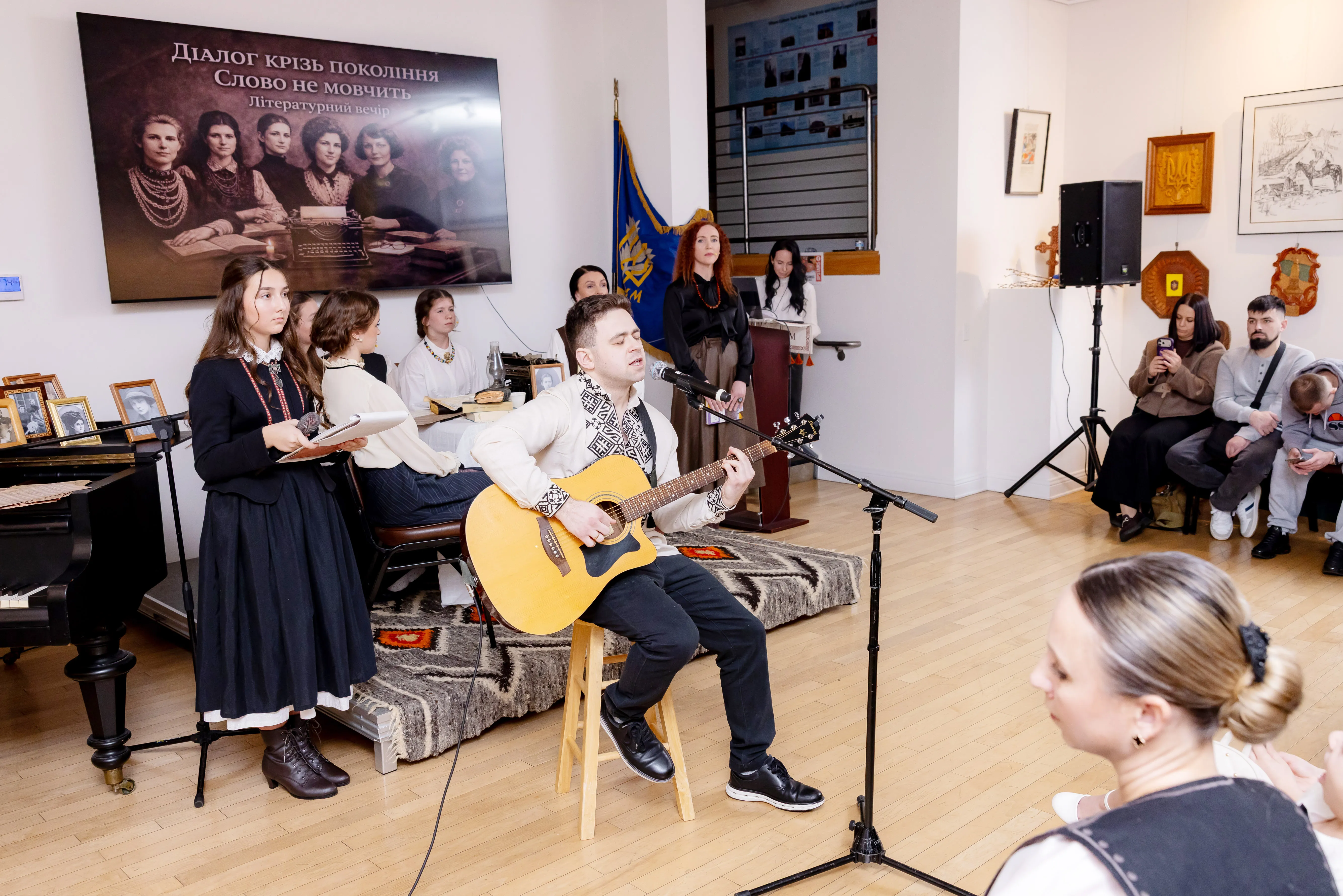
No less creatively prepared for the literary meeting was a lottery with wonderful prizes, which included a sheepskin vest from one of the largest Ukrainian clothing stores in the USA, LUXART Lana's Vyshyvanka, exclusive books from the renowned bookstore Ukrainian Best Books, the painting "Window to Spring" by the young talented artist Karolina Zelenecka, the painting "Those Who Did Not Fall Silent" by artist Khrystyna Shcherbin, an incredibly beautiful author's Easter egg by a member of the National Union of Artists of Ukraine Lidia Stefanyshyn. Sponsors — the LUXART store and Natalia Asevedo — supported the successful conduct of the evening, excellent sound was provided by Sashko Khryplyvyi (company "Sound"). Everyone understood the significance of this evening. The funds from the lottery and part of the proceeds from the tickets sold for the meeting, the event organizers, together with the staff of the Ukrainian National Museum, decided to divide equally and send to our incredible Lina Kostenko — as a birthday gift, and to transfer to the charitable fund Protez Foundation for the treatment of wounded soldiers. Because we must give wings. If the Word is important to us. That which was in the beginning. And from the beginning. That from which we all began.
Photo by Maksym Prokopiv.