
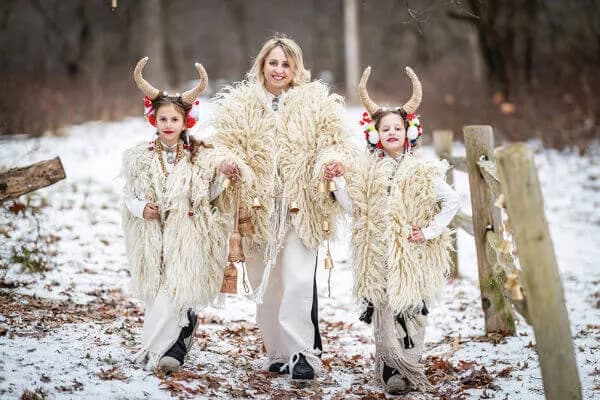
Purchase yourself a gunya. Dress in the warmth of the Carpathians.
I don't know about you, but for me, everything that touches our origins, our roots, the components of our Ukrainian identity is incredibly interesting. Those sources that nourish ancestral memory. Those people who pass this memory from generation to generation. Those traditions, customs, and rituals by which you can recognize a Ukrainian even on the other side of the globe. That wealth of folk art that resonates with incomparable songs or echoes with fiery or lyrical dances. Those crafts that testify not just to the skill of human hands, but also carry a unique national code.
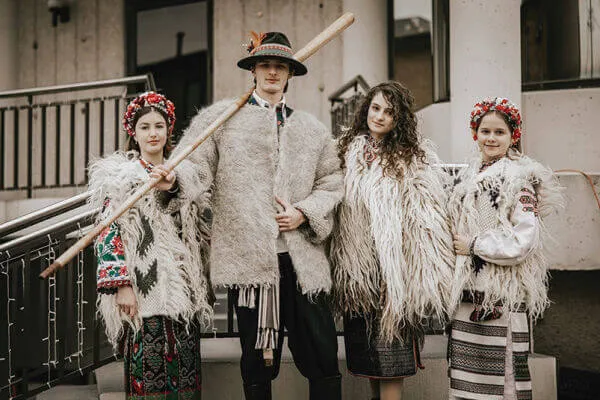
That's why I was significantly interested in getting acquainted with such a type of folk clothing, which has a rather unusual name at first glance — gunya.
Are you surprised? Do you think I made it up? Not at all. Even Wikipedia will tell you that ґуня is a Hutsul straight outer garment made of long-pile homemade cloth. It will also tell you how it's made, how sheep's wool is steamed, washed, combed, how threads are made from it, how they are passed through a special loom, resulting in cloth — smooth on the left, inside, side and shaggy on the right.
So, gunya is a creation of the imagination and skilled hands of hardworking Hutsuls. Probably, they were prompted to this by the Carpathian winters, which can be very harsh in the mountains. In the house during such times, you heat the stove with wood and it's warm. But when you need to go outside, you really can't do without good outerwear. That's how they came up with making gunya (perhaps the term comes from the ancient Latin word gunna – "fur coat"), especially since every good Hutsul host always had a full flock of "gunya", that is, sheep, which, among other things, were kept for shearing wool.
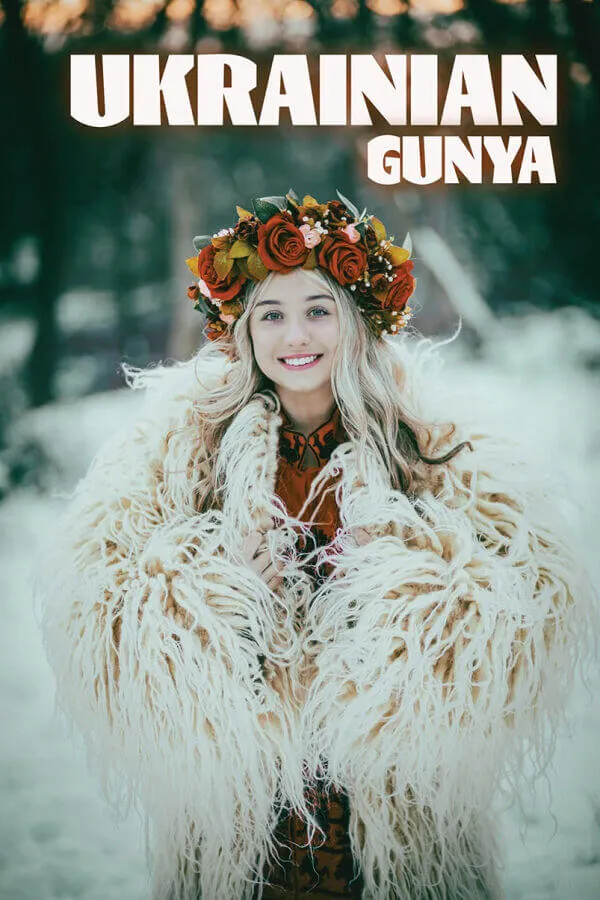
And how wonderful it is that the ancient Hutsul craft — making gunya — has not ended up on the archival shelves of time, and today this type of clothing is gaining more popularity as an element of modern ethnic style. And not just for winter needs. After all, its varieties — jackets, vests, capes — will come in handy in fashion at any other time of the year, allowing you to feel protected from the weather, warmth, and gentle care.
It's pleasing that in Ukraine, over the past few years, interest in this type of clothing has noticeably increased. It's pleasing that buyers at Hutsul markets are interested in gunya. And it's even more pleasing that the unique Hutsul clothing has crossed the Atlantic and reached Chicago. Of course, specific people are behind this process, whom I want to talk about today. Because they are doing a very significant, interesting, and necessary job. But first, I will still indulge in lyricism. Such is my nature: I must share what the soul feels. And it feels, thinking about gunya, that this clothing is nothing other than
Hutsul warmth of the Carpathians,
woven from wind and wool.
...When fog rises over the meadows, and the wind burns the cheeks, a Hutsul throws a gunya over his shoulders. It's heavy, but familiar, and gives such a feeling as if the mountain itself is embracing a person. Gunya is not just clothing. It's the silence of fir trees, it's the melody of the tronka, that small bell that shepherds hang on the necks of sheep to hear them in the dark or in the forest, it's the warmth of the home hearth that can be taken to the mountains. It was born there, where nature does not forgive carelessness. Size, color, shagginess — the skill of the master turns coarse and rough sheep's wool into a kind of shield for the shepherd, traveler, or lumberjack. The free cut, and therefore — freedom of movement, allow you to breathe deeply, fly in thoughts over steep trails, live in the rhythm of the mountains. In a gunya, you could go to the mountains in bad weather, sleep under the open sky, sit by the fire, listening to the crackling of wood in the fire, telling its fiery language of mountain legends and tales.
And now imagine: in those places where the morning begins with fog embracing the fir slopes,
there lives a woman,
who knows how to turn wool
into unique clothing.
Of course, she is not the only one there. Although to say that the number of masters goes into hundreds would also be incorrect. It doesn't. Because this craft requires a special gift. Most often — passed down as an inheritance. Like a family heirloom. Like a family tradition. Like a family business. But today — a few kind words specifically about her, about this talented woman.
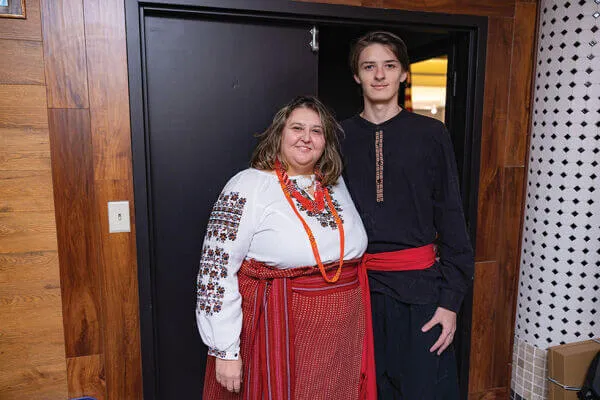
Stefania Korpanyuk was born in the village of Roztoky, Kosiv district, Ivano-Frankivsk region. When she got married, she moved to Yavoriv. Both villages are well-known centers of applied art in Hutsulshchyna, a land that has produced many folk craftsmen. Among them is Mrs. Stefania. The craftswoman has been making blankets (woolen blankets) and gunya for over 35 years. Her hands — warm, patient, slightly rough from threads and water — seem to have absorbed the spirit and strength of the ancient Carpathians. Mrs. Stefania works on all her products as if she is weaving the breath of the mountains into them. The craftswoman says that wool is alive, that it needs to be felt and worked with unhurriedly. "If you invest calmness in it, it will warm you. If you invest love — it will embrace you..." Here is the true essence of gunya.
By the way, at the Kosiv market, gunyas are very popular. And quite often, star guests — singers, actors — come here specifically for this clothing. And the fact that recently Stefania Korpanyuk's gunya have found their way across the ocean delights the craftswoman immensely. She owes this to her niece — a well-known photographer in the Ukrainian community of Chicago, Tetiana Drozhzhyna. She was the first to present gunya in our city. And she is also immensely glad that she can thus demonstrate the truly original talent of her aunt. For Mrs. Tetiana, this is important. Very important.
For her, ґуня is not just an item.
It's the story of a girl from the mountains,
who can see with her heart.
She was born where the sky touches the earth, where clouds lay to rest on the picturesque Carpathian peaks. Her childhood smelled of freshly cut grass, smoke from the stove, and rain that quietly tapped on the wooden roof of her grandmother's house. She grew up among the mountains, which taught her to see more than just landscapes around her. And they taught her to feel. So from a young age, Tetiana drew. Lines drawn with a pencil obediently lay on paper, trying to capture the beauty of the surrounding world. She drew mountain slopes and circles of emerald fir trees, faces of people, old houses, and the hands of craftsmen — those hands that created history. She drew, observing everything that happened, observing the life of the Hutsuls. Those real ones, who seemed to have merged with the mountains — so they understood and felt them. There little Tetiana witnessed the birth of gunya — no, not just a fur coat, but a warm, living canvas woven from love and labor. She saw how wool turned into clothing, how the memory of the family was preserved in each thread. Therefore, since then and to this day, gunya for her is not just an item. It's a touch of childhood. It's the warmth of the mountains. It's the voice of the ancestors.

She loved that farmstead, lost in the mountains, where she spent her vacations. She loved going to the forest with her great-grandmother Hafiya, learning to recognize herbs, berries, and mushrooms, learning to survive in the challenging conditions of the forest and mountains. She says: with her great-grandmother, it was not just a school of life, it was something clearly closer to drill. Because Hutsul Hafiya had a difficult character. She was a person more strict than gentle, more rough in communication than delicate, and the one who was the first to start working, who didn't let others lie down, who didn't hesitate to use sharp and spicy words... But it was from her great-grandmother that Tetiana learned not to submit, as true highlanders do, to the trials of fate, to live in nature, to hear nature, to heal with nature, and to be filled with pride for the unique native land, for its talented people who can create incomparable beauty with their hands. Therefore, she loved to watch her aunt Stefania work, who "conjured" over gunya. Other close relatives of hers also knew how to make them. It was majestic then and is majestic now when the promotion of our national identity is more relevant than ever.
For many years, Mrs. Tetiana has lived in the United States of America. Another continent, another language, different rhythms of weekdays and holidays... But in her soul remained that special perception of the world and memories of childhood in the picturesque Carpathians. At first, finding herself here, in a foreign world, she continued to make sketches, trying to capture beauty with a brush, but later realized: every moment is alive, it can be captured... with light. She began to engage in photography. When she came across a video plot from the Kosiv market on social networks, when she recognized her aunt Stefania and her gunya there, she immediately called her: what if your gunya were brought to Chicago? There are people here who understand well what authenticity is, what warmth and the breath of the native land are...
It was said — it was done. Recently, through the mediation of Tetiana Drozhzhyna, gunyas have slowly begun to find their place under the sun in Chicago. Their shows have already taken place at several creative events. Some already have them in their wardrobe. You can already order a photo session with Tetiana Drozhzhyna, capturing yourself — both individually and with your family — in gunya, in this extraordinarily original and extremely authentic clothing. You can get to know it better on the Facebook page GUNYA Chicago or in personal communication with Mrs. Tetiana, who, by the way, being a creative person, even gives her aunt Stefania ideas, sketching modern styles and patterns for future products.
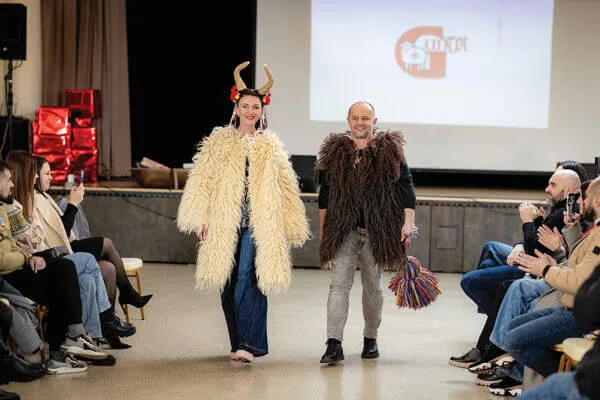
For her, this is a matter of special importance. And a subject of pride. And love. And the connection of generations. And ancestral memory. Now this pride, this love, this national code Tetiana passes on to her son Taras, because although he was born in America, he goes through life as a Ukrainian — in appearance, spirit, heart. And, of course, among other clothing, he has a gunya. And he has wonderful photos in gunya. And he has taken up learning to play the... trembita. Mrs. Tetiana made a great effort to get this unique Hutsul instrument from Ukraine. So now they have the warmth of the Carpathians at home — gunya, the voice of the Carpathians — trembita, and they always had the soul of the Carpathians because they were born and live with the feeling of the fatherland. How good it is that there are such people among us!
Photos by Maksym Prokopiv and from the personal archive of Tetiana Drozhzhyna.