
"The Taste of Home on the Frontline": How "Stanyslavsky Borsch" Feeds Ukrainian Defenders

When the full-scale invasion began, every Ukrainian sought their own way to be useful. Some went to fight, some weave nets, some collect funds. And Lyudmyla Doroshenko from Ivano-Frankivsk region, together with her neighbors, began... drying borscht.
Today, the "Stanislavsky Borscht" project is over 600,000 portions of hot meals sent to the front, dozens of volunteers, and the true taste of home that soldiers receive right at their positions.
From a home dryer to a volunteer kitchen
The idea was born in the spring of 2022. Lyudmyla's friends from Kolomyia started preparing dry borscht for the military and suggested she join.
"At first, it seemed to me that this wasn't really necessary. I wanted to help with something 'more serious' — like body armor or equipment. But I had a vegetable dryer. I thought: why not try?" she recalls.
From one dryer, the effort quickly grew to dozens. People dried vegetables at home, carried bags of beets, carrots, and onions, and children helped cut and package them. The first batches were far from ideal.
"The first borscht was, to be honest, not very tasty. But we experimented, refined the recipe — and eventually achieved that very taste," Lyudmyla smiles.
As for the name, it was chosen deliberately: Stanislaviv is the old name of Ivano-Frankivsk.
Food that weighs 80 grams but saves at the position
Today, "Stanislavsky Borsch" is not just borscht. The menu includes pea soup with croutons, green borscht, kharcho, mushroom soups, risotto with mushrooms, bean dishes, lazy cabbage rolls, mashed potatoes, porridges, and even dessert — chia pudding with freeze-dried berries.
All dishes are completely natural, without preservatives or flavor enhancers. One portion in dry form weighs 70–100 grams. To prepare, simply pour boiling water over the food — and in 15–20 minutes, you get a full hot meal.
"The guys at the positions can be there for 30 days. And when they write: 'It felt like being home,' that's the highest praise for us," says the volunteer.
70 ingredients and hundreds of helping hands
When you hear something like "dry borscht," it seems like an easy task, but behind the scenes is a complex system. It's necessary to constantly ensure that over 70 different components are available for preparation.
Vegetables were once cleaned by entire schools. Every day, volunteers collected bags of grated carrots and beets, delivered them to those who dry them, and the next day picked up the finished product.
Then all the products are checked, ground, weighed on precision scales, and packaged according to recipes. The packages are sealed, dated, and boxes are formed for dispatch.
Orders come through a special form — from the military, their families, and volunteers. Due to a lack of funds, a queue forms.
"If there are donations, we do more. If there are no donations, we work slower. But when they call and say the guys have been at the positions for weeks without proper food, we try to send it out of turn," she says.
From the Ivano-Frankivsk region to Antarctica and Japan
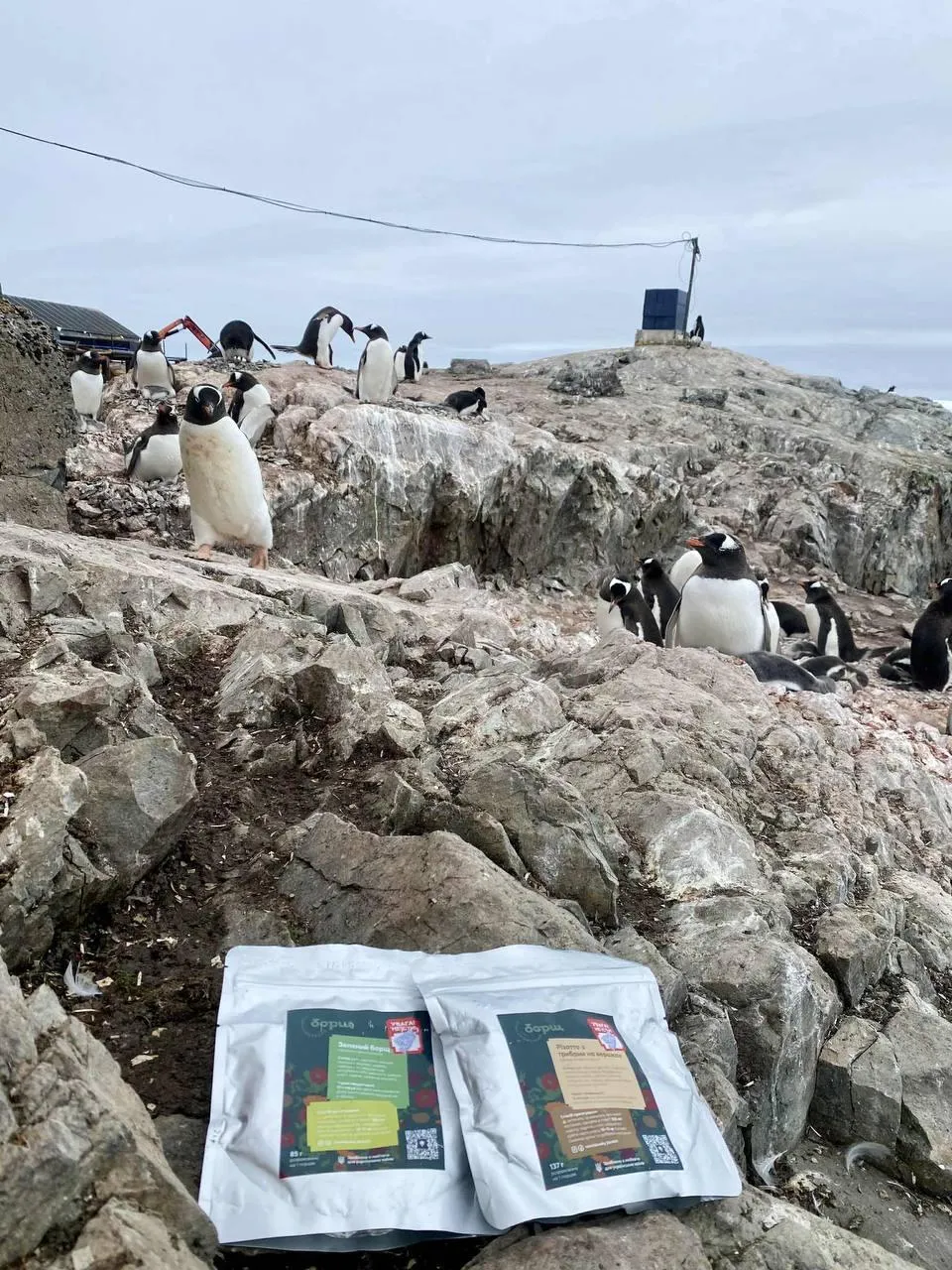
The geography of "Stanislavsky Borsch" is impressive. Once, two portions of dishes were sold at a charity auction in the USA. The buyer took them on a tourist trip to Antarctica.
"Our soups ended up 15,000 kilometers from home. It was incredible," shares Lyudmyla.
Ukrainian TV channels have filmed stories about the initiative. Once, even journalists from Japan visited to make a report about Ukrainian borscht, explaining to their audience that this dish is not Russian, but Ukrainian.
"No one is forcing you"
After four years, exhaustion accumulates. Donations become less frequent, but the work does not decrease.
"Someone once told me: 'No one is forcing you to do this.' And I thought: indeed, no one is. But when you see this queue, when help is constantly requested — you just can't fold your hands," Lyudmyla admits.
Her main motivation is videos and messages from soldiers who have tasted the dry dishes and remained full and satisfied.
"A well-fed warrior is a good warrior," she says.
After the war — to live on
Volunteers are already thinking about the future. A trademark has been registered, a brand book created. Foreign investors are eyeing the project.
But for now, the main focus is the front.
"Food is a basic need. Every hryvnia is an additional portion of borscht or soup for the defenders," emphasizes Lyudmyla Doroshenko.
And while they await a hot lunch at the front line, in the ordinary yards of Ivano-Frankivsk and its region, the dryers of various families continue to hum, so that along with the steam from the thermal package, the smell of home reaches the soldiers.
Support those who hold the front
"Stanislavsky Borsch" prepares thousands of portions of hot meals daily for Ukrainian soldiers on the front line. It's not just food — it's warmth, care, and a sense of home where there's cold, fatigue, and danger all around.
Every hryvnia you donate turns into a portion of borscht, soup, or porridge for a defender currently protecting Ukraine. Without donations, production slows down, and the queue for dispatches grows.
You can support the project here, PayPal: vashpartner2010@gmail.com Doroshenko Liudmyla.