Unite Efforts in Preserving Statehood
Journalist, publicist, and political scientist Vitaliy Portnikov is familiar to many Ukrainians (and not only them) who strive to understand the complex intricacies of modern politics. He is a regular contributor to "Hromada," has worked for many years on Ukrainian TV channels (most recently on the "Espreso" channel), and his political discussions can be found on YouTube, among other platforms. However, opportunities to speak with him in person are rare.
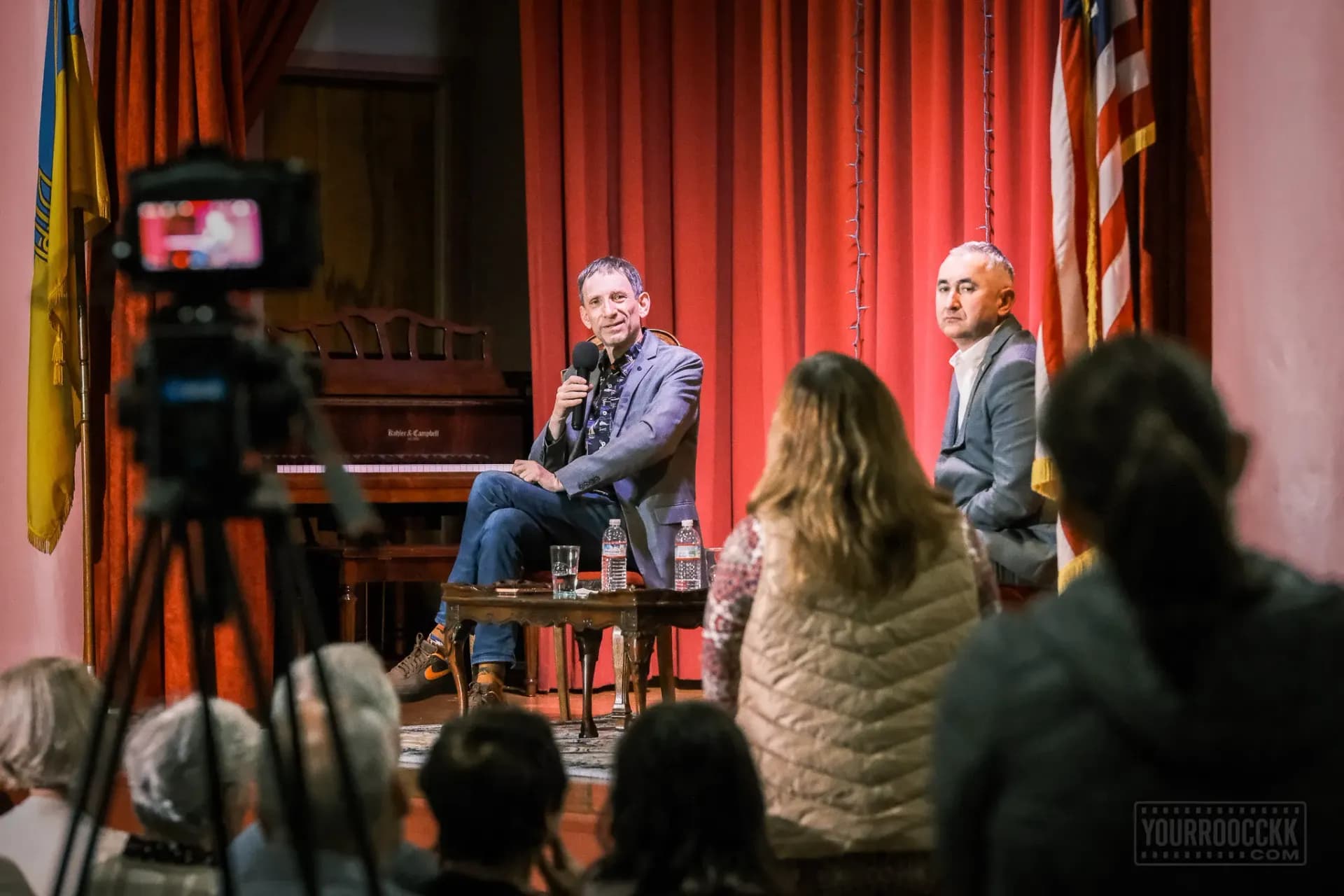
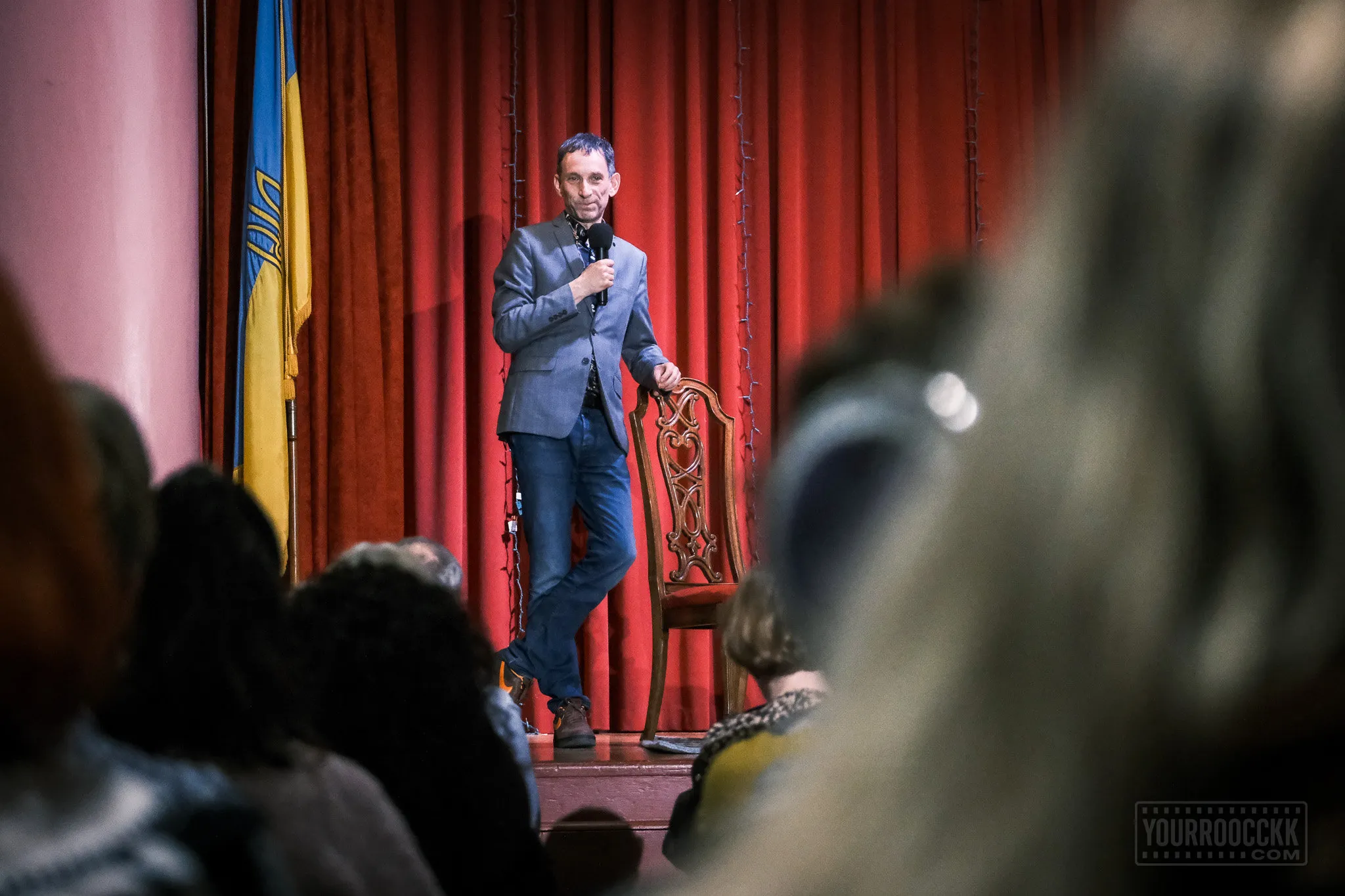
Thanks to the efforts of "Hromada," Father Oleh, and many volunteers, residents of San Francisco and the Bay Area had such an opportunity. The hall of the Ukrainian Greek Catholic Church of the Immaculate Conception in San Francisco was filled to capacity.
In a brief introductory speech, Mr. Vitaliy outlined the processes that led to the Russian Federation's aggression against Ukraine and accompany this war.
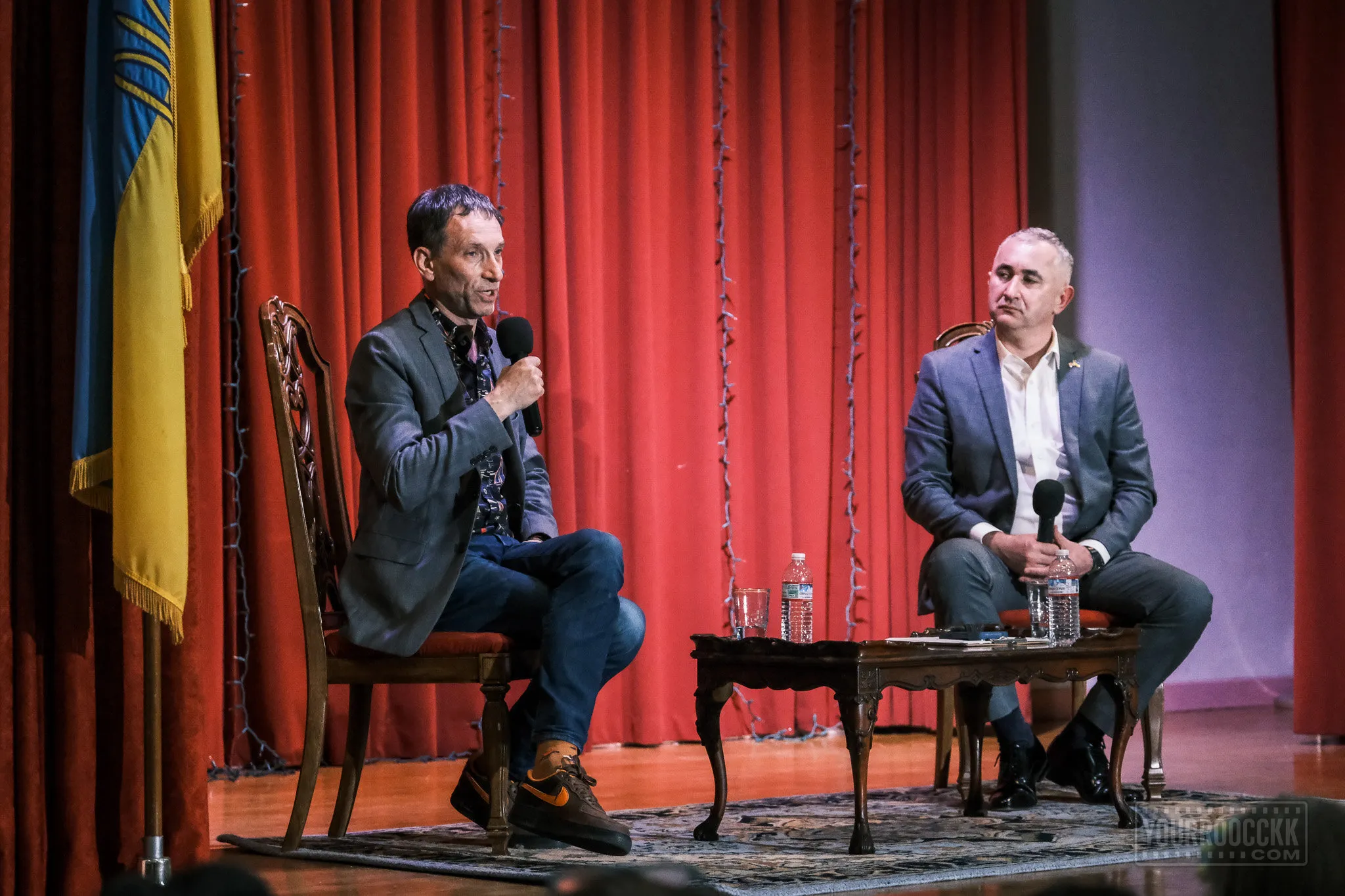
"They tried to boil a frog in milk, but instead they are playing with it," the political scientist metaphorically described the West's relations with aggressive Russia.
Back in 1991, just after the dismantling of the USSR, Yeltsin declared: "The Russian Federation has no territorial claims to the union republics that became independent states, as long as they are its allies," recalled Vitaliy Portnikov, quoting the then-president of the newly formed Russian Federation. However, until 2014, both in Ukraine and the world underestimated the dangers posed by post-Soviet Russia. They tried to act with it under the formula "where there is trade, there is no war," which is flawed regarding Russia, as Soviet society was raised with contempt for money. Even after Russia's annexation of Crimea in 2014, German Chancellor Angela Merkel wanted to build the "Nord Streams" at any cost to "bind" Russia with trade, noted Mr. Vitaliy.
In Ukrainian society, there was an inherited sense of security from the USSR, as the Union was a powerful nuclear state. Ukraine even agreed to give Russia its nuclear arsenal under pressure from the USA, which was mortally afraid of the spread of Soviet nuclear weapons. Society did not immediately realize that it was outside this "might," the political scientist noted.
A chain of mistakes and miscalculations by all involved parties eventually convinced Putin that he could, disregarding international law, "take Kyiv in three days." The desperate resistance of the Ukrainian people, who united to repel the aggressors, turned this attempt into a war of attrition, which became the largest armed conflict in Europe since World War II.
In such troubling times, US President Donald Trump announced the US's withdrawal from Europe. Trump's approach to international politics is characterized by the predominance of national states over international alliances and making deals like business agreements rather than strictly adhering to international rules and allied commitments. This approach determines the current American policy of gradually moving away from the former "Eurocentrism," which defined the Euro-Atlantic axis that maintained peace in this space for 80 years thanks to security guarantees provided by the USA. However, the historical experience of both world wars shows: "when the USA withdraws from European affairs, war comes to the States through the back door," emphasized Mr. Vitaliy. In World War II, Japan played such a role; this time, it could be China.
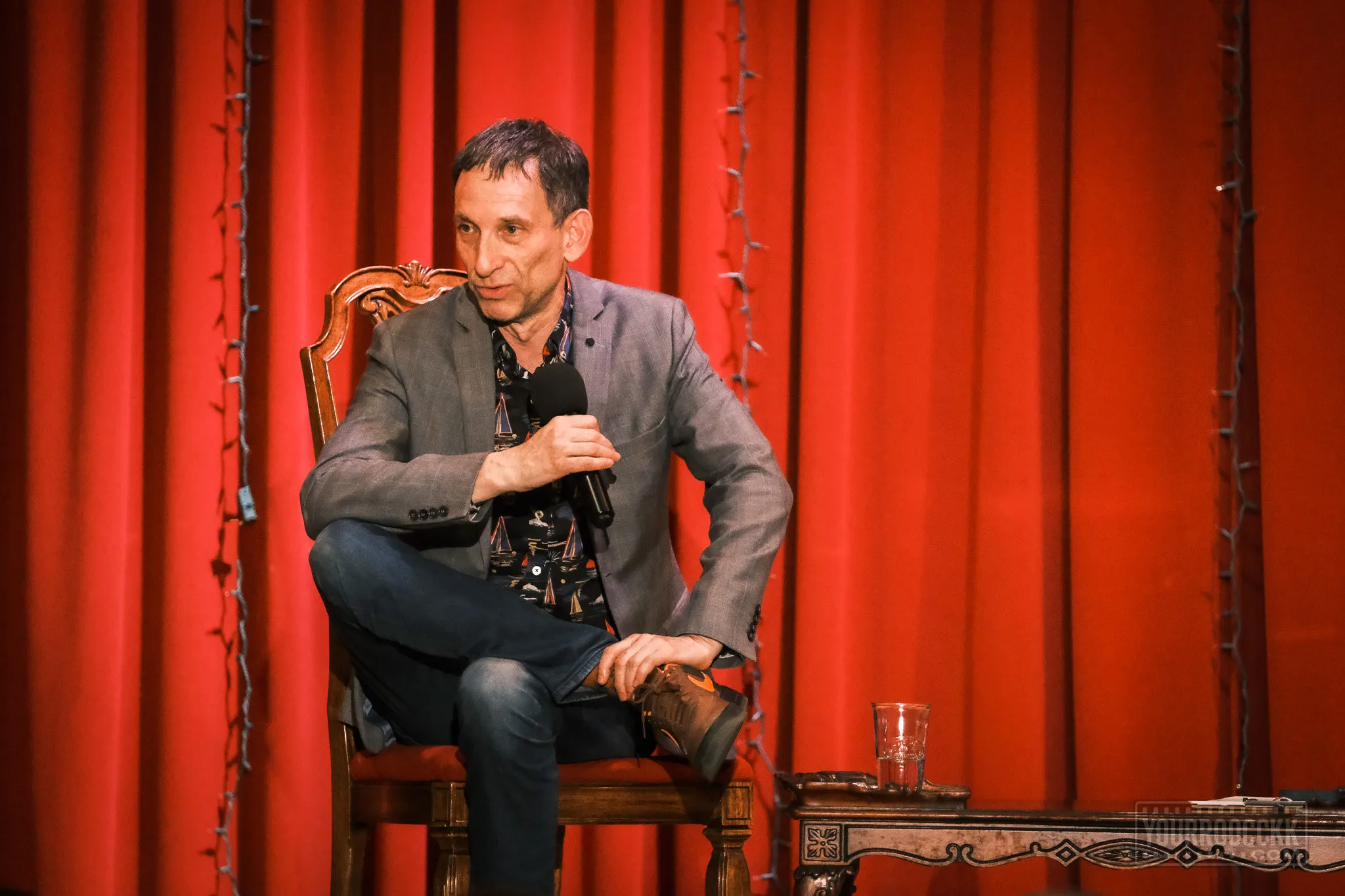
The trend of the US withdrawing from allied commitments in the defense of Europe caught Europe weakened because a world was built with joint efforts with the USA, where values related to maintaining peace and prosperity prevailed. Now, with the increasing aggressiveness of Russia and the US's withdrawal, Europe must quickly and intensively strengthen its defense capabilities. Ukraine becomes a natural part of the new system of collective European defense as a European state that has been enduring a fierce attack from a nuclear state much larger in size and population for four years.
Therefore, the joint defense of Ukraine with allies as part of Europe should be an integral part of the defense system of the Euro-Atlantic space, in which the USA would also feel safer, - this conclusion follows from Mr. Vitaliy's reflections on the current situation. (In my opinion, this idea should be conveyed to the broader American society and elected representatives in Congress by us, the Ukrainian diaspora activists in the USA).
Negotiations with the aggressor will lead nowhere because Putin does not want to end the war. For him, negotiations are just a means of buying time to continue the war and prevent new sanctions from the White House, noted Vitaliy Portnikov. Russia will fight until it exhausts its economic resources.
Those wishing to ask the distinguished political scientist questions lined up in a long queue at the microphone.
- What else can the diaspora do to help Ukraine, besides fundraising and advocating for the Ukrainian issue?
In response, Mr. Portnikov referred to the experience of the Jewish diaspora, which forced the USA to become an ally of the state of Israel, although initially, the States were not such an ally. The most important thing is to feel part of the Ukrainian people, participate in all aspects of Ukrainian society's activities, and preserve the state. It is crucial to preserve the Ukrainian language and culture in the diaspora. "The main thing is not to stop the process of participating in the life of Ukraine," emphasized Mr. Vitaliy.
- When will corruption be overcome in Ukraine?
- This problem is somewhat exaggerated. In neighboring states with Ukraine, corruption is no less, and they are not at war. To control corruption in Ukraine, not only effective work of anti-corruption institutions is needed, but also the society's refusal from the habit of giving and taking bribes.
- Is there a danger of a pro-Russian candidate winning the elections in Ukraine, similar to what happened in Georgia?
- In Ukraine, in the foreseeable future, there will be no elections because it is unknown when the hot phase of the war will end. In Georgia, the war was very bloody, but it lasted only 5 days. There, they feared the resumption of the war more than pro-Russian tendencies; Russian businesses did not cease operations in the country, and Russian tourists traveled without restrictions. In Ukraine, this is no longer possible.
- What to do if American political circles and ordinary Americans fear the collapse of the Russian Federation and its defeat more than its aggressiveness in its current form?
- This is a long-standing trend and a fundamental mistake in American political thought. In the USA, there is a widespread belief that Russia "guarantees stability." On the contrary, Russia sows instability around it. In particular, Armenia and Azerbaijan immediately ended the war as soon as Russia lost influence in this region. Currently, the imperial space is disintegrating, meaning the RF is losing influence in the post-Soviet republics. However, the collapse of the RF itself is questionable because the war gave the Putin regime the "opportunity" to destroy any manifestations of national identity of non-Russian subjects of the federation. The RF mobilizes primarily the population of non-Russian regions for the war, and in some federal republics, the male population has been entirely wiped out.
- Question from a member of the Belarusian diaspora: why did Ukrainian President Zelensky just now meet with Tikhanovskaya?
- It was a mistake for Ukraine to continue relations with the Lukashenko regime as if nothing was happening. Lukashenko was brought to power in 1994 by the FSB of the RF. Now we need to correct the mistake with joint efforts. If Ukraine withstands the war, there will be a chance for Belarus. The world based on rules is already destroyed. Therefore, new defense alliances need to be built, and our countries can cooperate.
- How to preserve Ukrainian identity in the occupied territories of Ukraine?
- This is very difficult. Russia ruthlessly destroys everything related to Ukrainian identity. In the RF itself, the Ukrainian Society in Moscow has been dismantled, and the director of the Ukrainian Library has been imprisoned. And in the occupied territories, the regime is even more brutal. However, the most important thing now is to preserve the state of Ukraine. Then there will be a chance for the occupied territories as well.
Unfortunately, the meeting with Mr. Vitaliy ended too quickly. We had to move on to the next points of the program, carrying with us unanswered questions. Will there be a chance to speak with Mr. Vitaliy in person again? I hope so.
Nadiya Banchyk
Feedback on the meeting, taken from Facebook:
The meeting turned out to be truly interesting. Particularly important, in my opinion, was the discussion about the role of the diaspora during the war and post-war reconstruction.
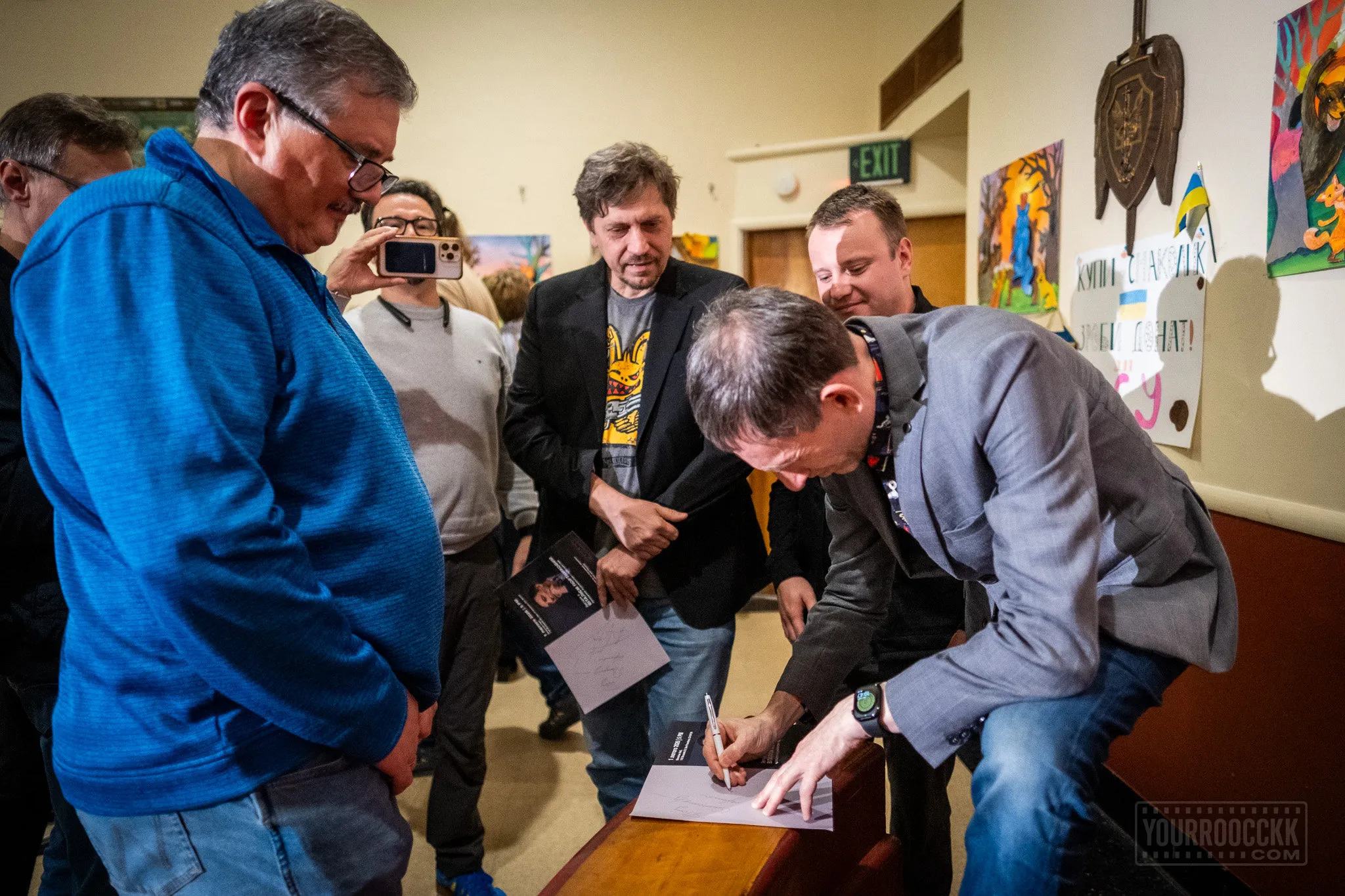
A friendly and pleasant atmosphere prevailed, the charity auction was lively, and the decision to gift the purchased lot to another meeting participant, which touched the lot's owner, was so humane and warm that I will long rejoice and mentally thank for witnessing this moment.
The evening ended with a musical program. Violin, piano, two wonderful opera singers, Lesya Zabashta and Ivanna Taratula-Filipenko - and a relaxed, almost homely atmosphere. Usually, such a combination is impossible, classical music is mostly heard in a more formal setting. But these coziness and friendliness created by the organizers somehow suited the academic vocals and violin melodies.
And in the hall - familiar faces, people whom it was pleasant to see.
Our impressions with my husband do not always coincide (perhaps that's why we've been together for so many years, that we have the opportunity to discuss what we've seen or heard), but today we were in complete agreement. The evening was very successful and important.
Many thanks to Hromada Yarema Kuzyshyn, Father Oleh Kepeshchuk, Marina Anisovych, Taras Turov, and everyone involved in organizing and conducting the event.
Olena Bilyak
It's interesting that Mr. Portnikov knows how to hold an audience, even though he speaks very quickly and covers many complex topics. I was impressed that there were so many questions and all were very meaningful; it seems everyone in the hall shared many common values and views, although they were from different parts of the diaspora.
Yana Ratman
Vitaliy Portnikov's tour for meetings with the Ukrainian diaspora is very timely.
Praise to the organizers for finding an opportunity for something no less important in our lives - classical music - in this serious event.
Congratulations to the artists who provided aesthetic emotions to the audience, particularly opera singers Lesya Zabashta and Ivanna Taratula-Filipenko. Let me remind you that Ivanna recently gave a charity solo concert to help children in Ternopil who suffered from the bombings of the rashists.
Love for Ukraine is realized not only in words but primarily in actions.
Nadiya Trush
I envy those who were able and wanted to be at the meeting.
Natalia Voyets