
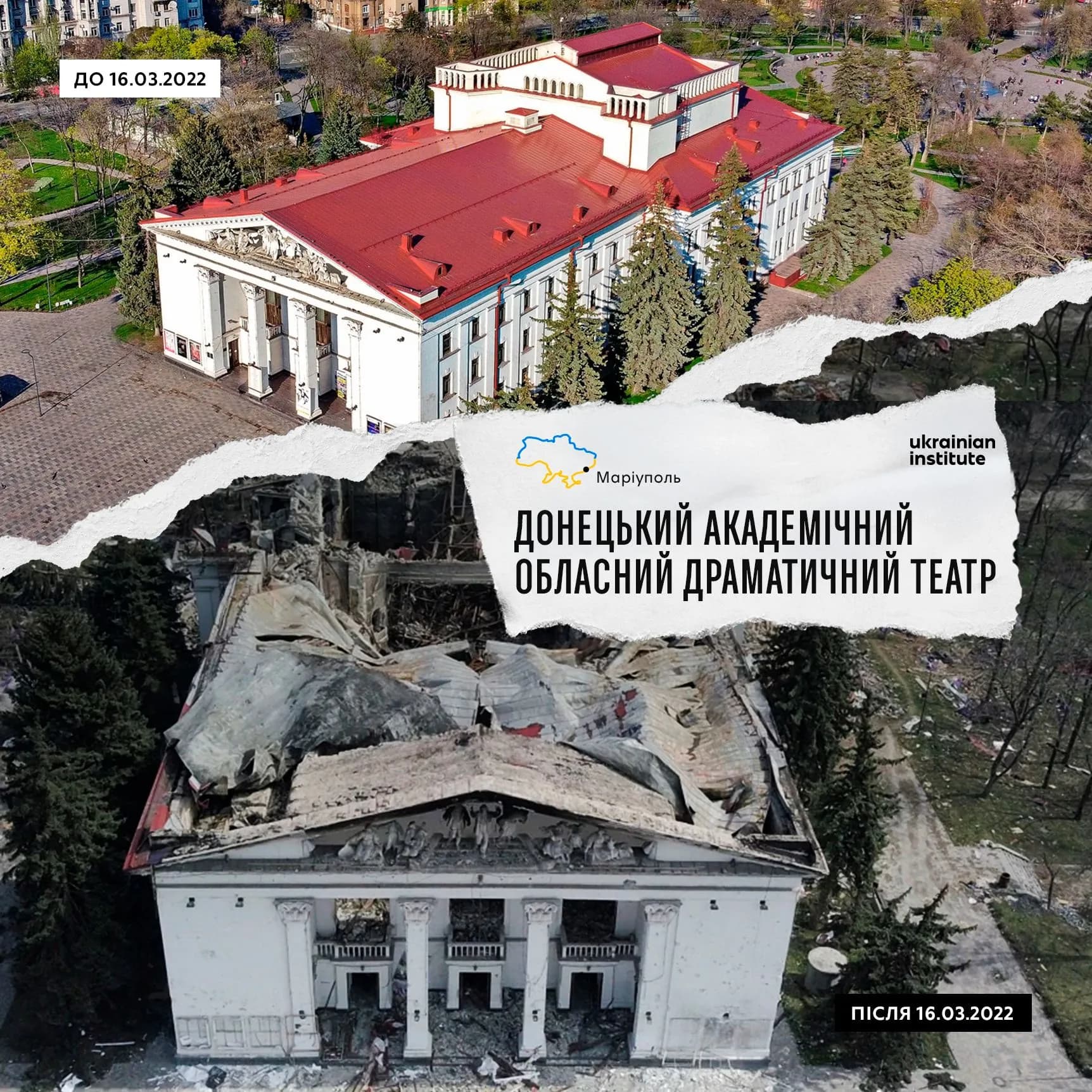
Mariupol Drama Theater: A Crime That Cannot Be Restored

The history of war crimes is rarely attempted to be erased immediately. They are first devalued, then denied, and later rewritten. What cannot be justified is attempted to be erased from memory. What cannot be erased is "restored." Behind facades, open scenes, and official reports lies the desire to deprive crimes of their names.
The Mariupol Drama Theater became one of the most horrific examples of the brutal destruction of civilians in the great war against Ukraine.
On March 16, 2022, the Mariupol Drama Theater became a mass grave. Despite the large "CHILDREN" sign in front of the building, clearly visible from the air, Russian aviation dropped a bomb on the theater. Inside, about a thousand civilians were sheltering — women, the elderly, children. The theater was known as a shelter, known to both military and civilians.
This was not a "mistaken strike." This was a deliberate war crime.

Photo: from open sources / Ukrainian Institute
According to eyewitnesses, including my acquaintances, there could have been over 1000 people in the theater. Some died immediately, others under the rubble. The exact number of victims cannot be established: the city was in complete blockade, bodies were removed without record, many were buried in mass graves or simply under the ruins.
Witnesses of the tragedy are alive. They speak of screams, darkness, dust, and the bodies of children pulled out by hand. There are people who miraculously survived because they were in basement areas or ended up under debris but were not fatally injured.
Despite numerous testimonies, photo and video evidence, Russia has yet to be held accountable for this crime. The world heard the testimonies, saw the evidence, but accountability has not followed. The war crime against civilians has yet to receive a judicial verdict.
Dancing on the Graves
In 2024–2025, the Russian occupation authorities announced the "restoration" of the drama theater. The building was restored, the stage opened, events held. Simultaneously, Russian media spread the narrative that the theater was allegedly destroyed by the "Ukrainian side."
This is not just a lie. It is a profanation of memory — an attempt to erase the crime and instead hold dances on the graves of the dead.

Photo: Reuters
No reconstruction can change the facts: the bomb was Russian; the strike was deliberate; the building was a civilian shelter; the word "CHILDREN" was written so that aviation could see: peaceful people are hiding here.
Russia acts according to a long-established scenario: first — destroy, then — deny, and later — rewrite history. This mechanism has been applied for years, leaving behind crippled fates and ruined lives each time. Lies become state policy, and crimes — silenced.
Memory is Stronger than Concrete
The Mariupol Drama Theater today is not a stage or an architectural object. It is a crime scene. And it will remain so, regardless of the color of the facade or new seats in the hall.
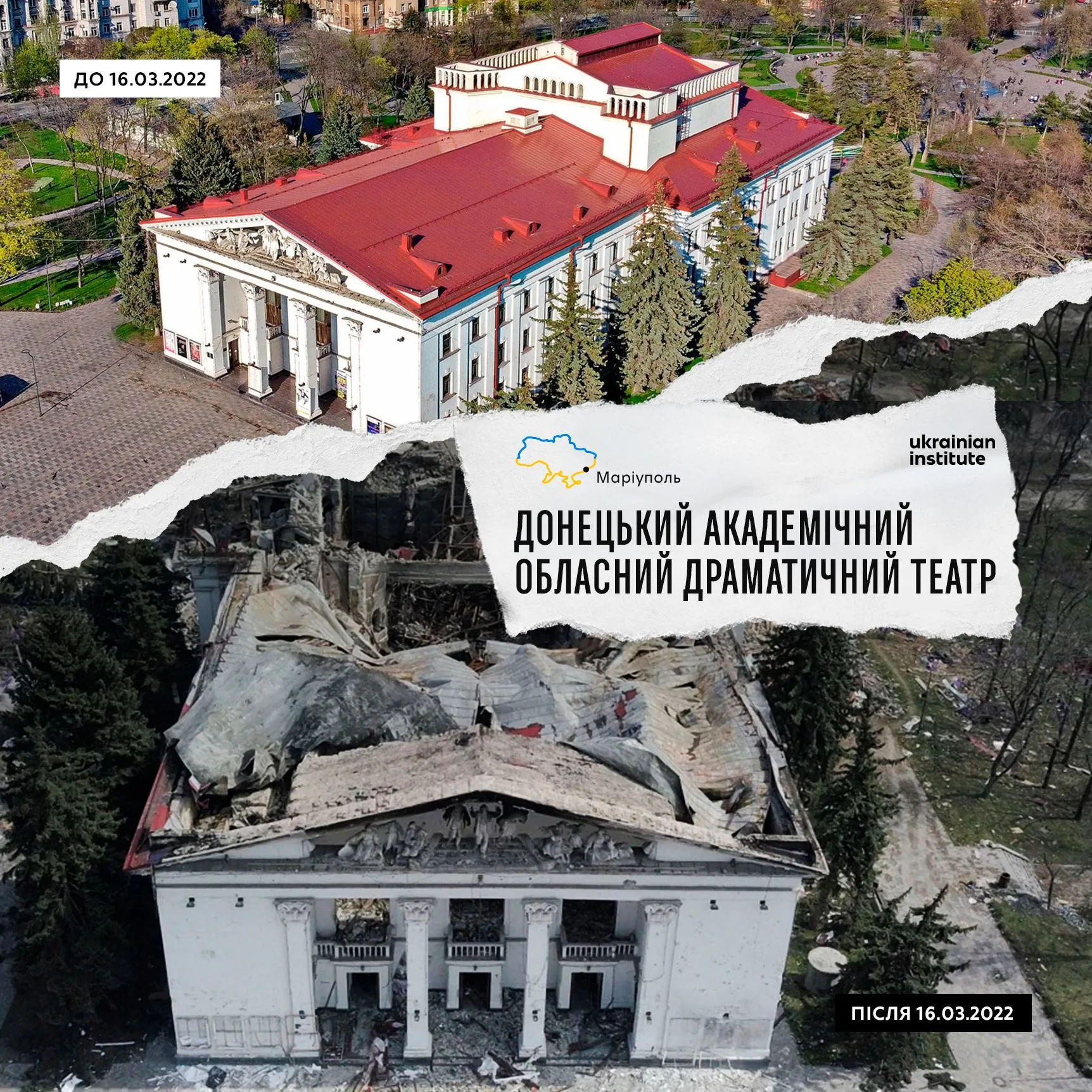
Photo: from open sources / Ukrainian Institute
The world has no right to accept this "restoration" as normal. Because if murder can be "repaired," then no crime will matter anymore.
The memory of Mariupol is not about the past. It's about responsibility. And it has yet to come.
What happened here will forever remain a testimony of Russian war crime. And every attempt to return this place to a "normal" appearance only underscores the depth of the moral downfall of the aggressor state.
The truth still grows.
Even through concrete.
Even through fear.