With Ukrainian Beauties — Into a New Peaceful Year
I never tire of saying that the Ukrainian community in Chicago is incredibly fortunate to have creative people. They not only demonstrate a high level of artistic culture themselves but also lead others, opening up the beautiful world of music, song, dance, theater, and spoken word. Importantly, they unite everything under the banner of a single word — Ukraine. Its historical and spiritual heritage, its beauty, its uniqueness, and God-given talents.
All these words fully apply to the creative niche chosen by Roksolana Prokopiv — an incredibly soulful person who collects ancient folk clothing from all regions of Ukraine or makes new ones while maintaining authenticity, based on samples from old photographs. Her collection, usually showcased by young girls, always becomes the highlight of every artistic event because it evokes something sacred, something important, something truly invaluable that is passed down to us from previous generations, turning into the nation's code. That invisible code that preserves our identity. That distinguishes us among the diversity of world ethnicities. That helps us to BE. That cannot be destroyed, no matter how much someone might want to. And which we, the current generation, must — and will — pass on to our descendants...
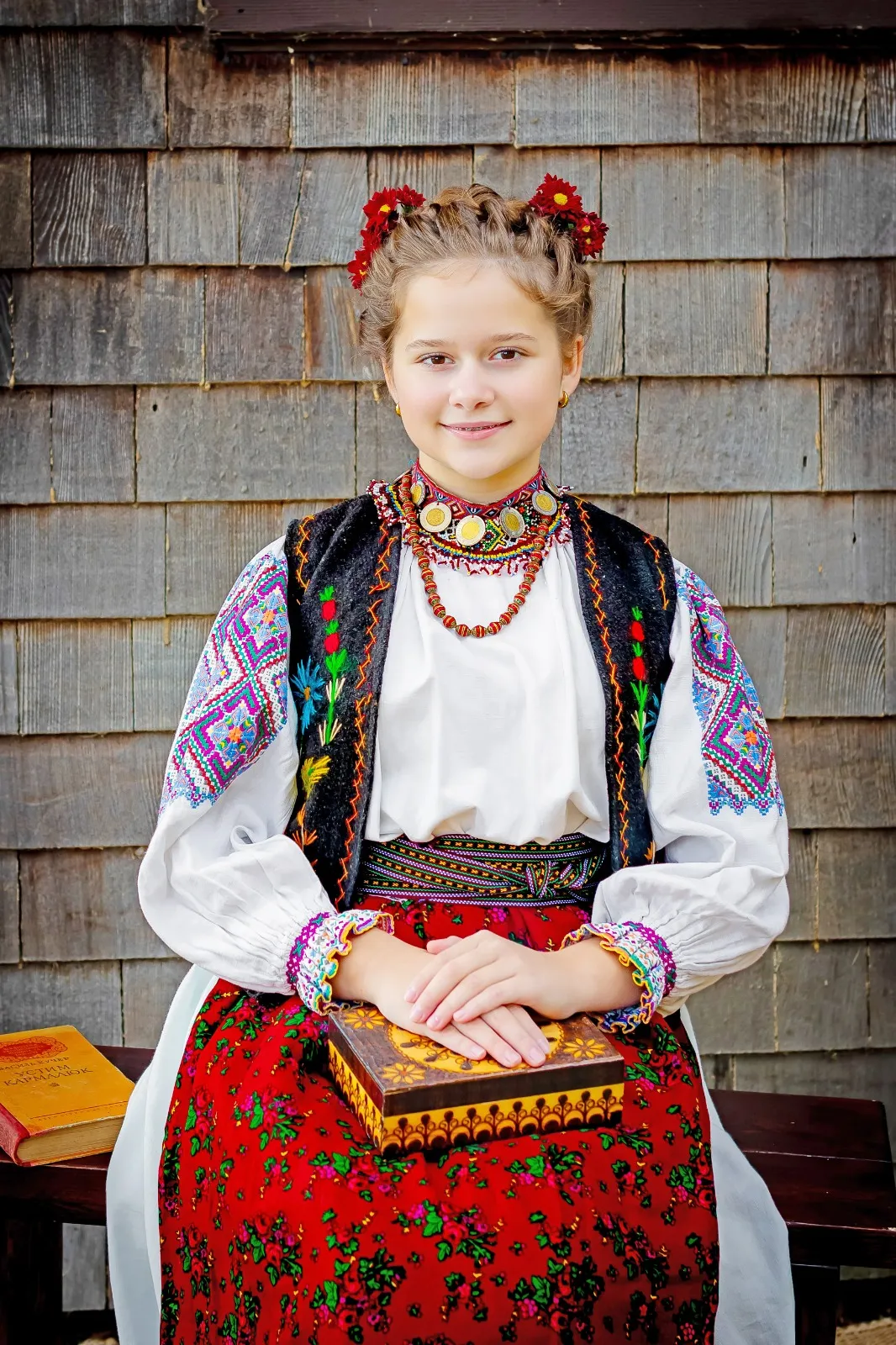
For many years, Ms. Roksolana, along with friends and like-minded individuals, has been directing all her creative efforts towards this. Not long ago, she initiated another extremely interesting project to promote Ukrainian national beauty: last year, her ethnographic calendar was published for the first time, and these days a new one for 2026 has been released. Believe me: this is truly an amazing publication, as it is illustrated with stunning photographs. The author of these photos is also Roksolana Prokopiv. Thus, we view each photo through her eyes, but we feel it with our hearts, which immediately start beating in unison with the breath of our native land.
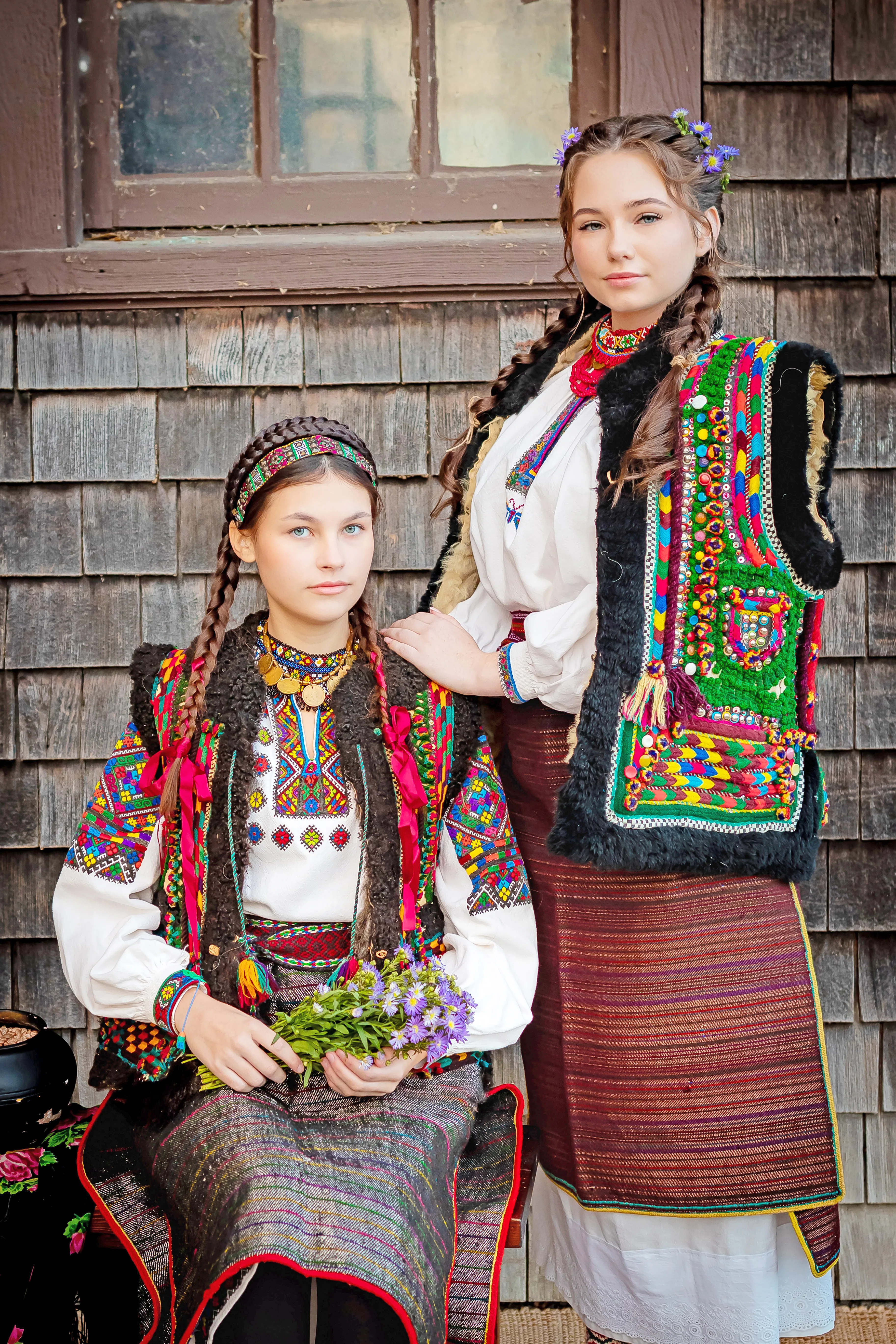
From the cover, which features a young beauty in festive Hutsul attire, your hand reaches to flip through the calendar further, with thrilling expectations. And they are fulfilled. Each subsequent page, dedicated to a new month, is a special dimension of Ukrainian beauty, conveyed through photos of girls dressed in authentic national costumes. In the corner — the model's name, the region represented by her attire. The information is presented in two languages — Ukrainian and English. You read — and the words sound like music: Podillia, Poltava region, Bukovina, Polissia, Boykivshchyna, Volyn, Hutsul region, Slobozhanshchyna, Transcarpathia, Galicia... And in the costumes — so much uniqueness and ancestral strength! And in the girls' eyes — so much purity and love! How beautiful you are, my Ukraine! With every flower in the girls' braids, with every thread on the fabric...
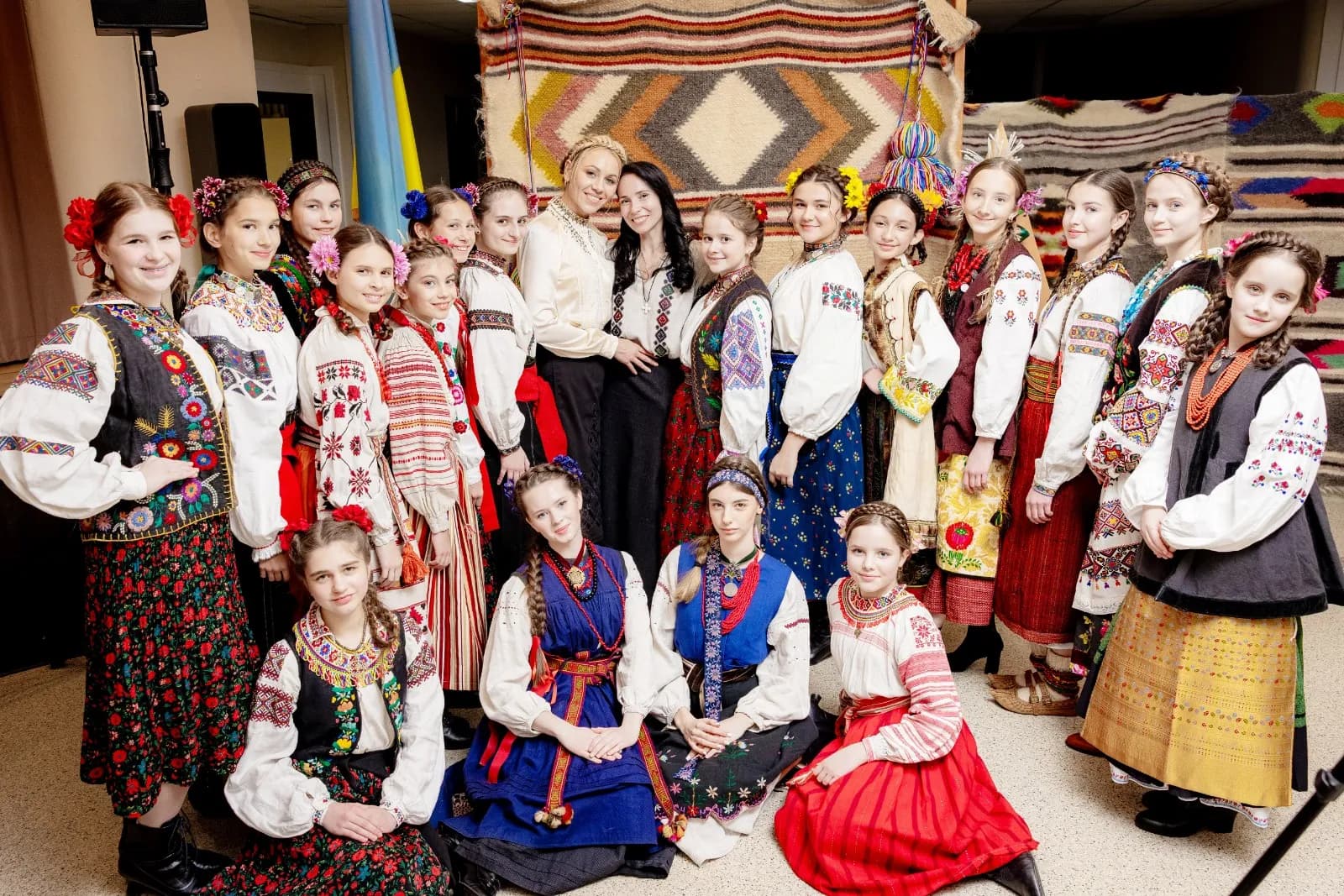
Last Sunday, the pictures from the calendar "came to life": a presentation of the publication took place in the auditorium of St. Joseph the Betrothed Church, and attendees had the opportunity to interact with everyone involved in this fantastically beautiful project. First and foremost — with Roksolana Prokopiv, who can talk for hours about her collection, about the richness of Ukrainian culture conveyed through clothing. She is convinced: it should not be left to gather dust in chests or attics but should become part of modern fashion. And be a source of pride for those who wear it.
Indeed, proudly — the girls-models, whose photographs adorn the calendar, demonstrated it, and today their runway show adorned the Sunday meeting-presentation. All of them are students of the "StarKids" modeling school, where their mentor, professional model Kateryna Hrod (together with Ivan Sabat — the host of the presentation), teaches her protégés to present themselves precisely this way — with the pride of Ukrainian princesses, with posture and gait that testify to honor and dignity, unbreakable will and resilience. Because this, too, is the nation's code. That invisible one. The one in the blood and with which the spirit is filled.
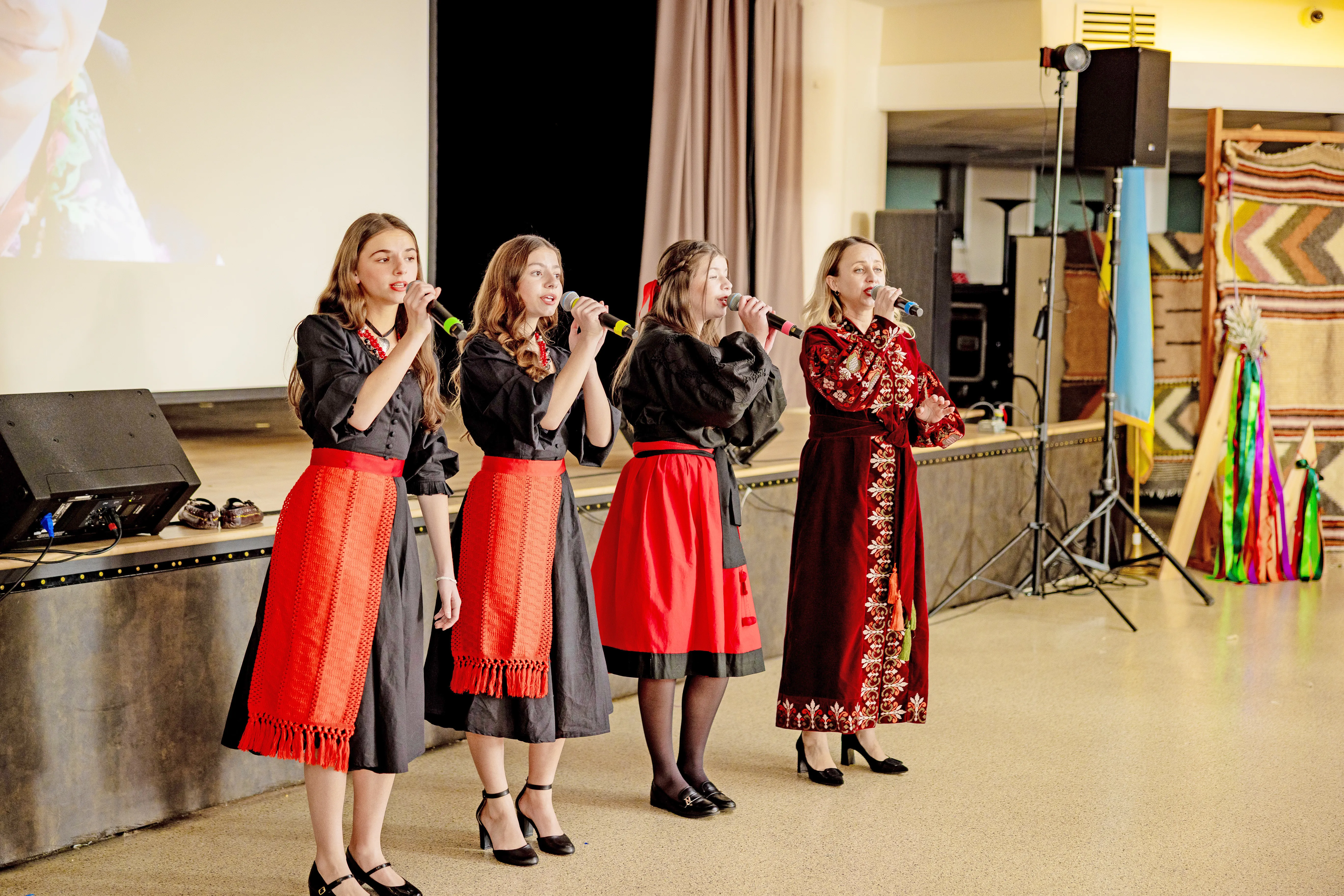
This was also demonstrated in the second part of the presentation meeting, which became a kind of surprise, as not everyone present had encountered... gunyas in their lives. Even now, some of you might be wondering: what is a gunya? If you redirect the question to Tetiana Drozhzhina, she will not only explain that it is a Hutsul outer garment made of homemade cloth from sheep's wool but also offer to examine it in assortment and, if desired, purchase it (details — on the Facebook page GUNYA Chicago). It is through Ms. Tetiana that gunyas are delivered to Chicago from distant Yavoriv in the Kosiv region, in the Carpathians, where they are made by her aunt — folk artist Stefania Korpaniuk. So, no one in Chicago can tell you more or better about this true work of applied art than Tetiana.
But can she only captivate the audience with stories about gunyas? Be prepared that she cannot. Because Tetiana is one of those who go through life with the nation's code, who knows the history of her family, and therefore could talk endlessly about the lives of her ancestors. And some of this, the guests of the presentation meeting, observing the gunya show, heard. And mentally transported themselves to the mountain meadows and slopes, to the fragrant hayfields, to the banks of the swift Carpathian streams — to where her ancestors lived and farmed, where little Tetiana learned the science of life (she jokingly says it was training, almost drilling) with her great-grandmother Hafiya — a person more harsh than gentle, more rough in communication than delicate, and the first to start work, not letting others lie around, who never hesitated to use a sharp or harsh word... But it was from her great-grandmother that she learned not to submit, as true highlanders do, to the trials of fate, to live in nature, to hear nature, to heal with it, and to be filled with pride for the unique native land, for its talented people who can create incomparable beauty with their hands. Now this pride, this love, this nation's code Tetiana passes on to her son Taras, because although he was born in America, he goes through life as a Ukrainian — in appearance, spirit, and heart.
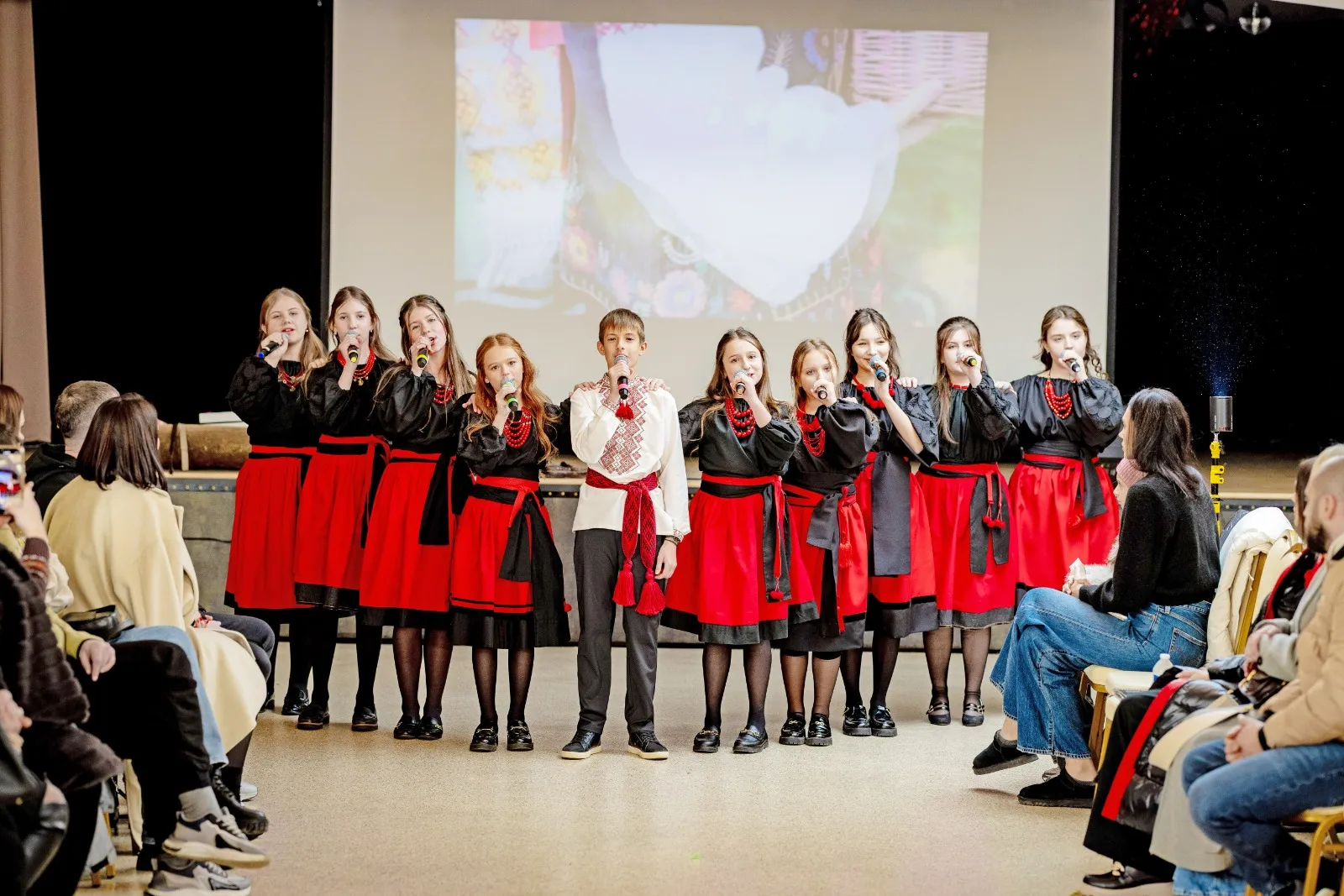
This unity and continuity of generations were felt throughout the presentation of the ethnographic calendar. In every word of the speakers, in the musical performances of Liubov Lukashevych, Angelina Sovych, Tetiana Baryliak, the vocal studio "Elegia," young performers Tereza Dynka, Sofiia Buriadnyk, Samira Prokopiv, in the greeting of Father Mykola Buriadnyk, who emphasized: it is incredibly important that the organizers of such ethnographic projects involve children and youth — so there will be someone to carry on the code of our nation. This was also emphasized in their video messages by well-known Ukrainians in the creative world — including Oksana Mukha, NAVKA, Oleksii Hnatkovskyi, Myroslava Polataiko, Volodymyr Pushkar, Vasyl Melnykovych ("Hutsul-hooligan"), Marichka Burmaka. Short interviews with them, overcoming the distance across the ocean, were also made by Tetiana Drozhzhina, concluding the story with a tribute to the memory of the People's Artist of Ukraine Stepan Higa, who passed away the day before. But until his last breath, he confessed: "I loved you all, but I loved Ukraine the most..." And let us love. Because as long as there is this love — Ukraine will be.
P.S. The 2026 ethnographic calendar is a non-commercial project. The sponsors of the publication are the "Samopomich" credit union and the parcel delivery company "MEEST-Karpaty." The print run of the calendar is 400 copies. All proceeds from its sale (the cost of one copy is $35) will be donated to the Heroes Protection Fund at St. Joseph the Betrothed Parish and the Protez Foundation charity. If you wish to purchase a calendar, contact Roksolana Prokopiv (773-931-7256) or Kateryna Hrod (773-742-3718). Let us embark on a new peaceful (we believe it will be) year of our lives with Ukrainian beauties.
Photos of the models on the calendar pages — Roksolana Prokopiv, photos from the presentation meeting — Maksym Prokopiv.