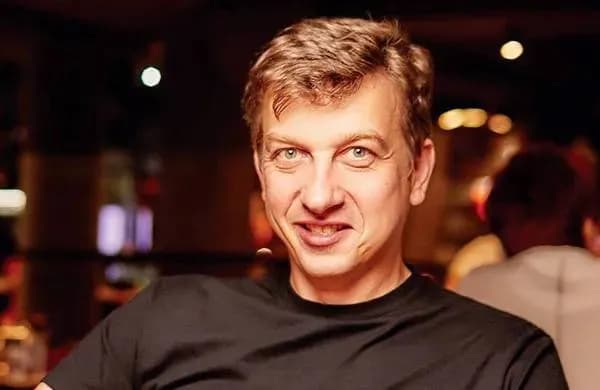
The question of "is there life after Yermak?" did not arise yesterday. It has been posed for years by the internal quasi-opposition — supporters of Petro Poroshenko, Yulia Tymoshenko, and some public activists and experts. For them, Yermak was a convenient symbol: unelected, not public, yet all-powerful. They systematically, loudly, and unsuccessfully demanded his resignation. Zelensky ignored these demands for years, perceiving them not as a warning signal but as an element of political warfare against himself personally.
Ignoring became a habit. Yermak turned into a unique filter between the President and the Verkhovna Rada, between law enforcement, between Ukraine and the West. He did not form ideologies but determined which ideas reached the first person. His power lay in the monopoly on access. And a monopoly sooner or later begins to crack.
A vulnerable moment that created not just a crack but an entire canyon was the corruption scandal known as the "Mindycha tapes." Not because of the sensational content — Ukrainian politics has seen worse. But because of the demonstration of systemic vulnerability. The leak showed: the vertical is not airtight, internal wars are no longer between the government and the opposition but within the government itself. And most importantly, these conflicts can no longer be hidden from external partners.
This is where the internal plot turns into an external one. The U.S. administration is increasingly signaling its interest in forcing Ukraine into a "truce" with Russia. The names may change: ceasefire, stabilization, pause — but the essence is the same: to stop the active phase of the war (perhaps for the Nobel Peace Prize dreamed of by Trump?). For this, a Ukrainian government is needed that is less monolithic and more externally controlled. Weakening Zelensky becomes not a side effect but a tool.
Yermak in this construction is a problem. He is too autonomous, too closed, and too associated with Zelensky's personal power model. For external players, it is easier to work with a destabilized Bankova than with a tandem that has been resisting any pressure for years — both from within and from outside. Thus, the topic of his resignation for the first time goes beyond internal noise and becomes an element of a large geopolitical game.
However, the illusion that Yermak's departure automatically means a reset is misleading. He did not create the "Zelensky system," but only became its most effective operator. The presidential monopoly on decisions, the bet on loyalty instead of competence — all this remains if only the surname changes.
Life after Yermak is possible. But only if it is not a cosmetic sacrifice, but the beginning of dismantling the model of manual control. Otherwise, the country will not get a new quality of power, but another "invisible manager" — with the same functionality and the same shadow.
And then the question will definitely not be about Yermak, but about how many more times society will allow institutions to be replaced by people — especially at a time when survival of the entire country depends on it, not ratings.
But as days pass, Yermak's resignation increasingly seems trivial. The country is concerned with more global issues: whether American diplomats will force the Ukrainian government into a "truce," or whether Zelensky will drag out negotiations as long as possible, playing on the exhaustion of partners and time. And if a truce does eventually happen — will it lead to elections.
Almost seven years of unchanging power — even with the war as an excuse — inevitably provoke corruption and inefficiency in the state system. This is not a moral judgment but a political inevitability. But it is the elections that Zelensky fears the most. A truce automatically makes them inevitable, and he has become so accustomed to the presidential role that he seemingly cannot imagine himself outside of it.
In this perspective, Yermak is just a detail. The system can do without him, but it cannot do without answering the main question: is the government ready to return normalcy and democracy to the country? And if not, life after Yermak will turn out to be just another illusion — much smaller than those Ukraine will still have to face.