
A Universe That Listens to the Heart’s Beat
A reflection on the exhibition and on Ihor Pavlyshyn — a man who burns with guarding Ukrainian memory
On November 8, 2025, the Ukrainian community of New York gathered not for another routine event, but for an act of cultural presence. On this day — the anniversary of the passing of Jacques Hnizdovsky — we looked directly at our own responsibility: are we capable of protecting what forms our identity? In an age when the world increasingly simplifies the complex and forgets the profound, gatherings like this become a test of maturity. And at the very center of this test stood Ihor Pavlyshyn — a man who defends Ukrainian cultural memory not with slogans, but with steady, daily work. Because when someone is ready to forget, there must always be someone who says, “We will not allow it.”
Silence That Holds a Community Together
That November morning, the church filled not only with prayer, but with a shared breath — a space of gratitude for all who had supported the creation of the Electronic Catalogue of the Ukrainian Diaspora Postcard.
This silence was not emptiness. It was testimony. In it, one could feel past and present meeting, generations of quiet laborers standing beside those who live and work today. It felt as if history itself stood near, listening closely to how we continue its story.
An Exhibition Born of Love — and of profound inner work
After the service, the community walked to the Ukrainian Selfreliance building, where an exhibition opened — not simply a display, but an encounter with the world of Jacques Hnizdovsky, restored and brought into order through the immense efforts of Ihor Pavlyshyn.
A postcard is a small, delicate thing. Easy to overlook. Yet it can hold what larger formats often fail to preserve: warmth, intention, a moment someone chose to remember.
On display were: the earliest postcards from the legendary Surma store, invitations to exhibitions across the United States and Europe, Hnizdovsky’s original letters, book covers, ex libris prints, icons, sketches, trials, notes — fragments of his creative laboratory.
These artifacts survived continents, migrations, and changing times. They speak again because they were gathered by someone who knows how to listen to the silence of history.
Ihor Pavlyshyn: the one who turns memory into a life’s mission
Ihor Pavlyshyn demonstrates how one person can alter the fate of a cultural legacy. His years of work on the electronic catalogue were not about numbers or dry archives. They formed a living world into which he entered for thousands of hours, retrieving fragments of the past that others might have passed by.
For him, every postcard is a witness. Every stamp — a journey.
Every handwriting — a voice of someone who once lived and created.
His work is loyalty, responsibility, and the conviction that Ukrainian culture does not belong on the margins of world art — it deserves recognition, study, and presence!
The World of Hnizdovsky: a space of depth rather than mere form
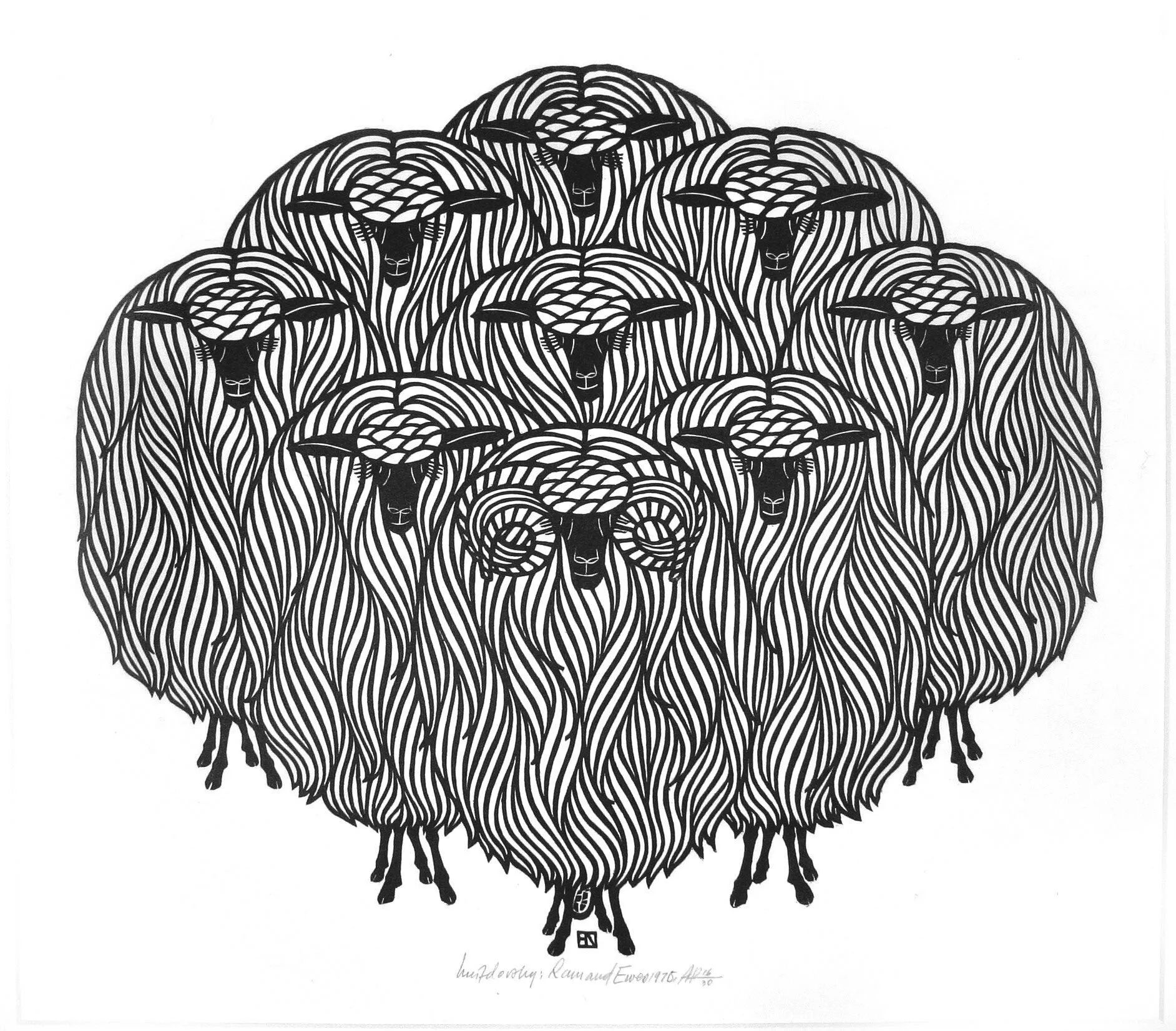
The exhibition “The Universe of Jacques Hnizdovsky” became a journey through which every visitor discovered a personal dimension of the artist. The screening of Sheep in the Tree was especially revealing — showing not only the technique of woodcut, but the discipline and attentiveness that guide it.
It was a chance to see thought becoming line, a hand listening to wood, silence becoming a partner in creation.

Hnizdovsky: an artist who belonged to the world, yet breathed Ukraine
Jacques Hnizdovsky’s name has long been international. His works have appeared in leading museums across the globe. Yet despite this recognition, his art remained deeply Ukrainian in essence.
His woodcuts reflect the rhythm of his Podolian childhood: silhouettes of trees and houses, evening shadows, repeating lines echoing the cycles of nature. His compositions embody restraint and wisdom: minimal form, maximal meaning.
The world embraced him. Yet he breathed Ukraine.
People Who Hold the Threads of Memory
At the opening, several names were remembered — those who stood beside Ihor in his long work:
• Oksana Teodorovych, guardian of cultural heritage,
• Ivan Dytuk, generous collector,
• Hanna, Ihor’s grandmother, whose warmth planted the earliest seeds of his love for Ukraine.
They form an invisible structure — the kind that quietly carries the memory of a nation.
The Silence That Stays After the Exhibition
Although the exhibition lasted only eight days, its impact cannot be measured. People left slowly, as if afraid to disturb something fragile. Someone paused before a postcard. Someone touched an artifact to feel its texture. Someone explained to a child why this matters. Someone wiped away a tear.
Because this exhibition was not about the past. It was about continuity.
About responsibility to those who came before us — and those who will come after.
About a quiet but determined refusal to let memory fade.
Remember. Preserve. Pass On.
A people remain whole through humanity, memory, and those who refuse to let that memory scatter. Ihor Pavlyshyn is one of those people.
There are exhibitions that bring together not objects, but hearts.
The Universe of Jacques Hnizdovsky is one of them. There are communities capable of lifting entire worlds from oblivion.
And the Ukrainian community of New York